
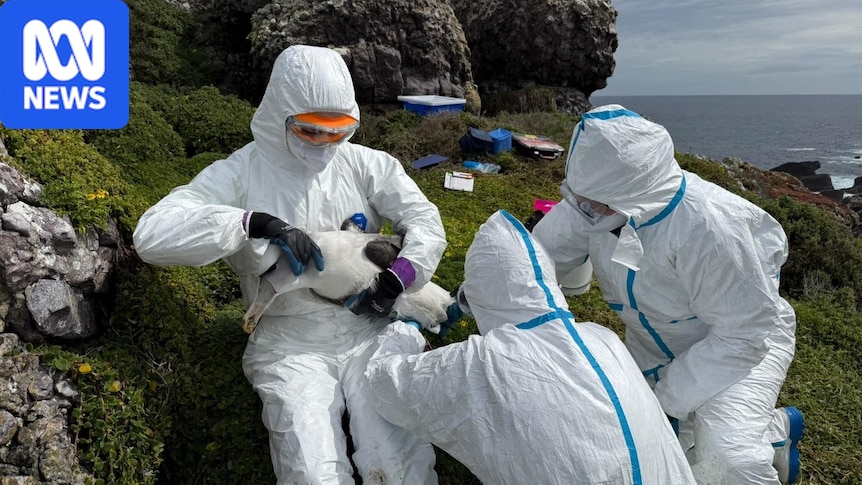
A vaccination program to protect an endemic Tasmanian seabird against the deadly H5 bird flu has begun on a remote Bass Strait island.
While no positive cases have been detected so far, the shy albatross is considered highly vulnerable to avian influenza.
The Department of Natural Resources and the Environment (NRE Tas) has this week embarked on a three- to four-week pilot program to vaccinate a hundred of the birds during nesting season.
Each bird requires a double vaccination for it to be considered effective.
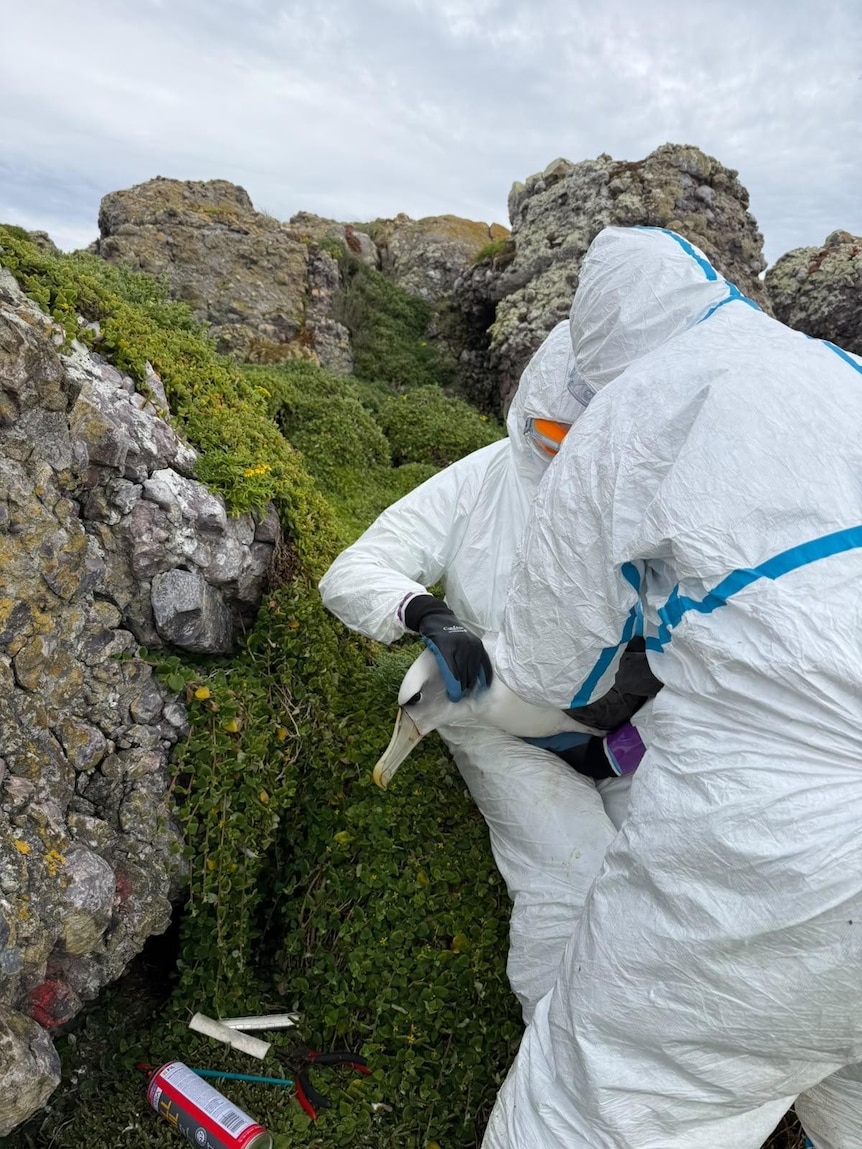
Wildlife experts will administer bird flu vaccines while on Albatross Island, off Tasmania’s north-west coast. (Supplied: NRE Tas)
The shy albatross breeds exclusively at three tiny island colonies dotted around Tasmania’s coast: Albatross Island, in the Hunter group near King Island; Mewstone, south of the Maatsuyker Islands; and Pedra Branca, off the south-eastern point of Tasmania.
Only the aptly named Albatross Island is accessible to humans.
Difficulty vaccinating wild species
Wildlife experts face significant challenges in vaccinating the birds, with crews facing extreme conditions on the exposed island as they aim to safely administer the shots while minimising disturbance to the colony.
To report sick or dead birds or other animalsCall the Emergency Animal Disease Hotline 1800 675 888 (24 hours)Use the online bird flu reporting formDo not touch sick or dead birds or other animals.
To report sick or dead wildlife (other than birds), please visit the wildlife health in Tasmania webpage.
A rigorous assessment process was required to undertake the program, and the animal ethics committee has imposed strict permit conditions and biosecurity protocols.
NRE Tas’ wildlife veterinarians and biologists will later monitor the birds via remote cameras and with return visits to the island.
Tasmanian Minister for Environment and Climate Change Guy Barnett said it was a world-first attempt to vaccinate albatross — a wild species — against bird flu.
“This is a unique opportunity because these birds can be safely approached while nesting, allowing us to provide the required two doses of vaccine for each bird over a three-to-four-week period and monitor individual birds in a way that’s not possible for many wild species,” he said.
There are an estimated 15,000 shy albatross pairs in the world.
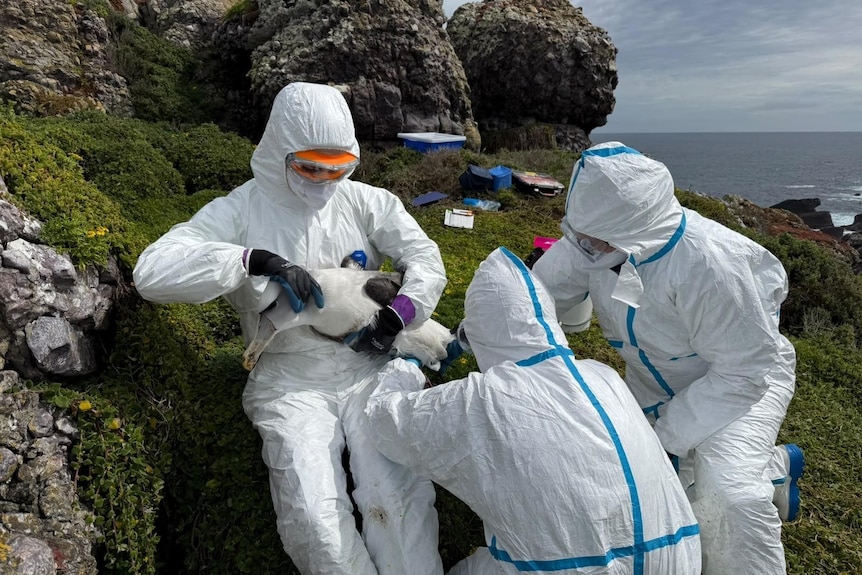
Vaccines are administered by hand after capturing the birds in the wild. (Supplied: NRE Tas)
How are the birds captured and vaccinated?
NRE Tas wildlife biologist Sheryl Hamilton described the process to vaccinate the animals as complex.
“Nesting birds are captured by hand by trained departmental personnel experienced in handling albatross,” she said.
“Birds are held by a staff member while assessed, weighed and vaccinated, with an experienced wildlife vet overseeing the process.”
Temporary non-toxic paint and numbered nest markers are employed to help identify which birds are part of the study, which require a second vaccine also helping assist with remote monitoring in the future.
She said the program will pave the way for what will be done moving forward with vaccinating against the avian flu.
“This controlled vaccination program will help inform future decisions about whether a more comprehensive vaccination strategy could feasibly be used at a population level to play a role in protecting shy albatross from the impacts of H5 bird flu,” she said.
Bird flu in Tasmania
Tasmania has recorded 50 H5 bird flu events across the state to date since the virus was first found in a brown skua in August, with no detections in commercial poultry, backyard flocks or mass mortality events.
Many of the positive events have been found on Bass Strait islands, with 150 little penguins found dead on King Island in late August.
The Department of Natural Resources and the Environment encourages the public to report any sick, dead or injured birds online or via the Emergency Animal Disease hotline on 1800 675 888.
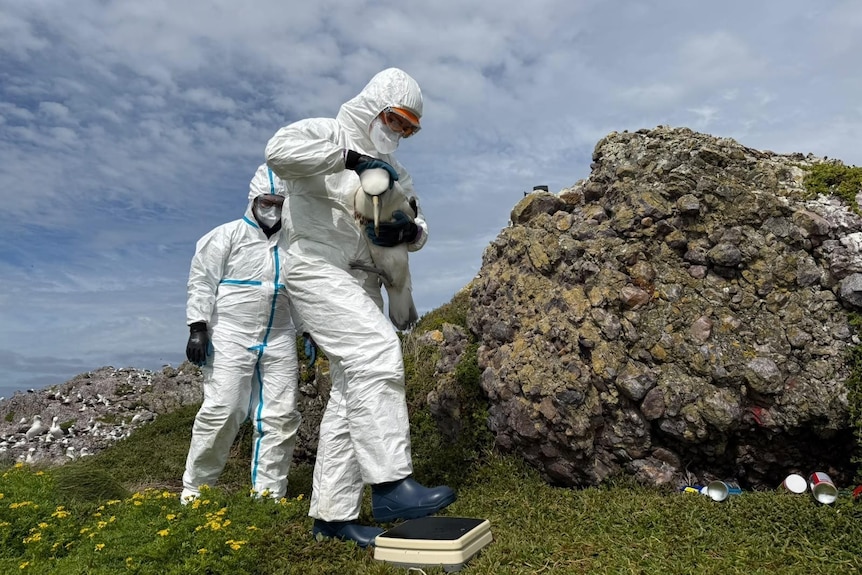
There are only three shy albatross nesting colonies, all on Tasmanian islands. (Supplied: NRE Tas)