
It’s moth season, baby.
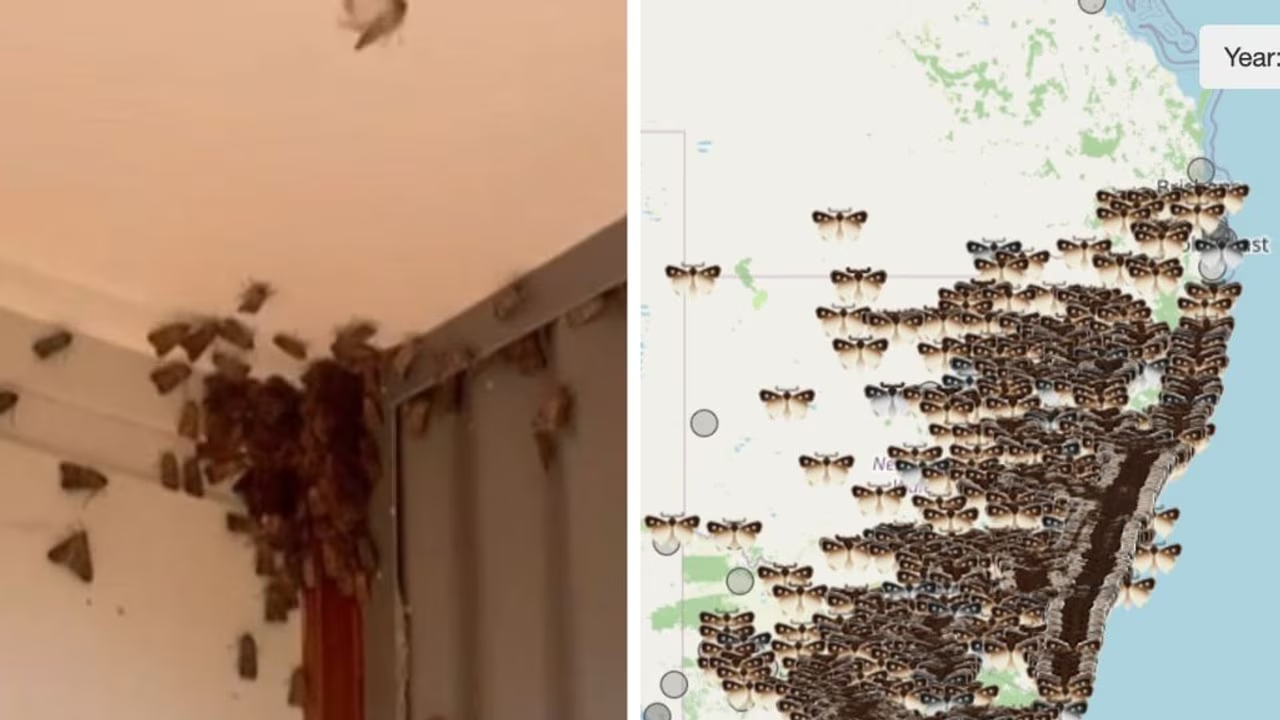
Zoos Victoria’s Moth Tracker map has charted the monstrous amount of new sightings across eastern Australia as millions of bogong moths head for the Alps.
The citizen-science project has recorded 12,000 verified sightings, according to Zoos Victoria senior conservation biologist Dr Marissa Parrott, who says the fluttering visitors are cause for celebration.
It’s not great if you’re an insectophobe, but wildlife experts are saying the sightings are great news.
“We’re seeing wonderful healthy numbers again after lower years,” she told Sunrise.
“That’s about six times higher than our previous best seasons. It’s just wonderful to see the numbers coming back to where they should be and everyone enjoying a visit from an endangered species.”
Swarms have already descended on NSW South Coast homes, with strong winds pushing migrating moths towards the coast and artificial lights drawing them into built-up areas.

University of Sydney entomologist Professor Dieter Hochuli explained how artificial light from major metro areas could be influencing the shift.
“While they’re pretty good flyers, where they end up is affected by the wind, the topography and the presence of artificial light,” he told realestate.com.au.
Homes also offer the dark, cool, sheltered crevices they seek while resting.
Each spring, the moths travel up to 1000km from breeding grounds across south-eastern Australia to cool alpine caves, where they shelter from summer heat. They then return to breed in autumn.
Individual stopovers may last days or weeks, while the broader migration can continue over the coming months.
“They’ll just continue their migration up to those nice, cool caves, to the species that rely on them, like the critically endangered mountain pygmy possums,” Parrott said.
Their return is particularly encouraging after an estimated 99.5 per cent population collapse in 2017–18. Bogong moths were listed as endangered on the IUCN Red List in 2021, and remain threatened by drought, climate change, habitat loss, insecticides and light pollution.
For an insect that can lose its bearings around a porch light, its navigation is otherwise remarkably sophisticated. Research published in Nature last year found bogong moths use the stars as a compass, alongside the Earth’s magnetic field, to guide their long-distance journeys.
Scientists are still piecing together exactly where they travel.
“We have limited knowledge about where Bogong moths go as they move through Australia on their epic migration,” Western Sydney University Associate Professor Kate Umbers said when announcing a tagging project in February.
Residents can help by switching off unnecessary outdoor lights, avoiding insecticides and uploading photographs to Moth Tracker, where experts check the species.
“Enjoy them while they last, while they have a quick feed, and then they will head on by themselves,” Parrott said.