
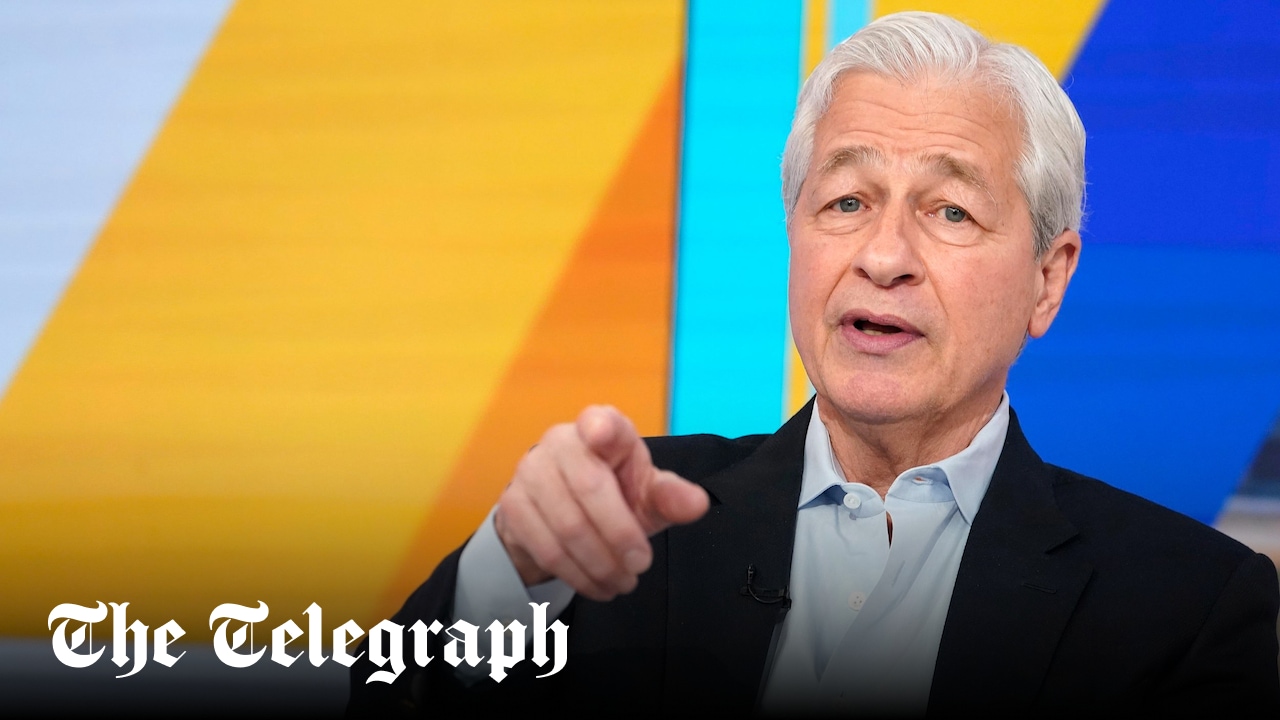
Savers are exposing themselves to major financial risks by allowing AI bots to manage their money, the boss of JP Morgan has warned.
Jamie Dimon, the Wall Street chief executive, said the growing use of autonomous agents to help people with their finances was a problem if the bots got things wrong.
Mr Dimon said customers could end up being liable for mistakes made by any agent acting on their behalf.
“If people are using them, they should understand the risk,” he said. “We have to make sure we protect our customers in the right kind of way.
“We will be building tools to do that too. In the meantime, we’re not going to allow just any outside agent to come in inside the company because that’s just too risky for clients and for JP Morgan.”
The warning from Wall Street puts it into direct conflict with Silicon Valley, which has pushed AI bots as a way to help people with their finances.
OpenAI’s ChatGPT announced a “personal finance experience” for the chatbot’s paid users in the US several months ago.
The tool allows customers to securely connect their financial accounts, see a dashboard of where their money is going and ask ChatGPT questions based on their own finances. Anthropic is also reportedly testing a similar feature, called Claude Money.
More than half of consumers in the UK already use AI tools and a quarter use the technology for financial tasks at least once a month, according to a survey by McKinsey. That figure rises to 59pc among high-income consumers.
There are also increasing concerns that AI could lead to a rapid run on a bank, as agents make it even easier to move cash from one bank to another.
The technology could also hit banks’ profits as AI bots move customers’ cash out of zero-interest current accounts in search of better returns.
Savers could shift up to £700bn out of accounts that offer little or no returns and into savings products on the advice of AI chatbots in the UK, according to consultants at McKinsey.
If just 5pc to 10pc of bank balances are moved this way, the profits lenders make on deposits could drop by a fifth or more.
Mr Dimon said that in the future banks would adjust to new ways of making money, perhaps through subscriptions or other services.
However, he added that there was more risk in the short term, as AI agents are let loose on the financial sector.
“Should regulators be thinking about what they’re going to do with some of these things? Yeah, of course they should,” Mr Dimon said. “It’s a new world and with all these bots and agents, could someone … cause a problem? Maybe.”
The warning came as JP Morgan reported a rare miss on profit in the third quarter of the year, as its bond trading revenue dropped by 4pc year-on-year.
Total trading revenue was $10.3bn for the period, below Wall Street expectations of $10.5bn.
Goldman Sachs also saw a small 1pc drop in bond trading to $3.47bn, significantly lower than expected.
Despite a stand-out performance by the bank’s stock traders, Goldman’s lending to hedge funds beat its trading division for the first quarter on record.