
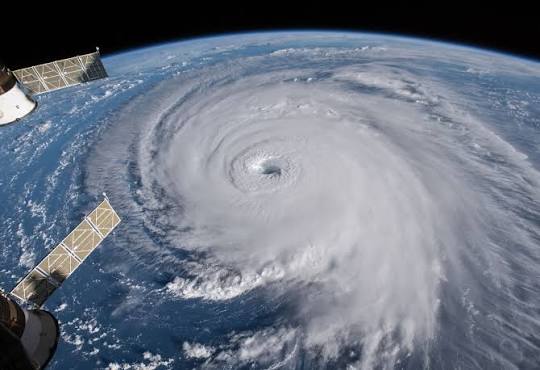
The 2026 eastern Pacific hurricane season now holds the record for the most cyclonic energy released.
According to NOAA, the season’s ACE – or Accumulated Cyclone Energy – reached 318.8 on Sunday evening, overtaking the previous record of 318.1 set in 2018.
It’s no surprise given the parade of major hurricanes that began last month: Lowell, Nolo (which became Typhoon Nolo as it crossed the width of the Pacific), Odalys, the long-lived Polo, and Simon.
Lowell was the first Pacific hurricane to reach Category 5 twice since 2006. Polo went further still becoming the second-strongest hurricane recorded in the eastern Pacific by minimum pressure, and it held Category 5 strength for 78 hours, beating the old record of 60 hours.
It was one of three Category 5s this season – another record – along with Genevieve and Lowell.
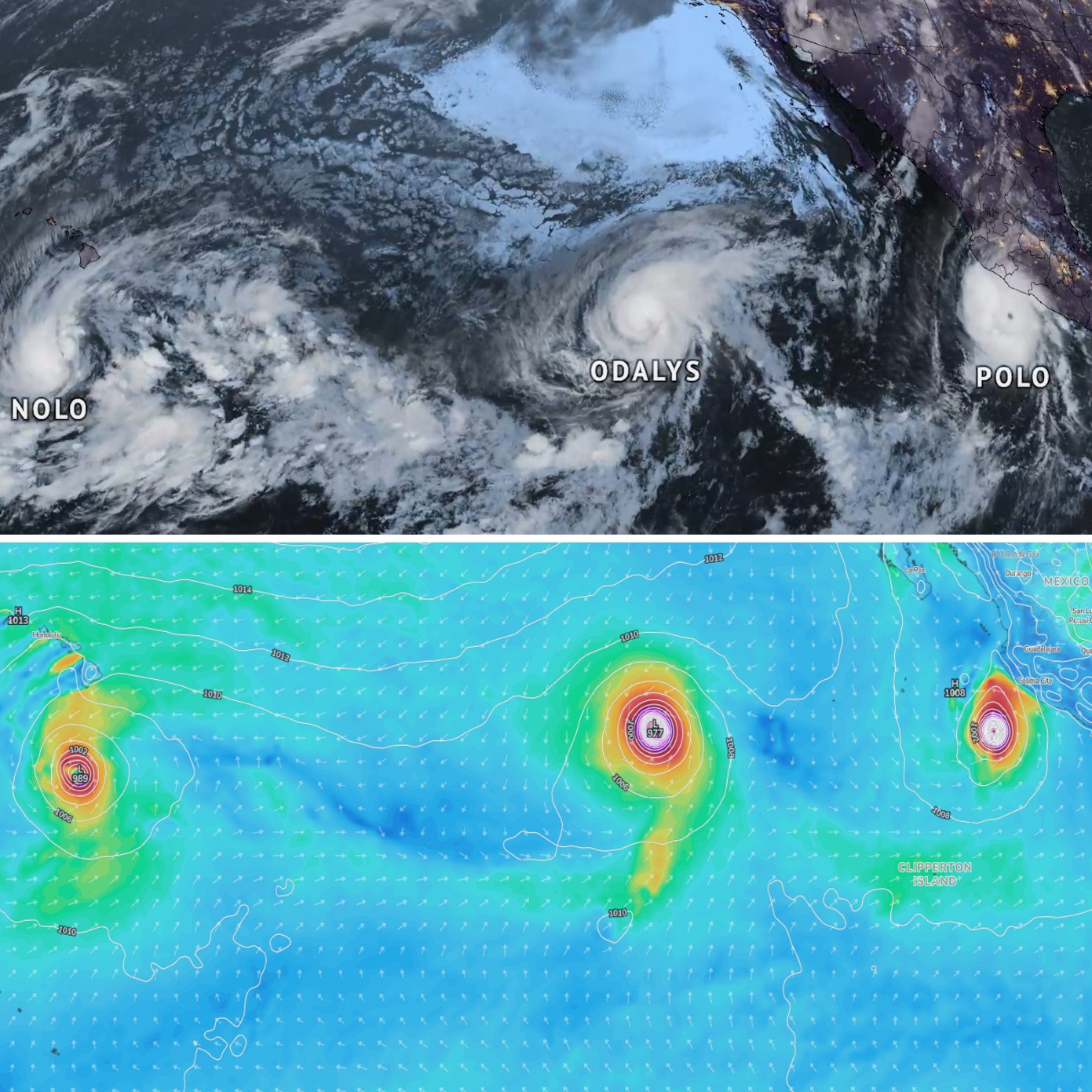
Hurricanes Nolo, Odalys, and Polo lined up across the eastern Pacific on September 27th (GFS/NOAA)
Tellingly, there have been 22 named storms, which is 5 fewer than 1992’s record of 27.
So, fewer storms, but stronger ones.
Broadly speaking, ACE is the power of a tropical or subtropical cyclone multiplied by how long it lasts.*
An average eastern Pacific season produces an ACE of 132.7, so 2026 is already more than twice as active as normal. The season still has six weeks to run.
As we write, Tropical Storm Trudy has formed east of Guatemala and is expected to reach hurricane strength, possibly major, in the next few days, while another storm, to be named Vance, is forming east of central Mexico.
*ACE is a wind energy index. It’s calculated by squaring each storm’s maximum sustained surface wind speed (in knots) every six hours while it is at least tropical-storm strength, adding those values up, and dividing the total by 10,000.