
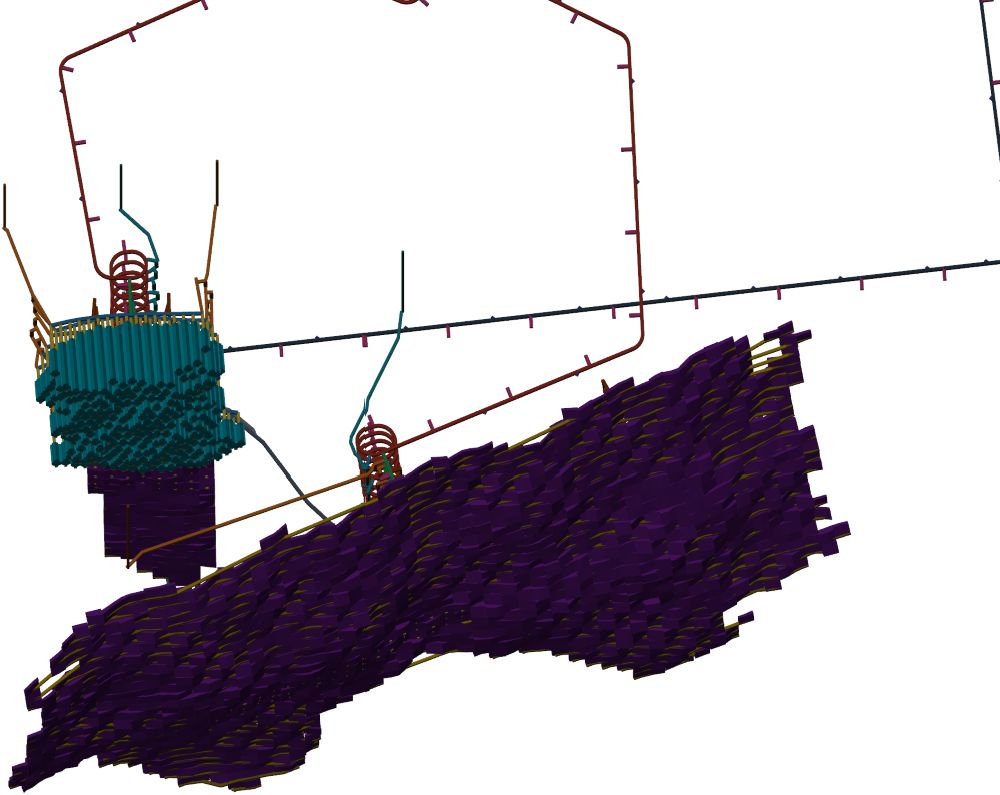
Bergbau is looking to enable mining engineers to to turn plain-language instructions into mine designs, production schedules and reports with the launch of its Planning Agent.
In its Planning Agent training demonstration, the platform carried a study from block model through optimisation, design, sequencing and resource-constrained scheduling to reporting in about a working day, compared with the conventional work duration of months.
Bergbau explained: “The opportunity is a dramatic increase in engineering capacity. Work that would normally occupy a planner for days can be tackled during a conversation, with several jobs moving forward at once. One session can run stope optimisation while another designs declines and a third investigates a production schedule.”
In the Planning Agent workflow, engineers give the direction and refine the results. They can ask for a different layout, investigate why production is delayed, change the scheduling priorities and compare the resulting cases. Designs and schedules remain available
in familiar mining software for inspection and further work, Bergbau said.
Bergbau has two thin connection layers: a Model Context Protocol (MCP) interface that makes capabilities available to the AI assistant, and a software interface that connects the work to the mining packages engineers already use.
The real value sits behind those interfaces, according to the company, with purpose-built design tools, calculation and optimisation engines, technical mining knowledge and complete workflows.
“Bergbau supplies the relevant tools and engineering guidance at the point the AI needs them,” the company added. “That allows it to interpret project criteria, select parameters, run alternatives and bring the results back into the planning environment. Teams can build their own repeatable processes on this foundation.”
The Planning Agent supports underground design and redesign, as well as open-pit workflows from optimisation through pushbacks, mining blocks, sequencing and schedule creation. It can read existing project files, investigate schedule bottlenecks, change priorities, assign resources and re-level cases. It also gives the AI access to the mining data needed for dashboards, presentations and reports.
Recurring jobs such as planning updates and reconciliation can be captured as reusable site workflows, retaining the steps and criteria that make each operation different, Bergbau said.