
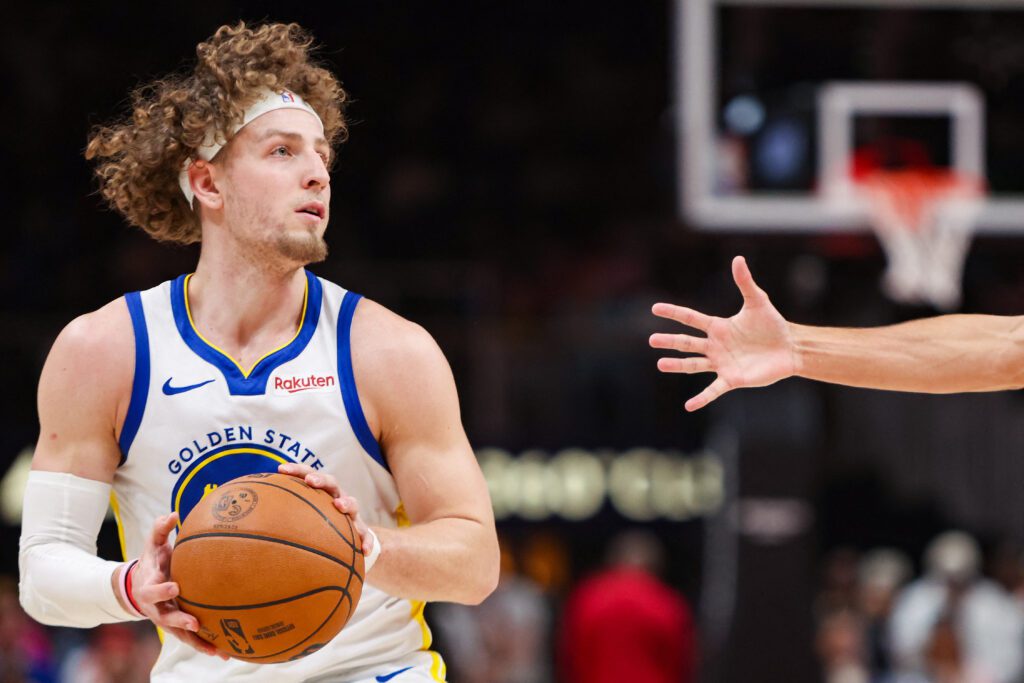
NBA contracts are getting pretty crazy, and some teams might already be nervous about the money they just spent. We’re talking about guys getting $100.0 million, $150.0 million, or even $200.0 million without being established superstars, and now they’ve got to prove they’re actually worth all that money.
Trae Young just got $212.0 million after playing only 15 games last season, Walker Kessler landed $130.0 million with the Lakers, and the Warriors gave Brandin Podziemski $110.0 million even though he’s never averaged 15 points per game. I mean, those are some pretty big contracts for players who still have a lot to prove.
And it’s not like these guys are bad players, because most of them had good seasons before getting paid. But there’s a difference between being a good starter and making $40.0 million or $50.0 million every year, especially when your team is expecting you to help win playoff games.
I think these six players have the most to prove heading into the 2026-27 season, and if they don’t take another step forward, their contracts could start looking pretty bad much sooner than expected.
1. Trae Young, Wizards
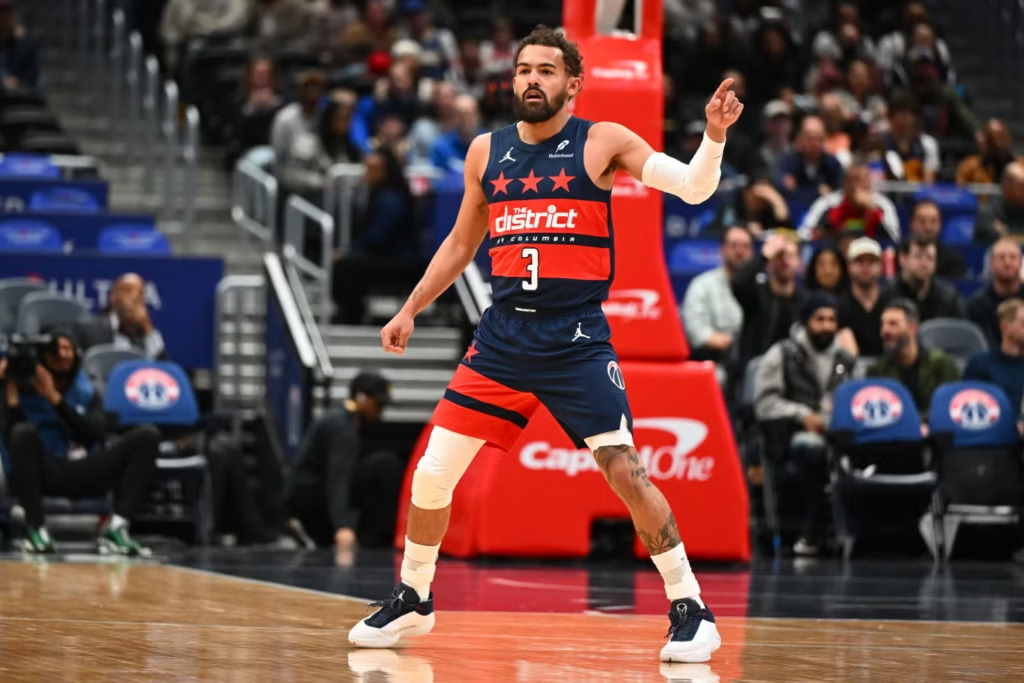 Mandatory Credit: Brad Mills-Imagn Images
Contract: 4 years, $212.0 million
I’m still trying to understand how Trae Young got $212.0 million after the season he just had. I get that he’s a four-time All-Star who used to average almost 30 points per game, but giving someone $53.0 million annually after he played only 15 games is a pretty crazy decision by the Wizards.
Young averaged just 17.9 points, 2.0 rebounds, and 8.0 assists last season, shooting 45.8% from the field and 33.8% from three. He dealt with injuries for most of the year, played only 10 games with the Hawks before getting traded, and appeared in another five with the Wizards. That’s basically an entire season lost, and Washington still decided to give him superstar money.
And remember, the Wizards acquired him for CJ McCollum and Corey Kispert in January. That’s not exactly a huge trade package for someone who was supposed to be one of the best point guards in basketball, but Young’s value had clearly dropped after all the injuries and his defensive problems.
To be fair, there’s a reason the Wizards are willing to take this gamble. Young averaged 29.6 points and 9.3 assists in 2019-20, led the Hawks to the Eastern Conference Finals in 2021, and finished 2024-25 with 24.2 points and a league-leading 11.6 assists. He’s already shown he can carry an NBA offense, and there aren’t many players who can create that many shots for their teammates.
But that version of Young needs to come back pretty quickly. His scoring dropped by more than six points per game last season compared to 2024-25, his three-point shooting hasn’t been great lately, and he’s still one of the smaller guards in the league. If he’s not scoring 25 or 30 points, his defensive limitations become a much bigger problem.
The Wizards also have Anthony Davis, AJ Dybantsa, Alex Sarr, and several young players who could benefit from playing with an elite passer, so Young has a pretty good chance to put up huge assist numbers again. I’d want something around 24 points and 10 assists, along with at least 65 or 70 games.
I don’t think Washington can feel good about paying him $53.0 million to average 18 points again, especially if the Wizards miss the playoffs. Young has been an All-NBA player before, but now he’s getting paid like one of the best players in the league, and he has to actually play like it.
2. Jalen Duren, Pistons
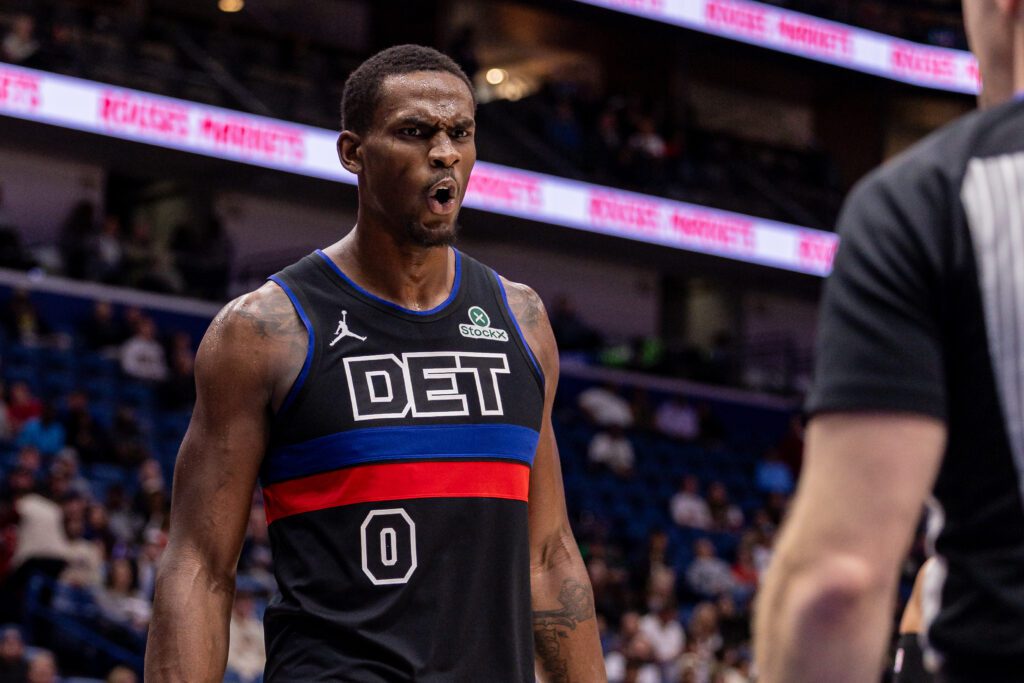 Jan 21, 2026; New Orleans, Louisiana, USA; Detroit Pistons center Jalen Duren (0) reacts to a play against the New Orleans Pelicans during the second half at Smoothie King Center. Mandatory Credit: Stephen Lew-Imagn Images
Contract: 5 years, $200.0 million
The whole Jalen Duren contract situation was a mess, and I know he made his first All-Star team, earned All-NBA Third Team honors, and helped the Pistons win 60 games. But you already know how I feel: so many players were injured and couldn’t reach the 65-game floor for the All-NBA, which basically cleared the way for Duren. And on top of that, he pushed for a massive contract all offseason, with negotiations getting so ugly that he almost ended up playing on the qualifying offer.
According to Shams Charania, the Pistons went from offering somewhere between $170.0 million and $190.0 million to finally agreeing on a five-year, $200.0 million extension. There was even that whole issue involving a proposed weight clause, which was eventually dropped from negotiations.
That’s a lot of trouble for a player the Pistons clearly wanted to keep, and now Duren has to show why he was worth all of that crisis. His regular-season numbers were excellent, with 19.5 points, 10.5 rebounds, and 2.0 assists per game on 65.0% from the field. He was one of the most efficient centers in the league, and the Pistons finished 60-22 with the best record in the East.
But then the playoffs happened, and that’s where I started having some doubts about his game. Duren dropped to 10.2 points, 8.5 rebounds, and 2.1 assists across 14 postseason games, shooting only 51.4% from the field. That’s almost half his regular-season scoring, and the Pistons ended up losing to the Cavaliers in the second round.
I know he’s only 22, and I’m not expecting him to become Nikola Jokic overnight, but $40.0 million per season is a huge amount of money for a center who still has to prove he can score consistently in the playoffs, especially when his offense depends so much on finishing around the rim and getting good passes from Cade and zero self-creation.
And it’s not like Detroit can just wait forever for him to figure everything out. Cunningham is already an All-NBA player and MVP candidate, the Pistons have one of the best young teams in basketball, and they’re trying to compete for a championship now. Duren needs to become someone they can trust against the best defenses, not just a center who puts up 20 and 10 during the regular season.
I’d love to see him get close to 21 points and 12 rebounds while becoming a better rim protector. His offense is already pretty good with a floor general running things, but the defense and playoff scoring are what could make him worth that $200.0 million.
I still think he’ll be fine because he’s so young, but after everything that happened with his extension, another disappointing playoff run would definitely get people talking about that deal as a huge mistake.
3. Austin Reaves, Lakers
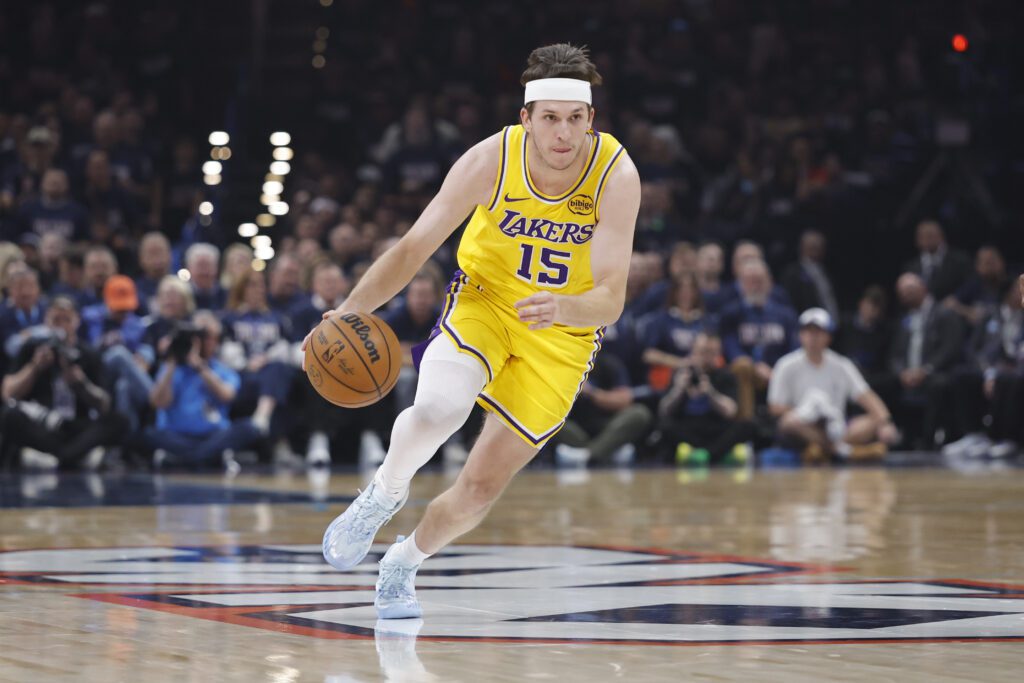 Mandatory Credit: Alonzo Adams-Imagn Images
Contract: 4 years, $180.0 million
Austin Reaves getting $180 million is one of the coolest stories in the NBA, especially because he entered the league undrafted in 2021. But I also think there’s a pretty good chance people start questioning that contract if the Lakers don’t win enough games this season.
Reaves had an awesome 2025-26 campaign, averaging career highs of 23.3 points, 4.7 rebounds, and 5.5 assists while shooting 49.0% from the field and 36.0% from three. He even dropped 51 points against the Kings in October, and he was basically an All-Star-level player whenever he was healthy.
The problem is that he played only 51 games because of injuries, and the Lakers still got swept by the Thunder in the second round. Reaves averaged 20.0 points in the playoffs, which isn’t bad, but now he’s making the kind of money usually reserved for players who can consistently carry their teams deep into the postseason.
His new contract starts at $41.3 million this season and includes a $51.2 million player option for 2029-30. That’s a massive jump from the $14.9 million player option he declined, and he’s going to have much more responsibility now that LeBron is gone and Doncic pushed so hard to keep him off trade talks.
I actually think Reaves could put up even better numbers this season because the Lakers don’t have a third star taking so many shots anymore. Luka is still the main guy after averaging 33.5 points, 7.7 rebounds, and 8.3 assists last season, but Reaves should have plenty of chances to score 25 points on a normal night.
Still, the Lakers have a problem with their backcourt defense. Doncic and Reaves are great offensively, but neither is an elite perimeter defender, and paying both huge money means the rest of the roster has to cover for them. That’s also why the Lakers added Walker Kessler and Quentin Grimes, because they needed better defensive players around their two stars.
For me, Reaves needs to average around 25 points and 6 assists while playing at least 70 games. I’d also want to see him make an All-Star team, because if you’re getting paid almost $50.0 million annually, you should probably be one of the best 25 or 30 players in the world.
I like Reaves a lot, and I think he’ll have another great season. But if he drops back to 20 points per game while the Lakers struggle to win playoff games, that new deal won’t look nearly as good as it does right now.
4. Walker Kessler, Lakers
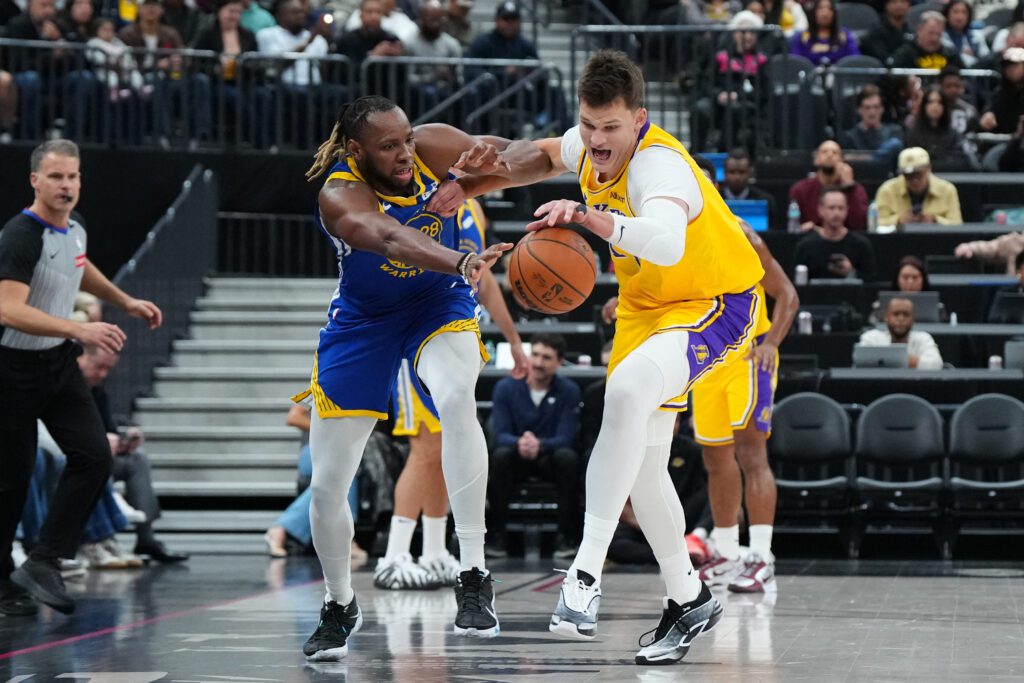 Oct 13, 2026; Las Vegas, Nevada, USA; Golden State Warriors center Charles Bassey (28) and Los Angeles Lakers center Walker Kessler (14) chase after the ball in the second quarter at T-Mobile Arena. Mandatory Credit: Candice Ward-Imagn Images
Contract: 4 years, $130.0 million
I think the Lakers took an even bigger gamble with Kessler than they did with Reaves, because they didn’t just give him $130.0 million. They also traded two unprotected first-round picks in 2031 and 2033, along with first-round pick swaps in 2028 and 2030, to get him from the Jazz.
That’s a ridiculous amount of draft capital for someone who’s never made an All-Star team, especially when he’s coming off a season where he barely played. Kessler appeared in only five games last year because of a torn labrum in his left shoulder, and now the Lakers are paying him $32.5 million per season.
Of course, I understand why they wanted him. Kessler averaged 11.1 points, 12.2 rebounds, and 2.4 blocks in 2024-25, shooting 66.3% from the field. He’s one of the best rebounders and shot-blockers in basketball when healthy, and the Lakers have needed someone like that for a while.
Last season, the Lakers ranked 27th in rebounds and 19th in defensive rating, which is pretty bad for a team that finished 53-29. They were also getting destroyed on the glass against bigger teams, and that became an even bigger problem in the playoffs against the Thunder.
Kessler should fix some of that immediately, and playing with Doncic is going to make his life pretty easy offensively. He won’t need to create his own shots, because Luka should be able to find him around the basket all game, and I’d expect his scoring numbers to improve from the 11.1 points he averaged in his last healthy season.
But here’s my problem with the contract: you can find centers who average 10 points and 10 rebounds without spending $130.0 million and four valuable draft assets. The Lakers aren’t paying Kessler just to grab rebounds, they’re paying him to become one of the best defensive centers in the NBA.
I’d want at least 13 points, 12 rebounds, and 2 blocks per game, along with 65 or 70 appearances. And more importantly, the Lakers need to finish much higher than 19th in defensive rating, because if their defense doesn’t improve, what was the point of spending all that money?
I think Kessler has a pretty good chance to make an All-Defensive Team if he stays healthy, and that would make the trade look much better. But another injury-filled season would be a disaster, especially considering what the Lakers gave up to bring him in.
5. Ayo Dosunmu, Timberwolves
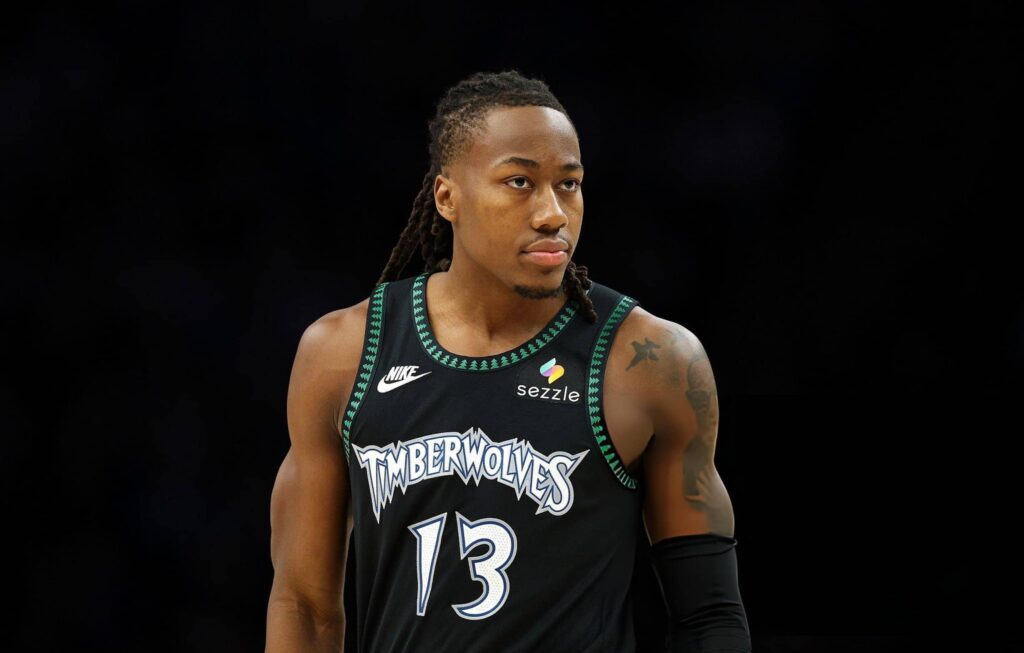 Mandatory Credit: David Berding/Getty Images)
Contract: 5 years, $112.0 million
Ayo Dosunmu getting $112.0 million was pretty surprising to me, because I never really saw him as someone who’d make more than $20.0 million per year. He’s a good player, and I like what he did with the Timberwolves last season, but five years is a long time to commit that much money to a guy who’s never averaged 15 points per game.
Dosunmu finished 2025-26 with career highs of 14.8 points, 3.4 rebounds, and 3.6 assists across 69 games, shooting an impressive 51.7% from the field and 43.9% from three. Those are excellent percentages for a guard, and it’s pretty obvious why Minnesota wanted to keep him.
After getting traded from the Bulls in February, he averaged 14.4 points, 4.2 rebounds, and 3.5 assists in 24 games with the Timberwolves. He also had that crazy 43-point game against the Nuggets in the first round, helping Minnesota win the series in six games.
But I wouldn’t pay someone $112.0 million because of one incredible playoff performance, and the second round showed why. Against the Spurs, Dosunmu dropped to 9.4 points per game while shooting just 36.0% from the field and 27.8% from three, and the Timberwolves got eliminated in six games.
That’s a pretty big difference, and I don’t think anyone should expect him to shoot 43.9% from three every season. His career average is closer to 38.0%, which is still good, but there’s a big difference between being an elite shooter and just being a solid one.
Minnesota also has a pretty crowded rotation now. LaMelo Ball arrived during the offseason, Anthony Edwards is still the franchise player, and the team added Jonathan Kuminga while keeping Donte DiVincenzo after his Achilles injury. They’ve got a lot of guards and wings who need minutes, and Dosunmu probably won’t start for them.
For $22.4 million per season, I’d want him to average at least 15 points while keeping his shooting around 40.0% from three. He also needs to be more consistent in the playoffs, because Minnesota isn’t paying him to disappear when Edwards needs help scoring.
I don’t hate this contract, but I think the Timberwolves paid him based on his best stretch, and now he has to prove that wasn’t just a career year he won’t repeat. If his scoring drops to 12 or 13 points, it’s going to be pretty hard to justify spending $112.0 million on him.
6. Brandin Podziemski, Warriors
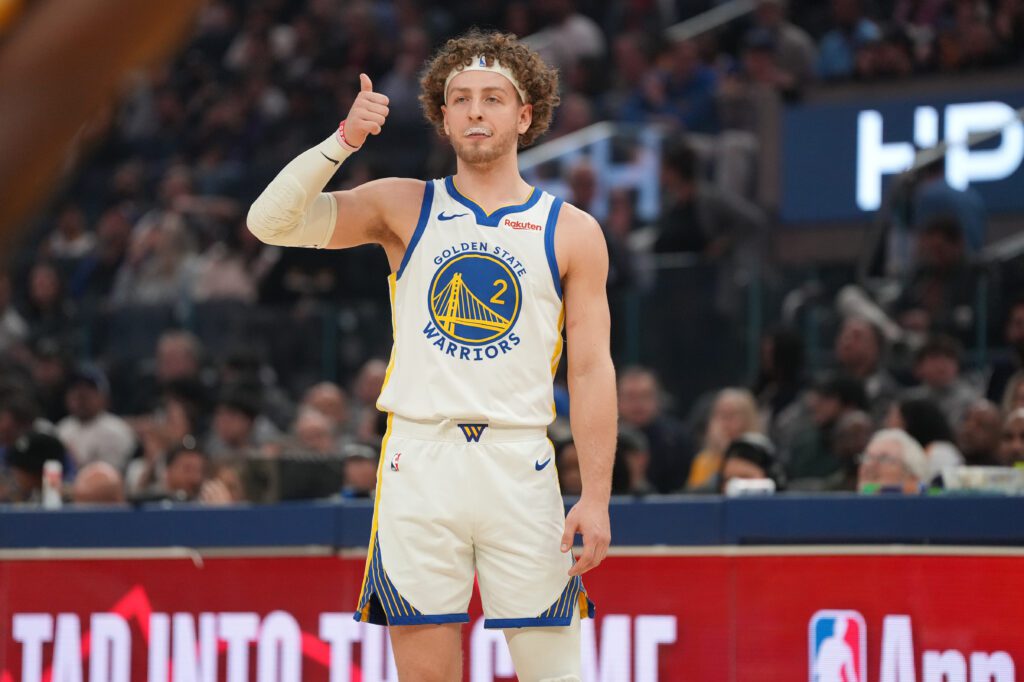 Apr 9, 2026; San Francisco, California, USA; Golden State Warriors guard Brandin Podziemski (2) gestures to a teammate during a timeout against the Los Angeles Lakers in the first quarter at the Chase Center. Mandatory Credit: Cary Edmondson-Imagn Images
Contract: 5 years, $110.0 million
The Warriors giving Brandin Podziemski $110.0 million might be one of the biggest gambles of the offseason, and I don’t think I would’ve done it. He’s a good young player, but we’re talking about someone who averaged 13.8 points last season and hasn’t really shown he can become a consistent 20-point scorer.
Podziemski played all 82 games in 2025-26, starting 43, and finished with career highs of 13.8 points, 5.1 rebounds, and 3.7 assists. He shot 45.5% from the field and 37.1% from three, making 153 triples, which was the second-most on the Warriors behind Stephen Curry.
Those are pretty good numbers for a 23-year-old who was drafted 19th overall in 2023, and I understand why the Warriors like him. He’s been healthy, he’s improved every season, and he’s already shown he can contribute with his big IQ and Steve Kerr’s system understanding.
But that’s also why I’m not completely sold on the contract. Podziemski has been a good rotation player, not someone who’s proven he can help carry the team, and the Warriors just finished 37-45 while missing the playoffs. I don’t think averaging 14 points on a losing team automatically makes someone worth $110 million.
His extension doesn’t even start until 2027-28, when he’ll make around $19.0 million, and the salary eventually climbs above $25.0 million in the final year. So Golden State still has time before the deal becomes expensive, but that also means this season is probably the best chance for Podziemski to show what kind of player he’s going to be.
And he should have plenty of opportunities. Curry is already 38 years old, Jimmy Butler is recovering from his ACL injury, and Kristaps Porzingis remains unavailable because of his health issues. The Warriors need someone else to score, and Podziemski might have to become their second offensive option on most nights.
I’d want something close to 18 points, 5 rebounds, and 5 assists per game, especially if he’s getting more minutes and shot attempts. That’s a pretty big jump from last season, but if you’re going to make +$20 million, there has to be some great improvement at some point.
I think Podziemski can become a really good starter, but I’m not convinced he’s going to be an All-Star or anything close to that. If he spends the next few years averaging 13 or 14 points, this contract could become another problem for the Warriors as they try to build their next competitive team.
Golden State clearly believes he’s worth the money, and now it’s his turn to prove them right. I wouldn’t call it a bad contract yet, but I definitely wouldn’t call it a steal either.
Final Thoughts
I think Trae and Kessler have the most pressure out of these six guys, mainly because their teams are taking some pretty serious risks. Young is getting $212.0 million after barely playing last season, while Kessler cost the Lakers $130.0 million and several future first-round picks.
Duren is probably the safest bet here because he’s only 22 and already made an All-NBA team, but I still want to see him play better in the playoffs. Getting $200.0 million after averaging 10.2 points in the postseason is a huge leap of faith, and the Pistons need him to become much more consistent when the games actually count.
Reaves is another player I think will probably be fine, but the Lakers need him to become an All-Star-level second option next to Doncic. That’s what they’re paying him to be, and now that James is gone, there won’t be many excuses if his numbers drop.
Dosunmu and Podziemski might not have the same pressure as those three, but $112.0 million and $110.0 million are still huge contracts for players who’ve never averaged 15 points per game. Both need to show they can handle bigger roles rather than just being solid starters or good sixth men.
If I had to pick the contract most likely to look bad in a couple of years, I’d go with Young. I know he’s been a great player before, but paying someone $53.0 million annually after all those injuries, especially with his defensive limitations, is a pretty scary gamble.
And while Kessler comes with some risks, I think his contract will be worth it if he stays healthy. His archetype is exactly what the Lakers need, and even if his numbers aren’t incredible, he’s pretty much the perfect center for Doncic. That’s also why I understand the Lakers giving up so many first-round picks to get him.
For me, at least two of these six contracts could become problems by the start of next season. Some of these guys will probably have career years and prove they’re worth every dollar, but I wouldn’t be surprised if a few teams are already regretting their decisions by the time next year’s playoffs arrive.