
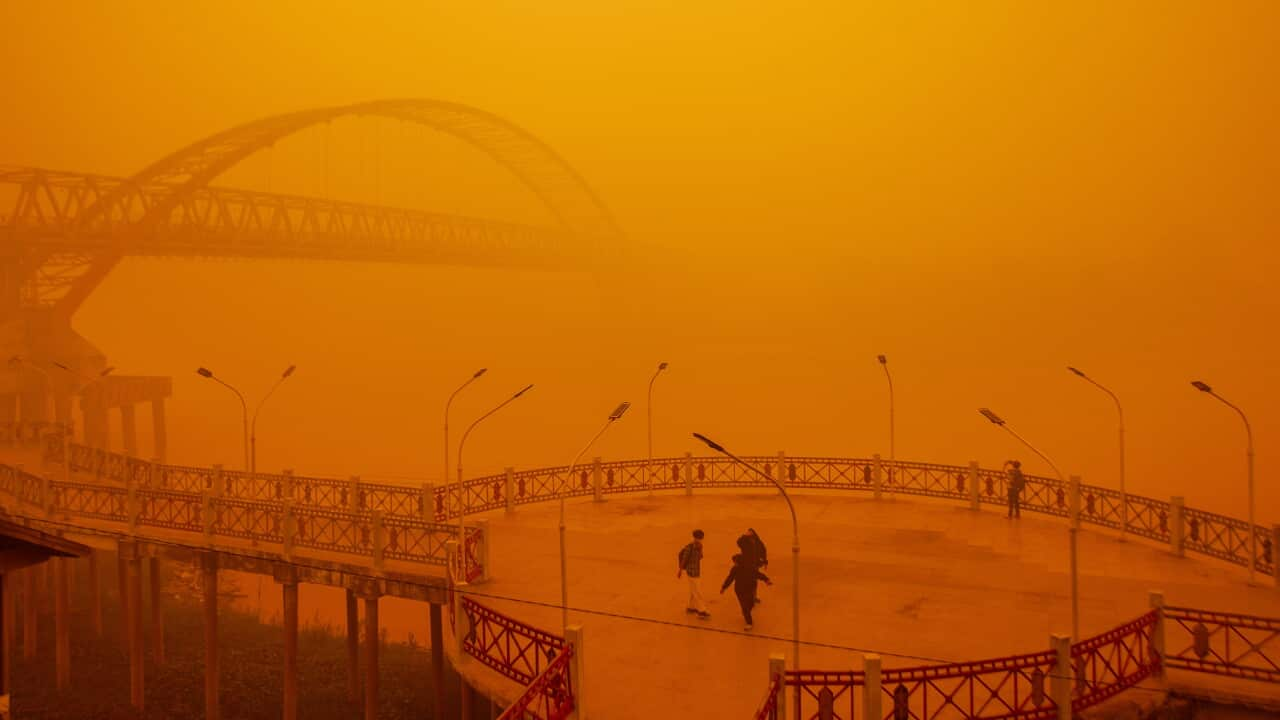
In briefConservation groups are racing to save orangutans in Borneo amid one of Indonesia’s worst wildfires. Pollution levels have risen again and neighbouring countries are badly affected.
Dozens of critically endangered orangutans have been rescued from rampant wildfires burning across Indonesia, as the Borneo residents sue the Indonesian government over negligence in handling the crisis.
The fires have triggered a months-long pollution spell that has closed schools, fuelled a surge in respiratory conditions both among humans and animals, and restricted outdoor activities in Indonesia, Malaysia, Singapore and East Timor.
Pollution levels again ranged from unhealthy to very unhealthy across the region on Sunday, cloaking many areas across southern Southeast Asia in toxic haze.
In Indonesia, groups are working to save wildlife from the fires, including orangutans.
On Saturday, the West Kalimantan conservation agency and Indonesian non-profit YIARI said a team evacuated 51 orangutans from locations in the province from 6 August to 19 October.
Your trusted source for staying up-to-date with the world around you. Get free daily news updates and analysis, straight to your inbox.
Figures from Indonesia’s forestry ministry suggested this week that the number rescued over recent months in Kalimantan could be as high as 96.
The latest rescue came on Saturday, when three conservation agencies rescued a 20-year-old male orangutan in Indonesia’s island of Borneo.
“The evacuation process was carried out with great caution,” the agencies said.
“After the orangutan was sedated, the medical team immediately conducted a health examination before taking the animal to the … rehabilitation centre,” it said.
Indonesia’s transport ministry also said around 2,400 flights across the country have been affected by the haze since mid-August.
“Haze reduces visibility around airports, which can lead to delays, disruptions, and even flight cancellations. Every operational decision is made with safety as the top priority,” the ministry said.
A group of Indonesians sue the government
Meanwhile, a group of residents on Borneo have sued the government of negligence in handling forest fires that have been raging there for more than three months.
The hearings in the case started this week, the group’s lawyer said on Friday.
It accuses 27 individuals and agencies, including the Indonesian president and vice president, the ministries of forestry and environment, and law enforcement officials and local authorities.
READ MORE
Both President Prabowo Subianto and Vice President Gibran Rakabuming Raka have visited areas near the wildfires on Borneo.
Indonesia’s longstanding forest and land fires have worsened this year amid an intensifying El Niño and a prolonged dry season, not only in the Indonesian part of Borneo but also in some regions of Sumatra.
Earlier this week, forest and land fires in Indonesia’s Bangka Belitung province in Sumatra spread into a densely populated residential area, damaging at least 300 houses and forcing the evacuation of 500 people.
‘Unhealthy’ air quality in Singapore
The fire scorched vast expanses of land and has polluted the air as far away as Malaysia and Singapore.
Pollution levels have ranged from unhealthy to very unhealthy across the region on Sunday, cloaking many areas across southern Southeast Asia in toxic haze.
Swiss-based air quality monitor IQAir again ranked Singapore and Kuala Lumpur among the world’s five most polluted major cities.
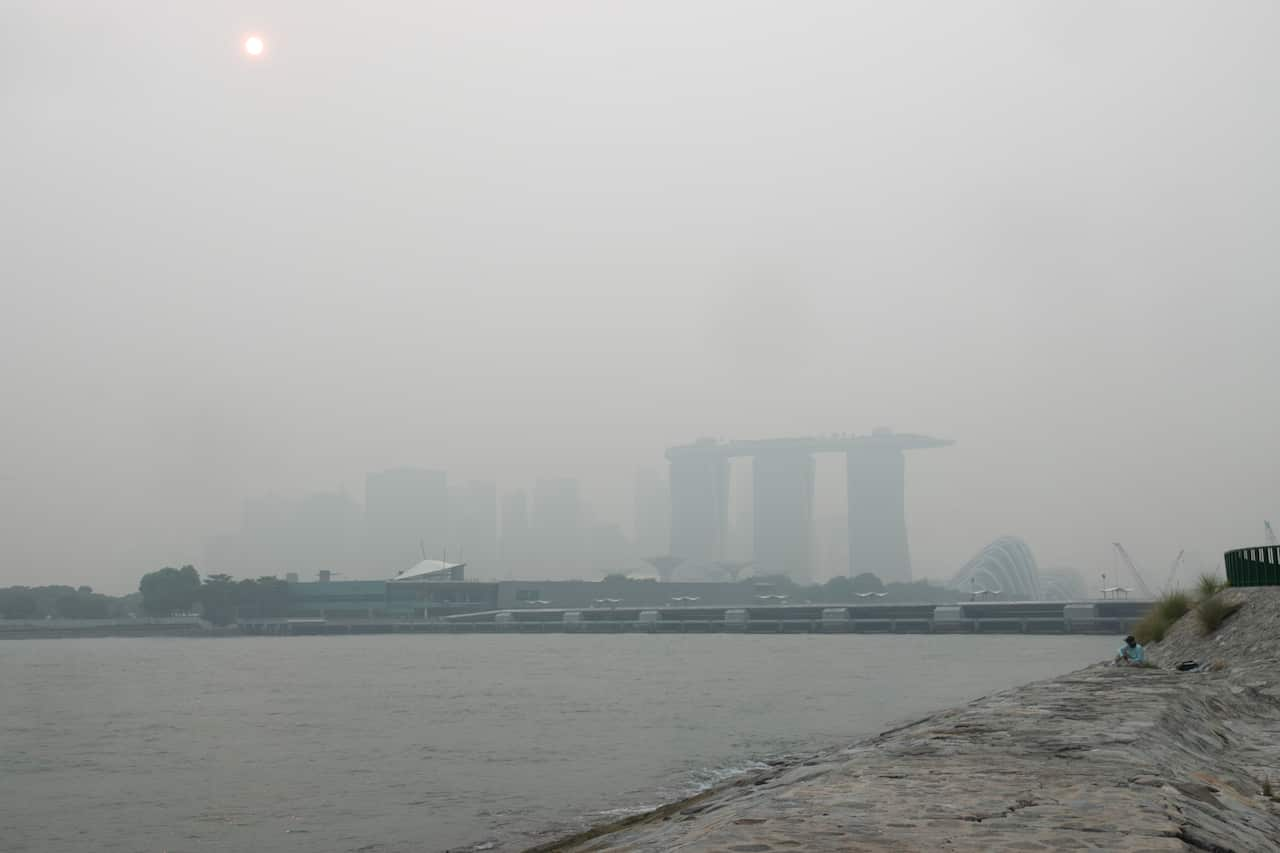 Months of sustained wildfires in Indonesia have blanketed Southeast Asian countries in hazardous haze, with Singapore and Malaysia badly hit. Source: AAP / Then Chih Wey
From 8 am to 9 am local time, the air quality index reached 202, rated “very unhealthy” in Singapore. By noon, it had improved to 163, still in the “unhealthy” range.
At AA Alive, a medical equipment company based just outside of Kuala Lumpur, employees are working at full capacity to deliver oxygen bottles, with officials saying sales were rocketing.
“We have seen a 35 per cent increase in sales because of the haze,” Rafina Firdaus, a member of AA Alive’s sales team, told AFP during a visit.
“When I started in the industry, I was shocked to see so many patients who need oxygen tanks,” she said.
READ MORE
The company supplies patients with both oxygen tanks and oxygen concentrators. An oxygen tank can run for about three hours of continuous use, while a concentrator can be used for about 24 hours.
Md Noor Bin Bujang spent more than a month in hospital and received his first oxygen concentrator on Thursday evening.
He told AFP that without the oxygen-providing equipment he would have “a shortness of breath, especially with the haze”.
For the latest from SBS News, download our app and subscribe to our newsletter.