
At the college level comes a balance between the desire to win hockey games and the desire to develop young players.
Greene’s experience has come vastly in the latter, working in player development. He long said that his job was never coaching, it was never about systems, it was never about the X’s and O’s. It was about playing the game, developing skills and situational abilities that eventually help players to better fit within what a coach is looking for. Ideally at the NHL level.
“Our job isn’t systems at all, it’s figuring out how to play the game,” Greene said of his role in player development. “We’ll continue to work on retrievals, passing, positioning, playing defense. That’s our job in development, is to help these kids play defense, learn the game and how to defend at the next level. If you do that, you gain more trust with your coaches and if you have more, you get more icetime, you get to play more.”
It’s the other side of it, though, that seemed to call him. College hockey feels like the perfect blend of both situations, where a player development background would be helpful, but a coaching mindset is required.
When the Kings made a coaching change last season, Greene was thought of as an option behind the bench. It’s something he clearly had an interest in and when Ken Holland made the change, Greene stepped behind the bench for the remainder of the regular season. If you ask those who he coached, in a short period, they felt he was up to the task.
“He brings so much intensity and when you’re a player, you feel it from him,” defenseman Mikey Anderson said. “There’s times when he’s so fired up where you want to go run through a brick wall with him, like he’s right there in the fight with you. It took him a little bit to figure that out as a coach, but he was open right away that he was going to help us and we’d help him. I thought he did a great job. If he wants to coach, I think he could do it for a long time.”
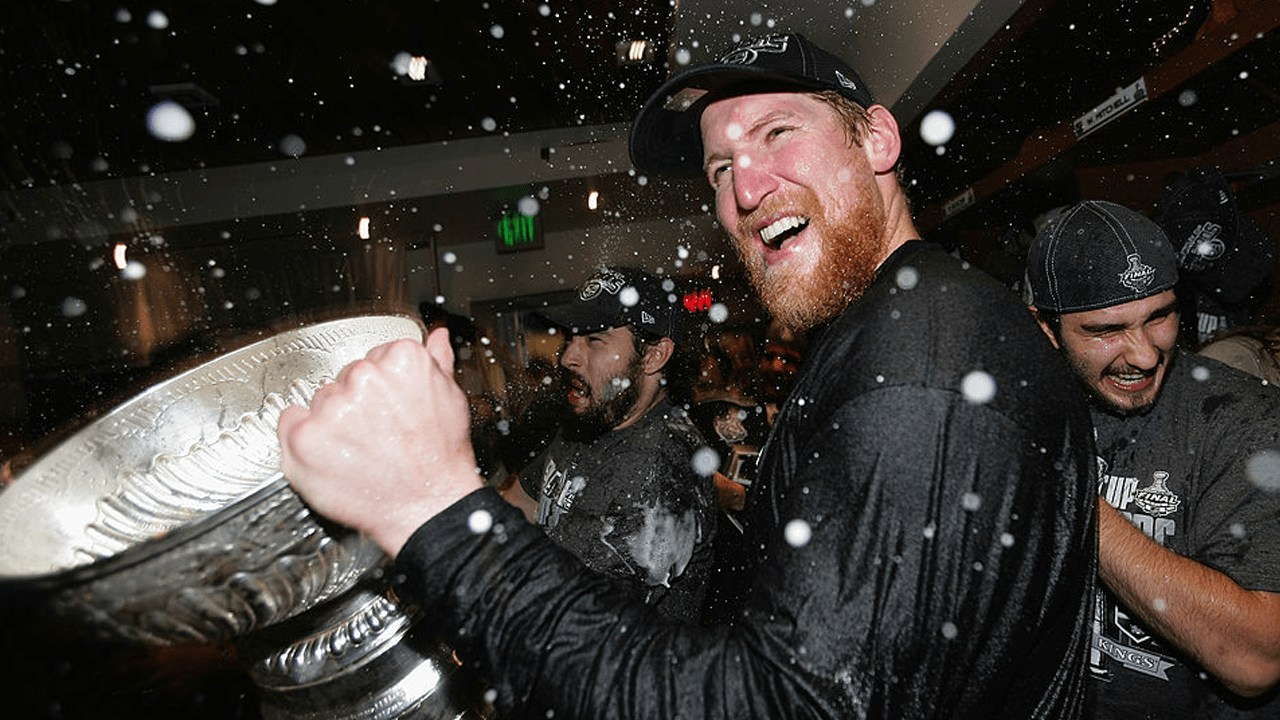
I wasn’t here when the Kings won a pair of Stanley Cup championships. But those who were talk about the impact that a player like Greene had. He wore an “A” on his jersey, but with younger players leading the way, Greene was the hardened veteran offering up support behind them. Taking on some of the tougher moments to allow those younger players to thrive. Anze Kopitar, the best player on two championship clubs, called Greene a “big part of winning teams”. I know that many shared his beliefs.
I’ve heard from a few people, who were following the organization all those years ago, who felt the trade acquiring Greene and forward Jarret Stoll from Edmonton in 2008 was perhaps the biggest move made towards changing the culture in Los Angeles. It came a full seasons before 2011-12, but it helped to start to build the framework.
Greene and Stoll both played important depth roles on the championship teams. Both players, on the ice, were good players. But they were important off the ice too. Guys who continued to garner mentions over the years from other players, with the lessons they helped imprint on younger players, who grew into full-time NHL’ers, continuing to surface.
I’ll wish Matt Greene the best of luck. He’s a great person who was always good to the staff here. Unlike when Greene himself would speak, there’s no sarcasm in that statement. A good man, certainly, who I’ll be rooting for in his next chapters. Perhaps getting the experience here leads him back to the Kings organization one day behind the bench or maybe another within the NHL. Greene has spent the bulk of his post-playing career working with and trying to develop younger players. There’s a lot that goes into that. Now he’ll move behind a bench for the first time on a full-time basis, doing exactly what he’s always done, just in a different context.
Happy Trails, Greener. Never much rooted for Arizona State. Mostly to bother proud Sun Devils alum Josh Schaefer. Might just have to change course for the hockey program.