
By Andrew Clarke
Date posted: 20 October 2026
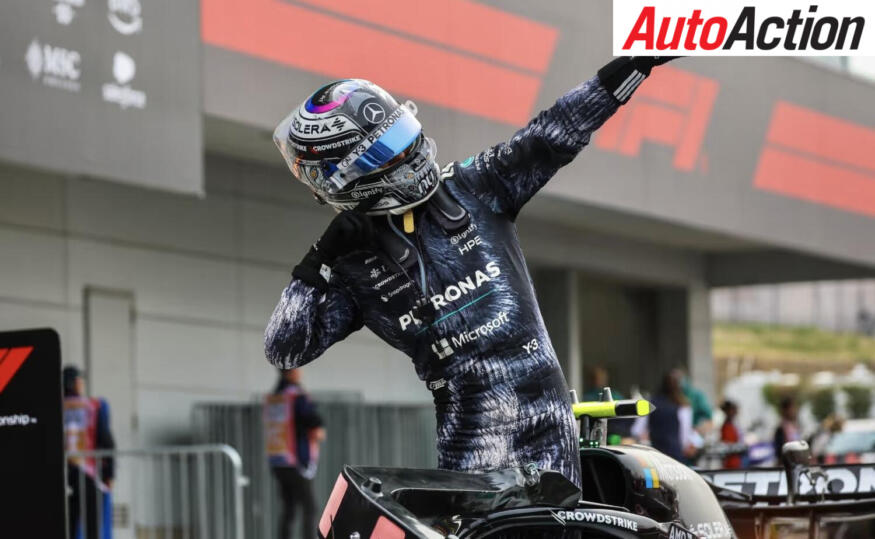
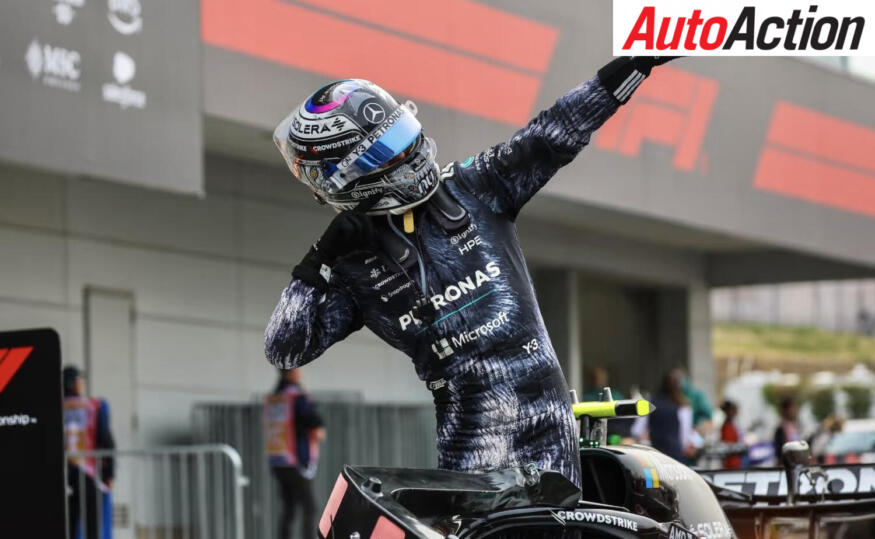
Kimi Antonelli could become Formula 1’s youngest world champion at this weekend’s United States Grand Prix, but the Mercedes driver needs more than another victory to settle the championship with five races remaining.
Antonelli arrives at the Circuit of the Americas with his first opportunity to clinch the 2026 Formula 1 World Drivers’ Championship, holding a commanding 102-point advantage over Mercedes teammate George Russell.
With six Grands Prix remaining and 150 points still available, the championship could be decided in Austin on Sunday, 25 October, provided Antonelli wins and his closest challengers fail to score heavily.
The equation is straightforward: Antonelli must win, Russell must finish ninth or lower, and Ferrari’s Lewis Hamilton must finish fifth or lower.
That combination would leave Antonelli at least 125 points clear with five races remaining, giving him the championship on countback even if a rival matched his total by winning every remaining race.
F1 championship standings before Austin
Only six drivers remain mathematically capable of winning the title. Antonelli’s closest challengers are Russell and Hamilton, although Max Verstappen has made the late-season picture more interesting with consecutive victories in Malaysia and Singapore.
Pos
Driver
Points
Behind
Maximum*
1
Kimi Antonelli
340
–
490
2
George Russell
238
102
388
3
Lewis Hamilton
229
111
379
4
Max Verstappen
221
119
371
5
Charles Leclerc
215
125
365
6
Lando Norris
201
139
351
*Theoretical maximum if each driver individually wins all six remaining Grands Prix. Standings after the Singapore Grand Prix on 11 October 2026.
How Antonelli can clinch the championship
The United States Grand Prix is a conventional race weekend, with no Sprint and a maximum of 25 points available.
Antonelli needs to increase his lead over Russell by at least 23 points, while also extending his advantage over Hamilton by at least 14 points.
Victory would take Antonelli to 365 points. Russell would then need to finish eighth or better to remain mathematically in contention, while Hamilton would need fourth or better.
Verstappen, Leclerc and Norris would all be eliminated if Antonelli wins, regardless of their finishing positions.
United States Grand Prix title scenarios
Antonelli
Russell
Hamilton
Championship outcome
1st
9th or lower
5th or lower
Antonelli champion
1st
8th
5th
Russell survives
1st
9th
4th
Hamilton survives
1st
8th
4th
Both remain in contention
2nd or lower
Any
Any
Championship remains open
Calculations based on the current standings, standard Grand Prix points and championship countback rules.
The significance of ninth place for Russell is that it is worth only two points. Combined with an Antonelli victory, that would leave the Mercedes drivers separated by exactly 125 points.
Antonelli would then have nine Grand Prix victories for the season. Russell currently has three and could finish the year with no more than eight, even if he won all five remaining races. That makes the countback decisive.
Hamilton finishing fifth would give him 10 points, leaving him 126 behind Antonelli and mathematically eliminated.
What keeps the F1 championship alive?
There are three straightforward ways the championship can extend beyond Austin.
Antonelli fails to win
Even if Russell and Hamilton both fail to score, a second-place finish would give Antonelli only an 18-point gain and leave Russell within 120 points of the lead, with 125 still available.
In other words, Antonelli cannot clinch the championship in Austin without winning the Grand Prix.
Russell finishes eighth or better
If Antonelli wins and Russell finishes eighth, the championship gap would be 123 points. Russell would remain mathematically alive, although he would need to win every remaining race and hope Antonelli scored almost nothing.
Hamilton finishes fourth or better
Even with an Antonelli victory, fourth place would leave Hamilton 124 points behind and keep his championship challenge alive by the narrowest of margins.
The result for Verstappen is particularly interesting. If Antonelli wins and Verstappen finishes second, the Dutchman would still fall 126 points behind, ending his mathematical challenge.
However, a third consecutive Verstappen victory would prevent Antonelli from securing the championship this weekend.
Norris, the most distant of the six contenders, faces a much tougher equation. Even if the McLaren driver wins in Austin, Antonelli must finish fifth or lower for Norris to remain mathematically in contention.
Antonelli’s remarkable 2026 season in numbers
The 20-year-old Italian has established a commanding championship lead through a combination of outright speed and consistency.
Statistic
2026 total
Championship points
340
Grand Prix victories
8
Grand Prix podiums
14
Pole positions
6
Grand Prix fastest laps
7
Grand Prix win rate
47.1%
Podium finish rate
82.4%
Sprint points
31
Championship lead
102 points
Antonelli has won eight of the opening 17 Grands Prix, taken 14 podiums and qualified on pole six times. His 340-point haul includes 31 points from the six Sprint races.
He established his championship lead with consecutive victories in China, Japan and Miami, followed by wins in Canada and Monaco. Further successes came in Belgium, Italy and Spain.
His most recent three Grands Prix have produced fifth in Azerbaijan, second in Malaysia and third in Singapore.
Meanwhile, Verstappen has won the last two races, underlining that Antonelli is not guaranteed the Austin victory he requires.
How many races remain after Austin?
Five Grands Prix are scheduled after the United States Grand Prix, with a maximum of 125 championship points still available.
Round
Grand Prix
Date
Points
19
Mexico City
1 November
25
20
São Paulo
8 November
25
21
Las Vegas
21 November
25
22
Qatar
29 November
25
23
Abu Dhabi
6 December
25
Total points remaining
125
All five remaining events are scheduled as conventional Grands Prix, with no further Sprint points available.
That is why Austin represents the first opportunity to decide the championship. The 125-point threshold is the key to every calculation.
There remains some uncertainty surrounding the final two scheduled events in Qatar and Abu Dhabi because of the regional security situation. Formula 1 intends to run both races, although contingency arrangements have been considered should either event become impossible to stage.
The Austin championship calculations are based on the currently scheduled six remaining Grands Prix.
Antonelli chasing Formula 1 history
Antonelli turned 20 on 25 August and would smash the record for Formula 1’s youngest World Champion, currently held by Sebastian Vettel, who claimed his first title in 2010 aged 23 years and 133 days.
An Antonelli championship would also end Italy’s 73-year wait for a Formula 1 drivers’ title.
The country’s most recent champion was Alberto Ascari, who claimed successive championships for Ferrari in 1952 and 1953.
For Russell, Hamilton and the remaining contenders, the priority is keeping the championship alive beyond Sunday. For Antonelli, victory and two favourable results would bring the contest to an early conclusion, with five Grands Prix still on the calendar.
United States Grand Prix 2026 – key details
Event
United States Grand Prix
Circuit
Circuit of the Americas, Austin
Race date
Sunday, 25 October 2026
Melbourne start
Monday, 26 October, 7:00am AEDT
Circuit length
5.513km
Race distance
56 laps / 308.405km
Format
Standard Grand Prix, no Sprint
Frequently asked questions
Can Kimi Antonelli win the 2026 F1 championship in Austin?
Yes. Antonelli will become World Champion at the United States Grand Prix if he wins the race, George Russell finishes ninth or lower and Lewis Hamilton finishes fifth or lower.
Can Antonelli win the title without winning the United States Grand Prix?
No. Even if his closest rivals fail to score points, finishing second would leave the championship mathematically undecided.
What results does George Russell need to stay in the championship?
If Antonelli wins, Russell must finish eighth or better. If Antonelli does not win, Russell will remain mathematically in contention regardless of his result.
How many points are left in the 2026 F1 championship?
There are 150 points available across the final six Grands Prix, including Austin. Following the United States Grand Prix, a maximum of 125 points will remain available under the current calendar.
The bottom line: Antonelli is one victory and two favourable results away from becoming Formula 1’s youngest world champion. Russell and Hamilton can delay the coronation, but the championship is now firmly in Antonelli’s hands.
Recent Storiesarray (
0 =>
WP_Term::__set_state(array(
‘term_id’ => 37,
‘name’ => ‘F1’,
‘slug’ => ‘f1’,
‘term_group’ => 0,
‘term_taxonomy_id’ => 37,
‘taxonomy’ => ‘category’,
‘description’ => ‘An Introduction to Formula One (F1)
Formula One, or F1, is the highest class of single-seater auto racing, governed by the Fédération Internationale de l\’Automobile (FIA) and is owned by Liberty Media. The name “Formula One” refers to the set of rules or formula that all cars and drivers must comply with.
The F1 season consists of a series of races, known as Grands Prix, held on purpose-built circuits or public roads around the world. The results of each race are combined to determine two annual championships: one for drivers and one for constructors (teams).
The history of Formula One can be traced back to the pre-war Grand Prix racing, which featured open-wheel cars with supercharged engines. The first World Championship of Drivers was organised by the FIA in 1950, following the end of World War II. The first race was held at Silverstone, England, and was won by Giuseppe Farina, driving an Alfa Romeo. The first constructors\’ championship was introduced in 1958 and was won by Vanwall.
Formula One has seen many changes and innovations over the years, both in terms of technology and regulations. Some of the most notable developments include the introduction of rear-engined cars in the late 1950s, the use of aerodynamic wings in the late 1960s, the adoption of turbocharged engines in the late 1970s, the emergence of electronic driver aids in the late 1980s, the switch to V10 and then V8 engines in the 1990s and 2000s, and the introduction of hybrid power units in 2014.
Formula One has also produced some of the greatest drivers and rivalries in the history of motorsport. Some of the most famous names include Juan Manuel Fangio, Jim Clark, Jackie Stewart, Niki Lauda, Ayrton Senna, Alain Prost, Michael Schumacher, Lewis Hamilton, and Sebastian Vettel. Some of the most intense battles for the championship have been between Fangio and Stirling Moss in the 1950s, Lauda and James Hunt in the 1970s, Senna and Prost in the late 1980s, Schumacher and Mika Hakkinen in the late 1990s, and Hamilton and Vettel in the 2010s.
Formula One is widely regarded as the pinnacle of motorsport, attracting millions of fans and viewers worldwide. The sport is also a huge business, involving billions of dollars in revenue and expenditure. The teams compete for prize money, sponsorship deals, and media rights, while the drivers earn millions of dollars in salaries and endorsements. The sport is also influenced by politics, regulations, and controversies, such as doping scandals, espionage cases, safety issues, and environmental concerns.
The following is a list of all F1 World Drivers Champions by year, from 1950 to 2020:
1950-1959
1950: Giuseppe Farina (Italy) – Alfa Romeo 158, Alfa Romeo
1951: Juan Manuel Fangio (Argentina) – Alfa Romeo 159, Alfa Romeo
1952: Alberto Ascari (Italy) – Ferrari 500, Ferrari
1953: Alberto Ascari (Italy) – Ferrari 500, Ferrari
1954: Juan Manuel Fangio (Argentina) – Maserati 250F, Maserati / Mercedes-Benz W196, Mercedes-Benz
1955: Juan Manuel Fangio (Argentina) – Mercedes-Benz W196, Mercedes-Benz
1956: Juan Manuel Fangio (Argentina) – Ferrari D50, Ferrari
1957: Juan Manuel Fangio (Argentina) – Maserati 250F, Maserati
1958: Mike Hawthorn (United Kingdom) – Ferrari 246, Ferrari
1959: Jack Brabham (Australia) – Cooper T51, Cooper-Climax
1960-1969
1960: Jack Brabham (Australia) – Cooper T53, Cooper-Climax
1961: Phil Hill (United States) – Ferrari 156, Ferrari
1962: Graham Hill (United Kingdom) – BRM P57, BRM
1963: Jim Clark (United Kingdom) – Lotus 25, Lotus-Climax
1964: John Surtees (United Kingdom) – Ferrari 158, Ferrari
1965: Jim Clark (United Kingdom) – Lotus 33, Lotus-Climax
1966: Jack Brabham (Australia) – Brabham BT19, Brabham-Repco
1967: Denny Hulme (New Zealand) – Brabham BT20, Brabham-Repco
1968: Graham Hill (United Kingdom) – Lotus 49, Lotus-Ford
1969: Jackie Stewart (United Kingdom) – Matra MS80, Matra-Ford
1970-1979
1970: Jochen Rindt (Austria) – Lotus 72, Lotus-Ford
1971: Jackie Stewart (United Kingdom) – Tyrrell 003, Tyrrell-Ford
1972: Emerson Fittipaldi (Brazil) – Lotus 72D, Lotus-Ford
1973: Jackie Stewart (United Kingdom) – Tyrrell 006, Tyrrell-Ford
1974: Emerson Fittipaldi (Brazil) – McLaren M23, McLaren-Ford
1975: Niki Lauda (Austria) – Ferrari 312T, Ferrari
1976: James Hunt (United Kingdom) – McLaren M23, McLaren-Ford
1977: Niki Lauda (Austria) – Ferrari 312T2, Ferrari
1978: Mario Andretti (United States) – Lotus 79, Lotus-Ford
1979: Jody Scheckter (South Africa) – Ferrari 312T4, Ferrari
1980-1989
1980: Alan Jones (Australia) – Williams FW07B, Williams-Ford
1981: Nelson Piquet (Brazil) – Brabham BT49C, Brabham-Ford
1982: Keke Rosberg (Finland) – Williams FW08, Williams-Ford
1983: Nelson Piquet (Brazil) – Brabham BT52, Brabham-BMW
1984: Niki Lauda (Austria) – McLaren MP4/2, McLaren-TAG
1985: Alain Prost (France) – McLaren MP4/2B, McLaren-TAG
1986: Alain Prost (France) – McLaren MP4/2C, McLaren-TAG
1987: Nelson Piquet (Brazil) – Williams FW11B, Williams-Honda
1988: Ayrton Senna (Brazil) – McLaren MP4/4, McLaren-Honda
1989: Alain Prost (France) – McLaren MP4/5, McLaren-Honda
1990-1999
1990: Ayrton Senna (Brazil) – McLaren MP4/5B, McLaren-Honda
1991: Ayrton Senna (Brazil) – McLaren MP4/6, McLaren-Honda
1992: Nigel Mansell (United Kingdom) – Williams FW14B, Williams-Renault
1993: Alain Prost (France) – Williams FW15C, Williams-Renault
1994: Michael Schumacher (Germany) – Benetton B194, Benetton-Ford
1995: Michael Schumacher (Germany) – Benetton B195, Benetton-Renault
1996: Damon Hill (United Kingdom) – Williams FW18, Williams-Renault
1997: Jacques Villeneuve (Canada) – Williams FW19, Williams-Renault
1998: Mika Häkkinen (Finland) – McLaren MP4/13, McLaren-Mercedes
1999: Mika Häkkinen (Finland) – McLaren MP4/14, McLaren-Mercedes
2000-2009
2000: Michael Schumacher (Germany) – Ferrari F1-2000, Ferrari
2001: Michael Schumacher (Germany) – Ferrari F2001, Ferrari
2002: Michael Schumacher (Germany) – Ferrari F2002, Ferrari
2003: Michael Schumacher (Germany) – Ferrari F2003-GA, Ferrari
2004: Michael Schumacher (Germany) – Ferrari F2004, Ferrari
2005: Fernando Alonso (Spain) – Renault R25, Renault
2006: Fernando Alonso (Spain) – Renault R26, Renault
2007: Kimi Räikkönen (Finland) – Ferrari F2007, Ferrari
2008: Lewis Hamilton (United Kingdom) – McLaren MP4-23, McLaren-Mercedes
2009: Jenson Button (United Kingdom) – Brawn BGP 001, Brawn-Mercedes
2010-2020
2010: Sebastian Vettel (Germany) – Red Bull RB6, Red Bull-Renault
2011: Sebastian Vettel (Germany) – Red Bull RB7, Red Bull-Renault
2012: Sebastian Vettel (Germany) – Red Bull RB8, Red Bull-Renault
2013: Sebastian Vettel (Germany) – Red Bull RB9, Red Bull-Renault
2014: Lewis Hamilton (United Kingdom) – Mercedes F1 W05 Hybrid, Mercedes
2015: Lewis Hamilton (United Kingdom) – Mercedes F1 W06 Hybrid, Mercedes
2016: Nico Rosberg (Germany) – Mercedes F1 W07 Hybrid, Mercedes
2017: Lewis Hamilton (United Kingdom) – Mercedes F1 W08 EQ Power+, Mercedes
2018: Lewis Hamilton (United Kingdom) – Mercedes F1 W09 EQ Power+, Mercedes
2019: Lewis Hamilton (United Kingdom) – Mercedes F1 W10 EQ Power+, Mercedes
2020: Lewis Hamilton (United Kingdom) – Mercedes F1 W11 EQ Power+, Mercedes
2021-
2021: Max Verstappen (Netherlands) – Red Bull RB16B, Honda
2022: Max Verstappen (Netherlands) – Red Bull RB18, Red Bull Power Trains Honda
2023: Max Verstappen (Netherlands) – Red Bull RB19, Red Bull Power Trains Honda
2024: Max Verstappen (Netherlands) – Red Bull RB20, Red Bull Power Trains Honda’,
‘parent’ => 660,
‘count’ => 3446,
‘filter’ => ‘raw’,
‘cat_ID’ => 37,
‘category_count’ => 3446,
‘category_description’ => ‘An Introduction to Formula One (F1)
Formula One, or F1, is the highest class of single-seater auto racing, governed by the Fédération Internationale de l\’Automobile (FIA) and is owned by Liberty Media. The name “Formula One” refers to the set of rules or formula that all cars and drivers must comply with.
The F1 season consists of a series of races, known as Grands Prix, held on purpose-built circuits or public roads around the world. The results of each race are combined to determine two annual championships: one for drivers and one for constructors (teams).
The history of Formula One can be traced back to the pre-war Grand Prix racing, which featured open-wheel cars with supercharged engines. The first World Championship of Drivers was organised by the FIA in 1950, following the end of World War II. The first race was held at Silverstone, England, and was won by Giuseppe Farina, driving an Alfa Romeo. The first constructors\’ championship was introduced in 1958 and was won by Vanwall.
Formula One has seen many changes and innovations over the years, both in terms of technology and regulations. Some of the most notable developments include the introduction of rear-engined cars in the late 1950s, the use of aerodynamic wings in the late 1960s, the adoption of turbocharged engines in the late 1970s, the emergence of electronic driver aids in the late 1980s, the switch to V10 and then V8 engines in the 1990s and 2000s, and the introduction of hybrid power units in 2014.
Formula One has also produced some of the greatest drivers and rivalries in the history of motorsport. Some of the most famous names include Juan Manuel Fangio, Jim Clark, Jackie Stewart, Niki Lauda, Ayrton Senna, Alain Prost, Michael Schumacher, Lewis Hamilton, and Sebastian Vettel. Some of the most intense battles for the championship have been between Fangio and Stirling Moss in the 1950s, Lauda and James Hunt in the 1970s, Senna and Prost in the late 1980s, Schumacher and Mika Hakkinen in the late 1990s, and Hamilton and Vettel in the 2010s.
Formula One is widely regarded as the pinnacle of motorsport, attracting millions of fans and viewers worldwide. The sport is also a huge business, involving billions of dollars in revenue and expenditure. The teams compete for prize money, sponsorship deals, and media rights, while the drivers earn millions of dollars in salaries and endorsements. The sport is also influenced by politics, regulations, and controversies, such as doping scandals, espionage cases, safety issues, and environmental concerns.
The following is a list of all F1 World Drivers Champions by year, from 1950 to 2020:
1950-1959
1950: Giuseppe Farina (Italy) – Alfa Romeo 158, Alfa Romeo
1951: Juan Manuel Fangio (Argentina) – Alfa Romeo 159, Alfa Romeo
1952: Alberto Ascari (Italy) – Ferrari 500, Ferrari
1953: Alberto Ascari (Italy) – Ferrari 500, Ferrari
1954: Juan Manuel Fangio (Argentina) – Maserati 250F, Maserati / Mercedes-Benz W196, Mercedes-Benz
1955: Juan Manuel Fangio (Argentina) – Mercedes-Benz W196, Mercedes-Benz
1956: Juan Manuel Fangio (Argentina) – Ferrari D50, Ferrari
1957: Juan Manuel Fangio (Argentina) – Maserati 250F, Maserati
1958: Mike Hawthorn (United Kingdom) – Ferrari 246, Ferrari
1959: Jack Brabham (Australia) – Cooper T51, Cooper-Climax
1960-1969
1960: Jack Brabham (Australia) – Cooper T53, Cooper-Climax
1961: Phil Hill (United States) – Ferrari 156, Ferrari
1962: Graham Hill (United Kingdom) – BRM P57, BRM
1963: Jim Clark (United Kingdom) – Lotus 25, Lotus-Climax
1964: John Surtees (United Kingdom) – Ferrari 158, Ferrari
1965: Jim Clark (United Kingdom) – Lotus 33, Lotus-Climax
1966: Jack Brabham (Australia) – Brabham BT19, Brabham-Repco
1967: Denny Hulme (New Zealand) – Brabham BT20, Brabham-Repco
1968: Graham Hill (United Kingdom) – Lotus 49, Lotus-Ford
1969: Jackie Stewart (United Kingdom) – Matra MS80, Matra-Ford
1970-1979
1970: Jochen Rindt (Austria) – Lotus 72, Lotus-Ford
1971: Jackie Stewart (United Kingdom) – Tyrrell 003, Tyrrell-Ford
1972: Emerson Fittipaldi (Brazil) – Lotus 72D, Lotus-Ford
1973: Jackie Stewart (United Kingdom) – Tyrrell 006, Tyrrell-Ford
1974: Emerson Fittipaldi (Brazil) – McLaren M23, McLaren-Ford
1975: Niki Lauda (Austria) – Ferrari 312T, Ferrari
1976: James Hunt (United Kingdom) – McLaren M23, McLaren-Ford
1977: Niki Lauda (Austria) – Ferrari 312T2, Ferrari
1978: Mario Andretti (United States) – Lotus 79, Lotus-Ford
1979: Jody Scheckter (South Africa) – Ferrari 312T4, Ferrari
1980-1989
1980: Alan Jones (Australia) – Williams FW07B, Williams-Ford
1981: Nelson Piquet (Brazil) – Brabham BT49C, Brabham-Ford
1982: Keke Rosberg (Finland) – Williams FW08, Williams-Ford
1983: Nelson Piquet (Brazil) – Brabham BT52, Brabham-BMW
1984: Niki Lauda (Austria) – McLaren MP4/2, McLaren-TAG
1985: Alain Prost (France) – McLaren MP4/2B, McLaren-TAG
1986: Alain Prost (France) – McLaren MP4/2C, McLaren-TAG
1987: Nelson Piquet (Brazil) – Williams FW11B, Williams-Honda
1988: Ayrton Senna (Brazil) – McLaren MP4/4, McLaren-Honda
1989: Alain Prost (France) – McLaren MP4/5, McLaren-Honda
1990-1999
1990: Ayrton Senna (Brazil) – McLaren MP4/5B, McLaren-Honda
1991: Ayrton Senna (Brazil) – McLaren MP4/6, McLaren-Honda
1992: Nigel Mansell (United Kingdom) – Williams FW14B, Williams-Renault
1993: Alain Prost (France) – Williams FW15C, Williams-Renault
1994: Michael Schumacher (Germany) – Benetton B194, Benetton-Ford
1995: Michael Schumacher (Germany) – Benetton B195, Benetton-Renault
1996: Damon Hill (United Kingdom) – Williams FW18, Williams-Renault
1997: Jacques Villeneuve (Canada) – Williams FW19, Williams-Renault
1998: Mika Häkkinen (Finland) – McLaren MP4/13, McLaren-Mercedes
1999: Mika Häkkinen (Finland) – McLaren MP4/14, McLaren-Mercedes
2000-2009
2000: Michael Schumacher (Germany) – Ferrari F1-2000, Ferrari
2001: Michael Schumacher (Germany) – Ferrari F2001, Ferrari
2002: Michael Schumacher (Germany) – Ferrari F2002, Ferrari
2003: Michael Schumacher (Germany) – Ferrari F2003-GA, Ferrari
2004: Michael Schumacher (Germany) – Ferrari F2004, Ferrari
2005: Fernando Alonso (Spain) – Renault R25, Renault
2006: Fernando Alonso (Spain) – Renault R26, Renault
2007: Kimi Räikkönen (Finland) – Ferrari F2007, Ferrari
2008: Lewis Hamilton (United Kingdom) – McLaren MP4-23, McLaren-Mercedes
2009: Jenson Button (United Kingdom) – Brawn BGP 001, Brawn-Mercedes
2010-2020
2010: Sebastian Vettel (Germany) – Red Bull RB6, Red Bull-Renault
2011: Sebastian Vettel (Germany) – Red Bull RB7, Red Bull-Renault
2012: Sebastian Vettel (Germany) – Red Bull RB8, Red Bull-Renault
2013: Sebastian Vettel (Germany) – Red Bull RB9, Red Bull-Renault
2014: Lewis Hamilton (United Kingdom) – Mercedes F1 W05 Hybrid, Mercedes
2015: Lewis Hamilton (United Kingdom) – Mercedes F1 W06 Hybrid, Mercedes
2016: Nico Rosberg (Germany) – Mercedes F1 W07 Hybrid, Mercedes
2017: Lewis Hamilton (United Kingdom) – Mercedes F1 W08 EQ Power+, Mercedes
2018: Lewis Hamilton (United Kingdom) – Mercedes F1 W09 EQ Power+, Mercedes
2019: Lewis Hamilton (United Kingdom) – Mercedes F1 W10 EQ Power+, Mercedes
2020: Lewis Hamilton (United Kingdom) – Mercedes F1 W11 EQ Power+, Mercedes
2021-
2021: Max Verstappen (Netherlands) – Red Bull RB16B, Honda
2022: Max Verstappen (Netherlands) – Red Bull RB18, Red Bull Power Trains Honda
2023: Max Verstappen (Netherlands) – Red Bull RB19, Red Bull Power Trains Honda
2024: Max Verstappen (Netherlands) – Red Bull RB20, Red Bull Power Trains Honda’,
‘cat_name’ => ‘F1’,
‘category_nicename’ => ‘f1’,
‘category_parent’ => 660,
)),
1 =>
WP_Term::__set_state(array(
‘term_id’ => 11,
‘name’ => ‘Latest News’,
‘slug’ => ‘latest-news’,
‘term_group’ => 0,
‘term_taxonomy_id’ => 11,
‘taxonomy’ => ‘category’,
‘description’ => ”,
‘parent’ => 0,
‘count’ => 19005,
‘filter’ => ‘raw’,
‘cat_ID’ => 11,
‘category_count’ => 19005,
‘category_description’ => ”,
‘cat_name’ => ‘Latest News’,
‘category_nicename’ => ‘latest-news’,
‘category_parent’ => 0,
)),
2 =>
WP_Term::__set_state(array(
‘term_id’ => 2029,
‘name’ => ‘ZZZ-Email’,
‘slug’ => ’email’,
‘term_group’ => 0,
‘term_taxonomy_id’ => 2029,
‘taxonomy’ => ‘category’,
‘description’ => ”,
‘parent’ => 2031,
‘count’ => 9562,
‘filter’ => ‘raw’,
‘cat_ID’ => 2029,
‘category_count’ => 9562,
‘category_description’ => ”,
‘cat_name’ => ‘ZZZ-Email’,
‘category_nicename’ => ’email’,
‘category_parent’ => 2031,
)),
3 =>
WP_Term::__set_state(array(
‘term_id’ => 2031,
‘name’ => ‘ZZZ-RSSFeeds’,
‘slug’ => ‘zzz-rssfeeds’,
‘term_group’ => 0,
‘term_taxonomy_id’ => 2031,
‘taxonomy’ => ‘category’,
‘description’ => ”,
‘parent’ => 0,
‘count’ => 8921,
‘filter’ => ‘raw’,
‘cat_ID’ => 2031,
‘category_count’ => 8921,
‘category_description’ => ”,
‘cat_name’ => ‘ZZZ-RSSFeeds’,
‘category_nicename’ => ‘zzz-rssfeeds’,
‘category_parent’ => 0,
)),
)