
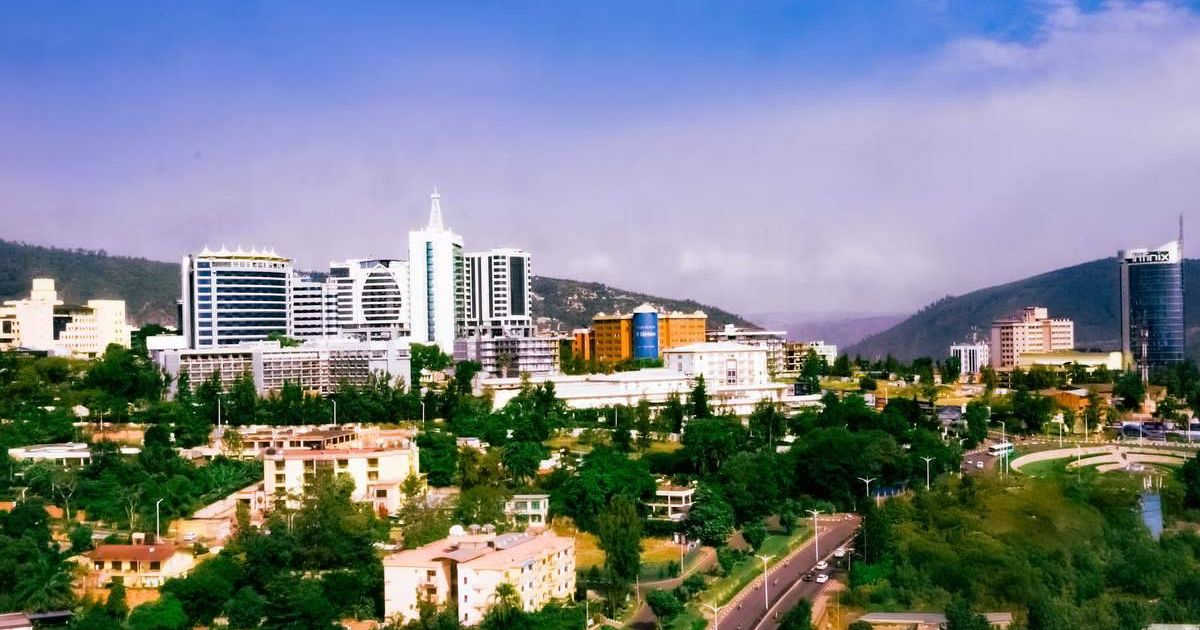
Last week, Formula 1 announced a 10-year agreement for Rwanda to host a Grand Prix on a purpose-built circuit designed with former racing driver Alexander Wurz.The announcement comes amid a broader desire for Formula 1 to return to Africa, where the championship last raced in 1993.
It’s an ambitious project that is likely to involve eye-watering sums. The circuit would be the first new purpose-built permanent venue to join Formula 1’s calendar in more than a decade. Rwanda’s government is backing the wider project, and the event will be known as the Formula 1 African Grand Prix, Presented by Visit Rwanda. A bit of a mouthful, but a good one for word counts.
That’s all well and good, but I’m skeptical about whether the track can prove a sustainable success on Formula 1’s ever-expanding calendar.
A promising concept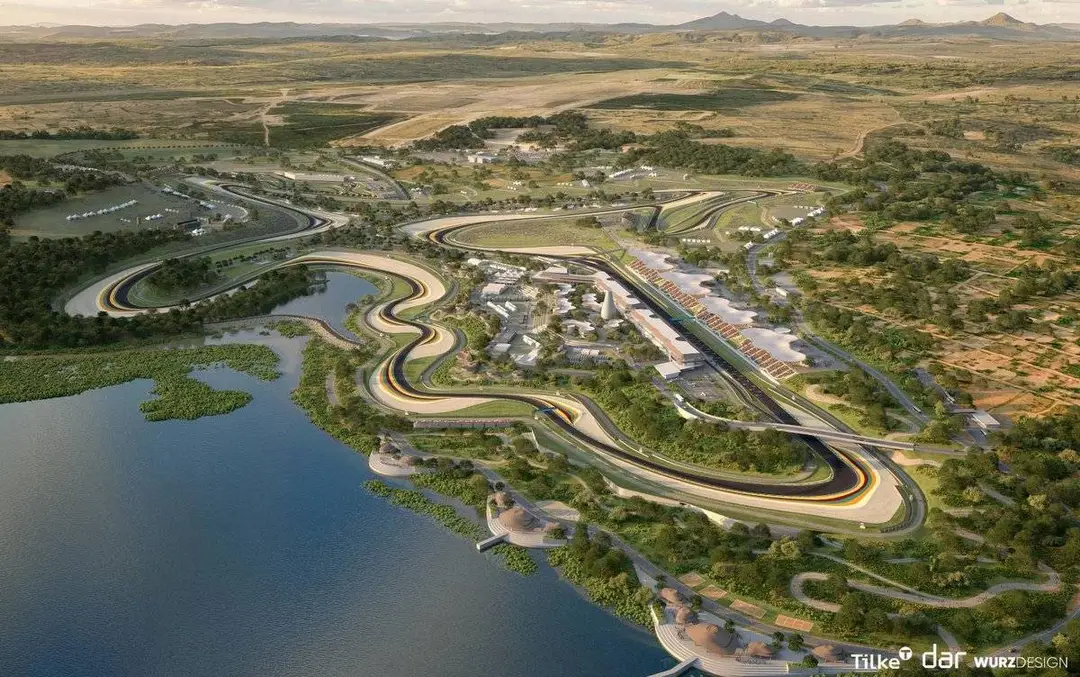 From the limited information available so far, the track plans seem to tick every box. Set in Bugesera, the roughly 6km circuit is planned to weave through the stunning Rwandan landscape, including an entirely forested corner with no spectators. A nice touch, and it feels like a throwback to legendary tracks such as the Nürburgring and Hockenheim.
The lap is also set to feature around 197 metres of elevation change, nearly twice Spa’s 102.2m, currently the biggest figure among Formula 1 circuits. Alex Wurz, whose design company is heavily involved in the layout, has promised a combination of fast and technical sections, with the explicit aim of encouraging overtaking and great racing.
For all the noise around Formula 1’s decision to award Rwanda the African Grand Prix, there’s no disputing that the proposed track sounds phenomenal.
A cautionary tale
While great racing is the primary metric for fans and drivers alike, the less glamorous truth is that new venues must also make commercial sense. Formula 1 ticket prices are through the roof right now, following significant growth since Liberty Media’s buyout. Many fans feel priced out, but attendances remain strong.
The tricky part for Rwanda’s foray into Formula 1 is finding a return on the hefty investment, and to engage Africans to attend. Let’s not beat around the bush: there are real concerns about affordability for locals. Allow me to go down the economic rabbit hole for a brief moment.
World Bank figures put Rwanda’s 2024 GDP per capita at around $1,060. For reference, a general admission ticket at the Las Vegas Grand Prix starts at $393, more than one-third of the average economic output per person for an entire year.
There is currently no official information on expected ticket prices in Rwanda, and they would presumably be significantly lower than in Las Vegas. Sepang, for example, offered discounted rates for Malaysians, with a three-day ticket costing $219. But even a much cheaper ticket could price many locals out of attending an event that is supposed to unite the continent.
How many seats will be filled by international fans and people travelling from elsewhere in Africa? That’s anyone’s guess. I struggle to see how we can assume attendance will remain consistently strong. And that raises questions about the project’s long-term sustainability. Government backing only goes so far.
Projects in India and South Korea serve as stark warning to organizers and Formula 1 executives. In terms of the circuits alone, there is no disputing that both produced good racing. South Korea in particular delivered some memorable moments in the early 2010s, including a rain-soaked debut in which Mark Webber crashed out, giving his rivals valuable championship momentum.
Poor attendance and financial problems sadly helped bring the Korean Grand Prix to an end, while tax disputes contributed to the end of the Indian race. Both were purpose-built facilities that couldn’t sustain their place on the Formula 1 calendar. I fear the Rwanda project could fall into the same trap.
Use by other series and events could help generate revenue, but Formula 1 would still be the main draw. The last successful purpose-built track that stood the test of time is Formula 1’s next stop: Circuit of the Americas (COTA). That came off the back of a considerable boom in interest in the USA, but there is also little public evidence so far of a comparable surge in the sport’s popularity within Rwanda.
The question is whether Rwanda can follow COTA’s success, or if it will fall by the wayside similar to South Korea and India.
The bottom line
To be clear, I’m delighted to see Formula 1 return to Africa. It’s a continent with a rich history in the sport, and I sincerely hope I’m proved wrong.
There is also a valid counterargument to attendance concerns. Rwanda’s government may not need the gate to balance the books. If the deal is judged on tourism and global exposure rather than ticket sales, a half-empty grandstand matters far less. But that is a bet on one government’s priorities holding for a decade or more, and India’s tax dispute is a reminder of how quickly the commercial and political landscape can shift.
That’s why this goes beyond Rwanda. Formula 1 has a seemingly insatiable appetite for new venues and a habit of announcing them with fanfare, but it has no transparent test for whether they can stand the test of time. For a sport that insists on promoting sustainability, that should be the bare minimum.
Africa deserves a Grand Prix that endures, not what could be interpreted as a vanity project. The track sounds phenomenal. Now Formula 1 has to show the business case behind it is just as good.