
Stargazers in Australia can look forward to a celestial treat this week, with the Orionid meteor shower reaching its peak.
The Orionids, pieces of dust and detritus left behind from Halley’s Comet, appear every October and run for multiple weeks, but will climax early on Thursday.
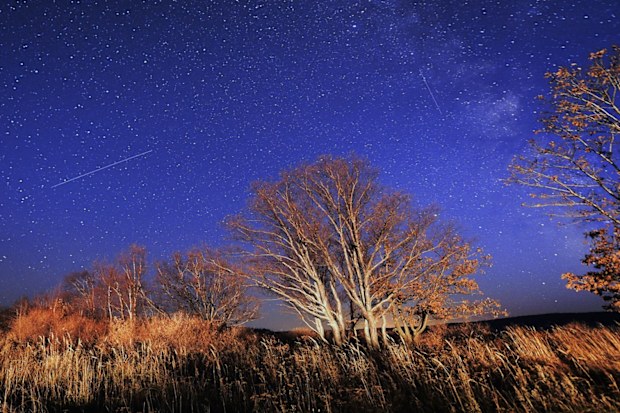
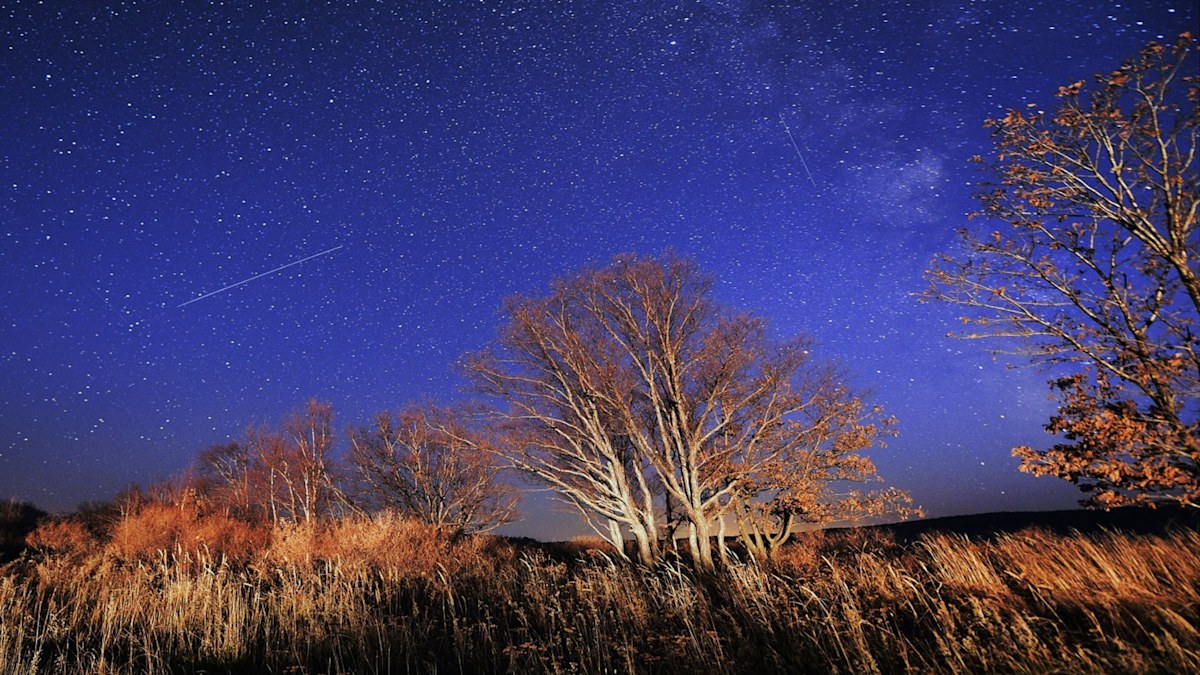
Meteors streak across the night sky during the Orionid meteor shower. Photo by Yuri Smityuk\TASS via Getty Images TASS via Getty Images
When Earth moves through the cloud of debris every year around this time, the cosmic waste strikes our upper atmosphere and burns up in a display seen on the ground as shooting stars and sometimes a fireball.
The only downside this year is the Orionids peaking at the same time as a nearly full Moon.
This means during the early stages, the meteor shower will be washed out by the bright Moon.
Astronomer Sara Webb, from Swinburne University in Melbourne, told nine.com.au the best viewing time for the meteors should be 3am to 5am on Thursday.
“The Orionid meteor shower is pretty visible across the entirety of the sky of Australia … up north you will always have a better chance of seeing more meteorites,” she said.
The best way to see them is look towards the Orion constellation with your naked eye, or by using a night sky app.
“Try to avoid too much light pollution to your eyes adjust to the darkness of the sky,” said Webb.
Catching sight of a meteor is a bit hit and miss: you may have to wait for a while, then multiple ones can appear.
And they enter Earth’s atmosphere at the extremely fast speed of about 66km per second.
At its peak, up to 20 meteors are visible every hour in the Orionids meteor shower, dropping every night until they end in early November.
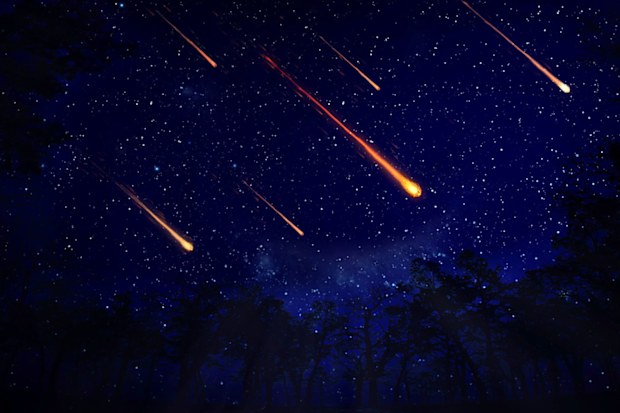
Meteors are produced when Earth moves through the cloud of debris, causing cosmic dust to burn up in the upper atmosphere. Supplied
Tips for spotting meteors
For the best place to view the Orionids meteor shower from Australia, pick a secluded area away from bright city lights.
Make sure you’re somewhere with a clear view of the sky and check the weather forecast to ensure there’s a clear sky to spot meteors.
A meteor shower sky map can help you find the radiant (area where most of the meteors will appear from) and then it’s just a waiting game.
More meteor showers ahead
If you miss the Orionids this month, don’t worry, the Geminid meteor shower will begin over Australia in November and peak in mid-December.
Astronomers consider it one of the most reliable and spectacular meteor showers, producing up to 150 bright, multicoloured meteors per hour under dark skies.