
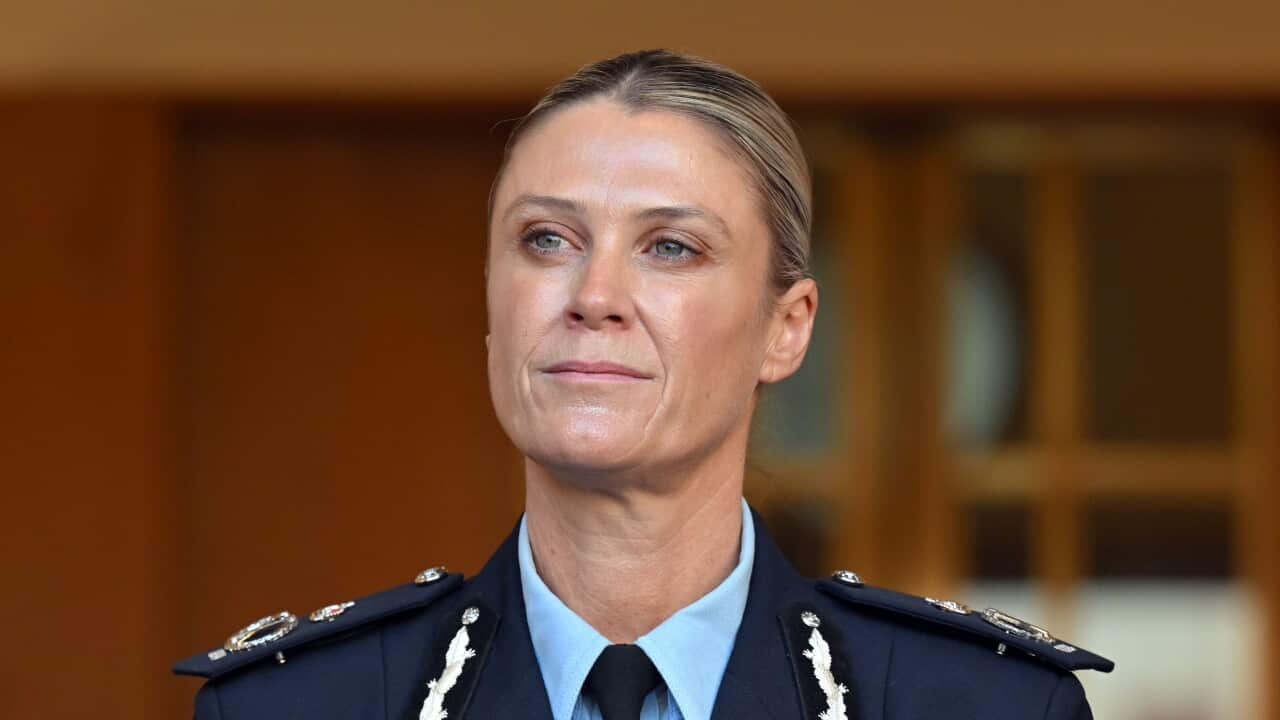
In briefAustralian Federal Police (AFP) commissioner Krissy Barrett said police are yet to establish a motive for the alleged car ramming attack on MP Helen Haines.Reported mental health concerns and potential political motivations will all form part of the investigation, she said.
Australia’s federal police chief has acknowledged gaps in regional mental health care, as investigators continue to probe the motive behind the alleged attack on independent MP Helen Haines.
Appearing on ABC’s Insiders on Sunday, Australian Federal Police commissioner Krissy Barrett said determining a motive would continue to be the “primary focus” of the investigation.
She acknowledged reports that the man accused of ramming Haines with a 4WD outside her Wangaratta electorate office had previously received treatment for mental health issues.
“There has been media reporting around his mental health, around some of the causes or issues that he has aligned himself with. That all remains part of the ongoing investigation,” she said.
Authorities are still investigating whether Haines was targeted because of her political role, but the incident has prompted a wave of federal parliamentarians to speak out about rising political tensions and an increase in threats, abuse and safety concerns.
Your trusted source for staying up-to-date with the world around you. Get free daily news updates and analysis, straight to your inbox.
It has also raised questions around access to mental health care in regional and rural Australia. Earlier this week, prominent psychiatrist and former Australian of the Year Patrick McGorry said regional mental health services were seriously lacking and poorly funded, leading to people falling through the cracks.
Haines has had both legs amputated and remained hospitalised in a serious but stable condition in Melbourne on Sunday morning.
Brendan Nugent, the 43-year-old man accused of harming her, faced court on Wednesday and will reappear in court next year. His lawyer said he lives with a rare neurological condition as well as mental health concerns.
Nugent was charged with dangerous driving, intentionally causing serious injury, and a federal offence of causing harm to a public official. He was also charged with cultivating and possessing cannabis.
READ MORE
On Insiders, Barrett was asked about the role of mental health in the current political environment. While stressing that she was not drawing a direct link between the two, she noted that police frequently encounter people experiencing mental health challenges.
“That does sometimes form part of what we are seeing in terms of motivation or how people are looking to express their views,” she said.
“But at the end of the day, these are criminal offences. There needs to be consequences. People need to be charged, and they need to be put before the court.”
READ MORE
Asked whether a lack of mental health services, particularly in regional Australia, was making policing more difficult, Barrett acknowledged it was among several challenges facing police.
“I would say that the environment in general, it’s febrile, it’s complex.
“There are a number of elements that add to that that do make our job harder, yes.”
READ MORE
Barrett also repeated her previous warnings about the rising consumption of illicit drugs in Australia, the role of social media companies in preventing radicalisation and exploitation on their platforms, and the large volume of threats federal politicians receive.
“We are not here to police free speech, we are not here to intervene in political discourse,” she said.
“But I would challenge any Australian to read some of these threats and some of the abuse that is reported to us from federal parliamentarians, and for anyone to argue that that is free speech or political discourse.”
For the latest from SBS News, download our app and subscribe to our newsletter.