
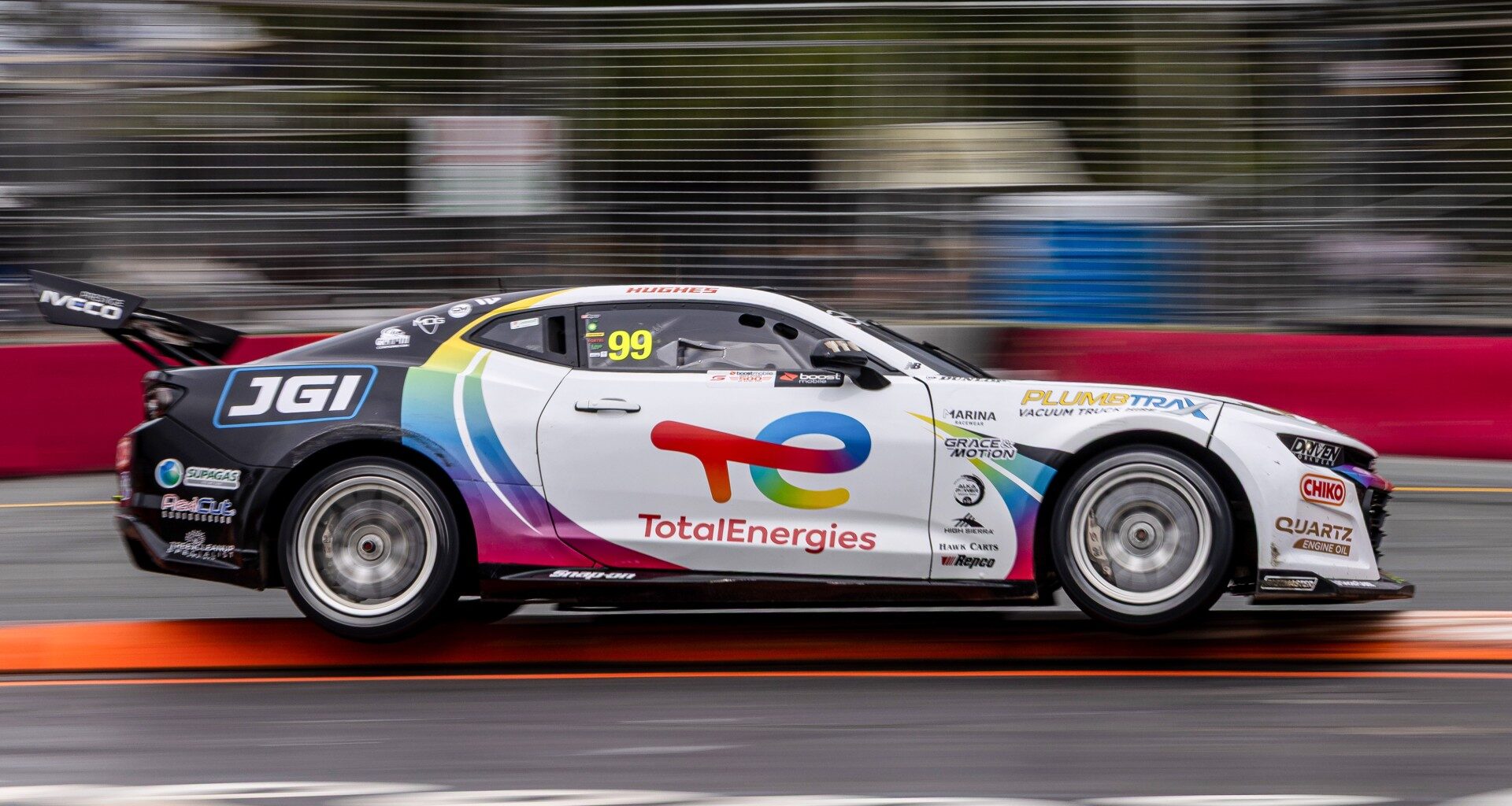
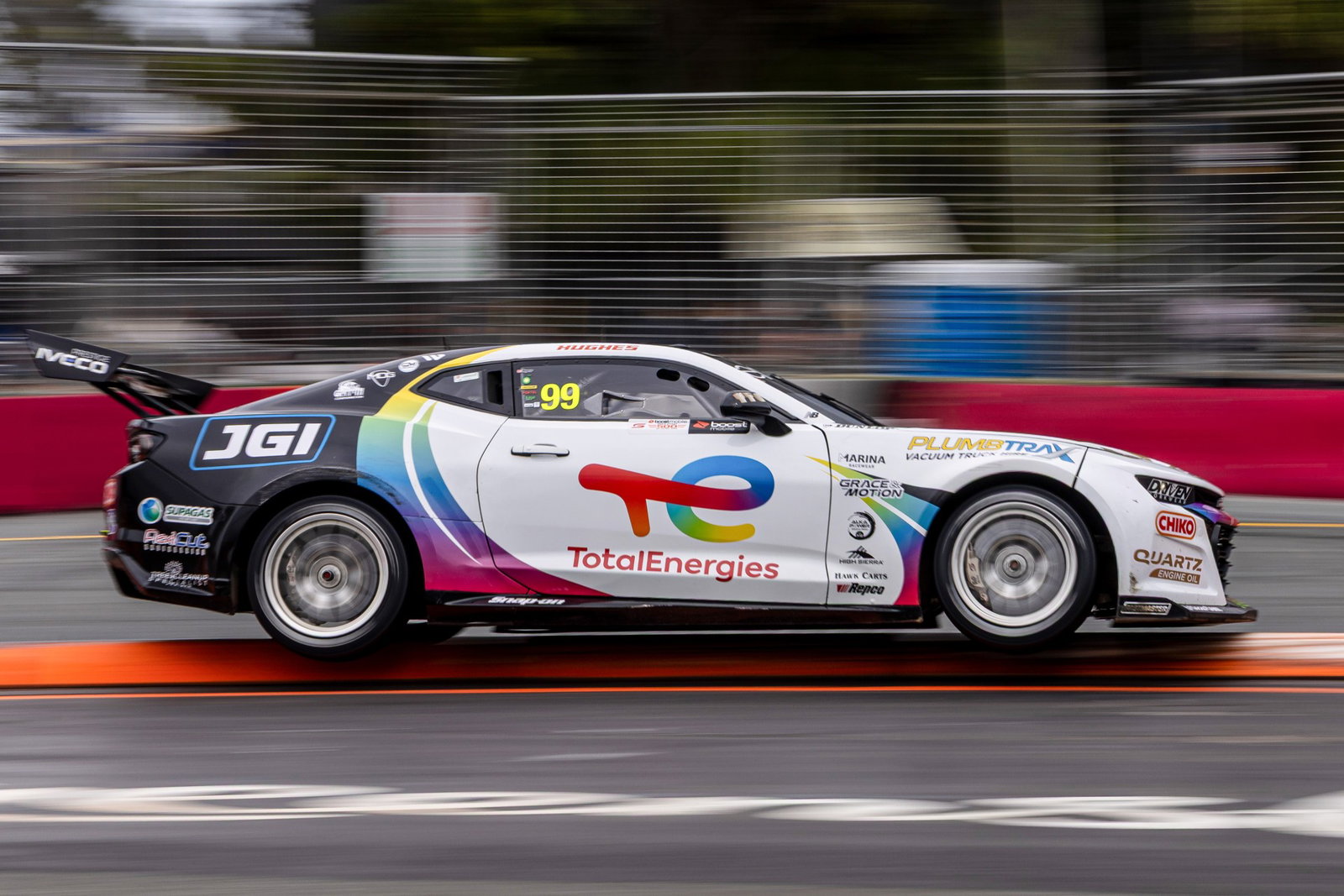
 Jarrod Hughes on track in his Erebus Motorsport Chevrolet Camaro at the Gold Coast 500. Image: InSyde Media
De Pasquale will head to Sandown as the sole Chevrolet driver still in contention for the title after escaping elimination in Sunday’s Gold Coast race.
He only did so by the skin of his teeth, a poor qualifying effort compounded by a first lap stop to replace a damaged tyre putting him on the back foot.
He did manage to climb high enough in the field to force a tie-breaker with Ryan Wood in the closing stages of the race, only for his path to Sandown to be cleared when fellow Camaro drivers Jarrod Hughes and Cooper Murray – neither in Finals contention – made unscheduled late stops for fuel from top 10 positions.
That immediately prompted concerns that the stops were unnecessary and were instead a ploy from Chevrolet to ensure De Pasquale progressed to Sandown.
Team orders are legal in Supercars, but only from within a single team.
The Supercars operations manual includes a rule written specifically to avoid manufacturers getting involved in team orders.
It reads: “It is not permitted for any sponsor, supplier, entity or related entity, including an automobile manufacturer, importer or their representative to impose or seek to impose team orders, on any team”.
Supercars prioritised fuel checks on the Hughes and Murray Camaros after the Gold Coast race and quickly established that the late stops were necessary rather than strategic.
“I can tell you that we have pumped the fuel out of both of those cars, and had they not done the third pitstop they wouldn’t have finished the race,” Supercars motorsport boss Tim Edwards told Speedcafe.
“I can tell you, if they had not put the 15 litres, roughly, that they put in their cars, they would not have finished the race.
“We always do pump-outs and clearly we see triggers like that and we go ‘okay, why did they stop and how much was left in the car?’.
“It’s a bit like if somebody has gone long, and we’ll be doing capacity checks on a couple of cars tonight because they appeared to be able to go longer than others.
“You are always looking for triggers as to why we’ll go and scrutineer those cars.
“It’s our job to be suspicious. We’re always suspicious about lots of things on lots of occasions.
“Was I any more suspicious of that than others? You will never know. Our job is to be suspicious.”
When asked if he had come into the weekend suspecting gamesmanship would be an issue, Edwards said: “Not the scenario you’re talking about, but teams – you saw it with the Walkinshaw cars – working together to try and achieve an outcome.
“Teams learnt a lot from the Finals last year about how to approach it and you saw evidence of that today.”
The reference to the Walkinshaw cars relates to a case of blatant, and entirely legal, use of team orders by the factory Toyota squad as it looked to help Ryan Wood progress to Sandown.
At one point, third-placed Chaz Mostert was asked to drop 10 seconds back to promote Wood to the podium, while Mostert played rear gunner to keep Andre Heimgartner at bay.
That briefly put Wood ahead of De Pasquale above the cut line.
Once it became clear that it wouldn’t be enough for Wood, he let Mostert back through to ensure the reigning champion would hold fourth seed heading to Sandown.
That gamesmanship is not something Edwards has any issue with.
“It’s always happened,” he added.
“It could be the last race of the season and someone is doing that to help a teammate win the championship. That’s happened before.
“Do we get more examples of that because of the Finals? Possibly, because you’ve got a mini final at the end of all of these races. We’re now seeing more evidence of that.”
Matt Payne, Broc Feeney, Brodie Kostecki, Mostert, Will Brown, Cam Waters and De Pasquale will head to Sandown in contention for the title.
Feeney wins Gold Coast finale amid Finals elimination controversy