
The first new steel mill to be be built in Australia in more than 35 years will also be the first to contract its electricity supply entirely from renewables, after striking a deal with mining giant BHP to use capacity it is no longer using.
Generation Steel, an Australian company formerly known as Green Steel WA, intends to invest $850 million to build an electric arc furnace (EAF) mill at Collie, a town that is transitioning away from coal to new green industries in south-west of Western Australia.
It will recycle Australian scrap steel into reinforcing bar, wire rod and merchant bar for construction, and will be the first steel mill to be built in W.A., and the first new steel mill built anywhere in Australia in more than 35 years.
At its targeted capacity of producing 450,000 tonnes a year of reinforcing bar steel (rebar), the Collie mill will need around 250,000 megawatt hours a year of electricity, or nearly 100 megawatts of wind and solar capacity.
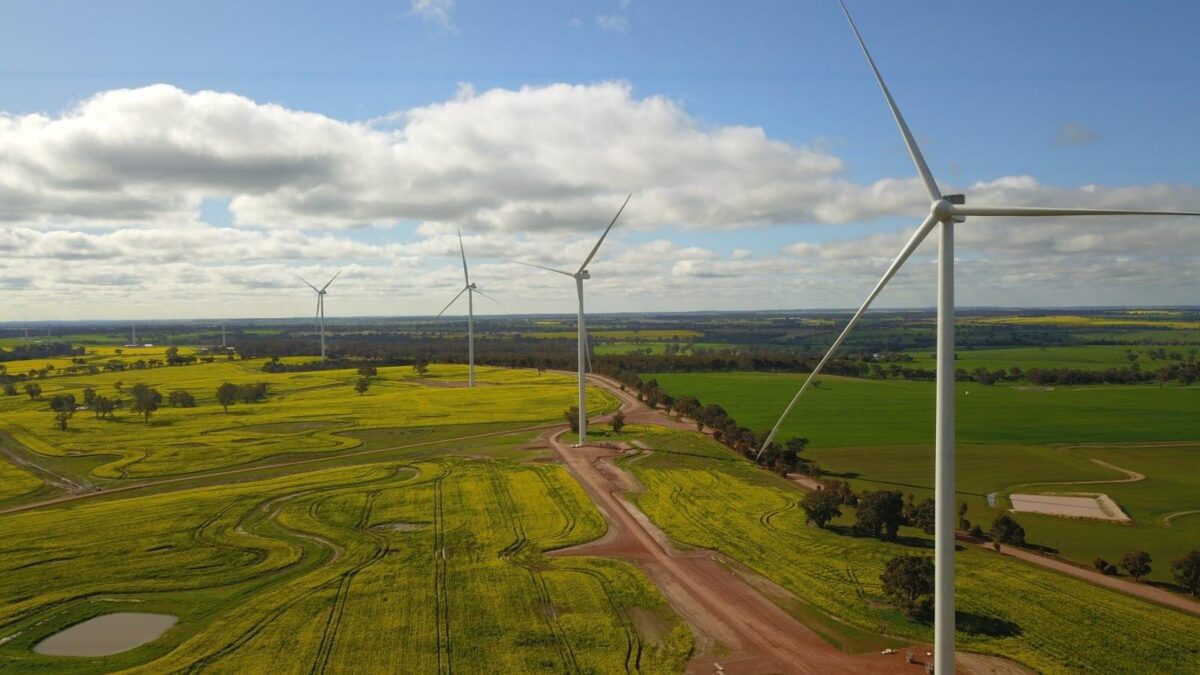
It has signed a power purchase agreement with BHP, which had lined up off-take deals for the expansion of its W.A. nickel business that it has now abandoned, at least for the time being. The agreements source power from the Flat Rocks wind farm and the Merredin solar farm.
“Being powered entirely by renewable energy from day one is a defining moment for Generation Steel,” Rajan Aggarwal, the co-founder and executive director of Generation Steel, said in a statement.
“It confirms our position at the forefront of low-carbon steel production and demonstrates that world-class, high-quality steel and genuine decarbonisation are not just compatible — they’re the future of the industry.”
The renewable energy contracts are expected to come into force from 2029, around the time that the last of the state-owned coal-fired generators in Collie are expected to shut down, leaving just one privately owned coal unit running that is also expected to close around the same time.
Collie has now become a centre for big battery storage, and currently hosts the two biggest batteries in Australia, the 500 MW, 2,400 MWh Collie battery owned and operated by state-owned generator Synergy, and the 560 MW, 2,240 MWh Collie battery owned and operated by Neoen Australia just up the road.
The steel mill is not the only big industrial user that is turning to renewables. The country’s two biggest energy consumers, the Tomago aluminium smelter in NSW and the Boyne Island smelter and refineries in Gladstone, are both shifting away from coal.
Rio Tinto has already signed multiple deals with gigawatt-scale wind, solar and battery projects, while Snowy Hydro has been tasked to find the same for Tomago.
In the Pilbara, Andrew Forrest’s Fortescue is building more than 2 GW of wind and solar capacity, and more than 4 GWh of battery storage, to reach his target of eliminating fossil fuels from his giant iron ore mining operations.
In Collie, Generation Steel has no choice, because there will be no coal in Collie, or the state, by the end of the decade, and relying on gas-fired power is way too expensive.
Generation Steel was co-founded by Aggarwal (ex Aurecon, SunEdison and Macquarie), Don Johnston (ex Aurecon and Water Corp), and Azlan Ho (ex Aurecon, BHP and Fortescue), who are all executive directors, along with Moksha Watts.
The company is chaired by construction industry veteran Enzo Gullotti, who posted on LinkedIn in July that “if you went back 10 years and said ‘I’m going to build a steel mill in WA, people would have said you’re an idiot.”
The company says that the combination of a renewable power supply and 100% recycled Australian scrap are expected to make the mill one of the lowest emissions steel mills in the world.
The green electricity is critical is delivering an emissions ration of around 272 kg CO2e per tonne of steel, which is about three times lower than the “sustainability brand” in the Australian market, and the global average.
There are reportedly only three steel companies in the world that currently deliver rebar at less than 300kg Co2e per tonne of steel. These are Nucor Sedalia in the US, Seven Steel Nordic and Celsa in Europe.
Rob Whitham, the manager of commercial energy and utilities at BHP WA Nickel, said the deal showed how the company can unlock additional value from its renewable energy contracts, and “convert surplus renewable energy into opportunities that support the wider community and economy.”
To join more than 29,000 others and get the latest clean energy news delivered straight to your inbox, for free, click here to subscribe to our free daily newsletter.

Giles Parkinson is founder and editor-in-chief of Renew Economy, and founder and editor of its EV-focused sister site The Driven. He is the co-host of the weekly Energy Insiders Podcast. Giles has been a journalist for more than 40 years and is a former deputy editor of the Australian Financial Review. You can find him on LinkedIn and on Twitter.