
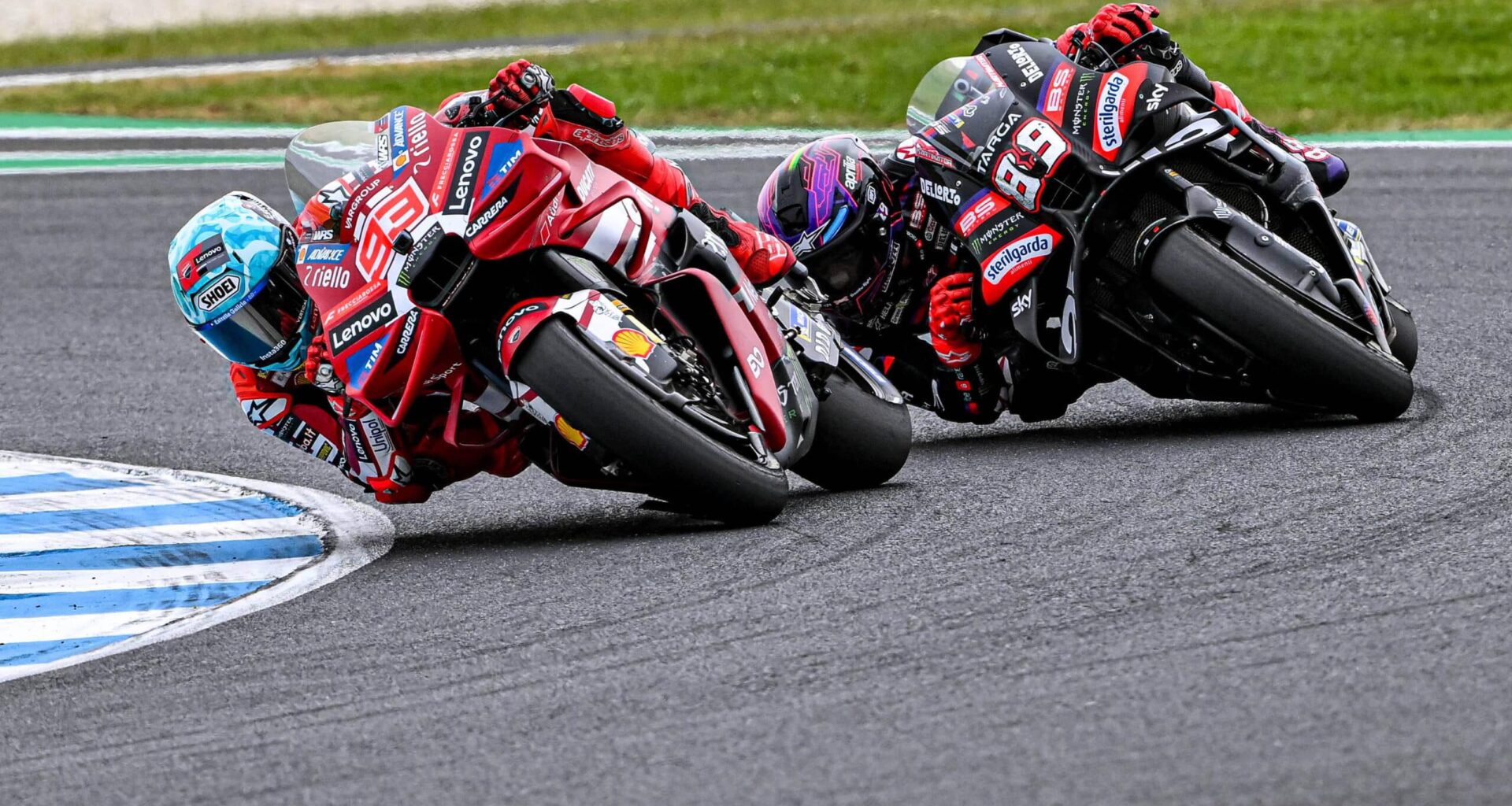
Two weeks later at Phillip Island, MotoGP announced that it was broadening the fines for promo no-shows. Most importantly, frequent offenders would be hit with sporting punishments: suspension from practice sessions and grid penalties.
This is a step too far – the punishment does not fit the crime. It is unacceptable to destroy a rider’s weekend for the crime of not signing enough autographs, or whatever.
Take this to the extreme and imagine a rider losing a world championship for refusing to kowtow to Liberty’s demands. That will never happen, you might say, but that’s not the point. Liberty has made it possible. And the people that come up with rules like this usually like to use them.
Even Formula 1 doesn’t impose rules like this on its drivers. Of course, F1 has a range of penalties covering driver attendance of promo and media activities. These start with a 5000 Euro fine for arriving late for a pre-event media conference and end with so-called F1 community penalties.
The worst that can happen to repeat F1 promo/media offenders is that they will be required to attend promotional events outside of race weekends. These might include awareness or educational activities, so drivers might have to give lectures on road safety to school kids, which might require a couple of days out of their schedules between races. But won’t damage their results.
This is an excellent case of the punishment fitting the crime: a promo penalty for a promo offence. And it’s a win-win-win: drivers serve time for the sport, kids get educated and they get to meet F1 stars, which promotes the championship.
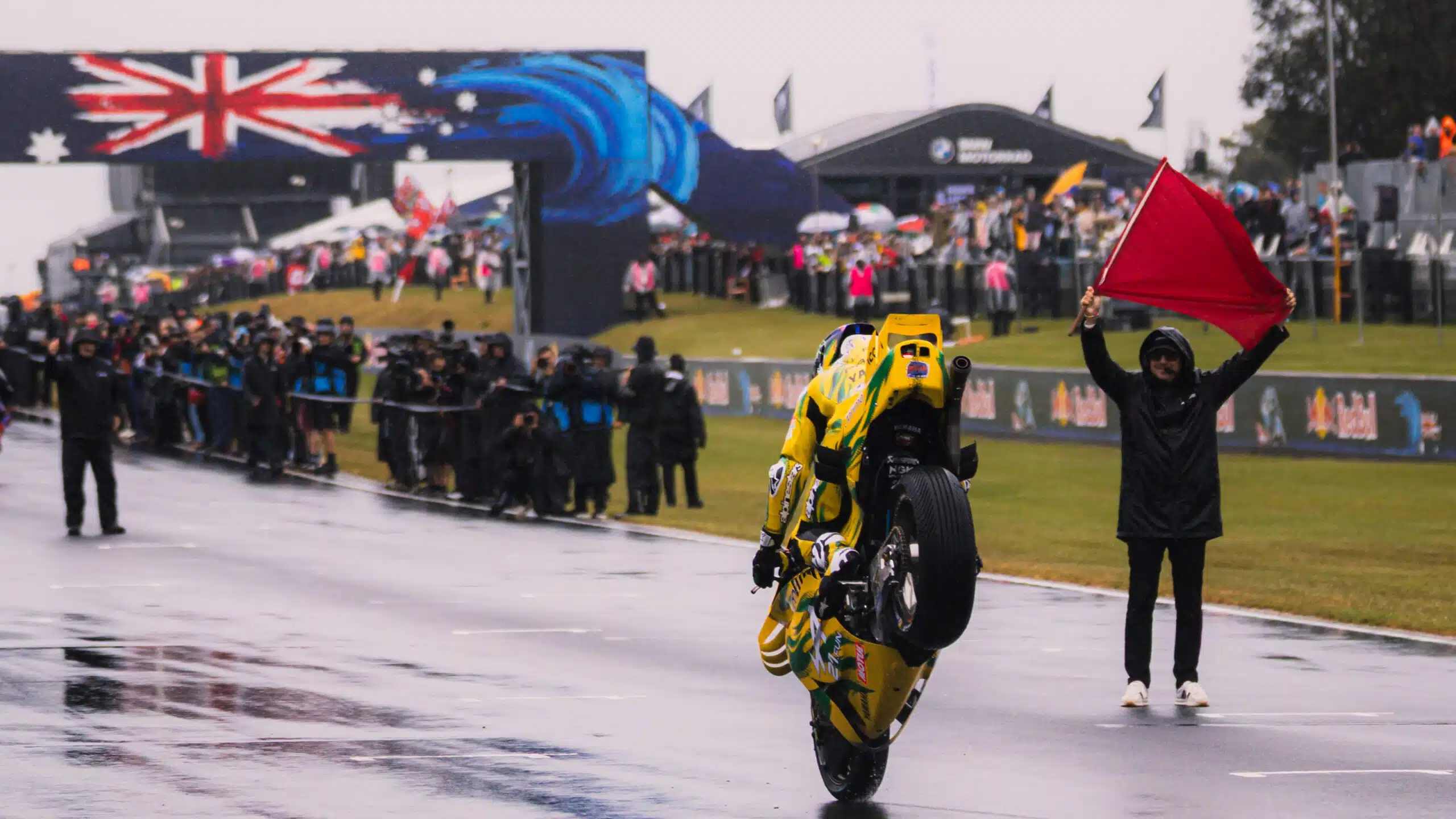
Local hero Jack Miller didn’t get to race his Aussie-livery Pramac Yamaha, but did get to do a few wheelies and stoppies
Yamaha
MotoGP riders should not accept these sporting punishments for promo/media offences.
Were Liberty’s pronouncements in Indonesia and Australia designed to force a showdown with the riders? Because it certainly seems like that. The question now is who will win this confrontation.
Perhaps they will be the spark that lights the fire that creates a MotoGP riders union that will fight for rider rights against the corporate interests of the championship’s owners.
There’s been talk of a rider union since 2023, when sprint races were introduced at every round, without full consultation with the riders, teams and manufacturers.
Sprints aren’t merely an extra race, the new format written to squeeze them into the schedule transformed every MotoGP weekend into a non-stop, full-gas ordeal that takes riders, mechanics, engineers and many others to the brink.
This year half the grid has missed races due to injury
On top of all that, there are now 22 rounds per season. When Márquez graduated to MotoGP in 2013 there were 18 rounds, so that was 18 races, against 44 now.
So many riders got injured in that first year of sprints that not one GP race started with a full grid, the first time that had ever happened and by no means a coincidence.
And this year half the grid has missed races due to injury: Martin, Márquez, Bezzecchi, Johann Zarco, Alex Márquez, Ai Ogura, Raul Fernandez, Fermin Aldguer, Toprak Razgatlıoğlu and Maverick Viñales.
The fact that Liberty continues to apply extra pressure to riders suggests a disturbing lack of understanding of what they’re involved in. Motorcycle racing isn’t tennis, golf or football. Or even F1.
Perhaps Liberty’s American bosses need reminding that last year two riders were killed while practicing for JuniorGP events – managed, marketed and organised by Liberty’s MSEG – one of them a child. Twenty-year-old Superstock rider Borja Gómez was killed at Magny-Cours and 17-year-old Moto3 rider Pau Alsina died after crashing at Aragon.
Last summer I asked Márquez about the increasing racetrack pressures and media demands imposed on MotoGP riders.
“Always they ask more and more and more [of us] and someday it will explode,” he answered.
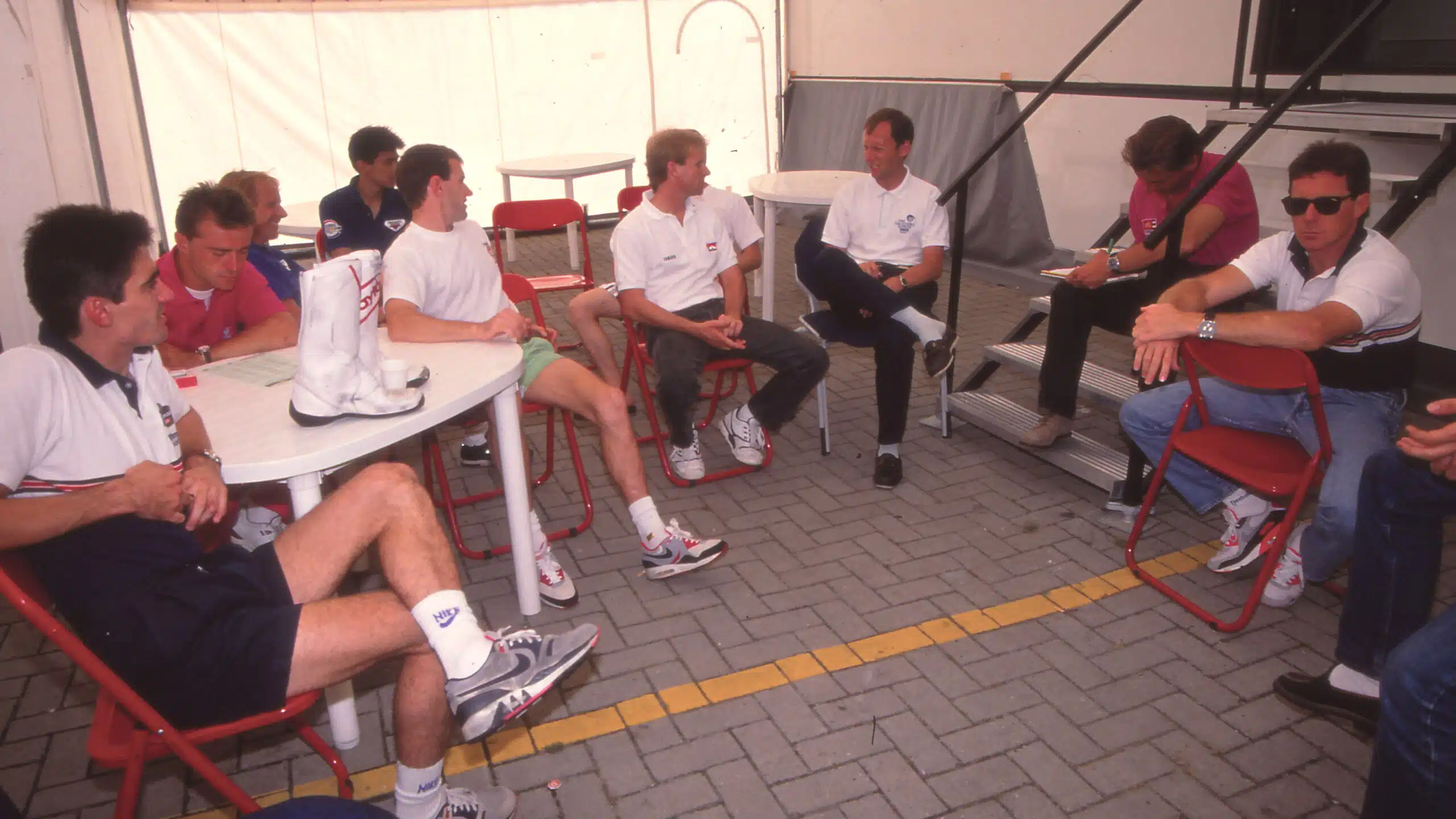
A riders meeting at Assen in 1990: Mick Doohan, Pier Francesco Chili, engineer Stuart Shenton, Masahiro Shimizu, Niall Mackenzie, Wayne Rainey, rider rep Didier de Radigues and Wayne Gardner
Two weeks ago at Mandalika I asked him about the promo penalties.
“As riders, we are the first to want MotoGP to grow bigger and bigger,” he said. “But I think we can have different ways to grow the sport without pushing the riders so much.
“Now we have a lot of things to do, because it’s not only MotoGP things. We have sponsor things during the weekend, team meetings, then Sunday warm-up, then you change quickly for the parade, then the hero walk, with a lot of people, then you come back for another team meeting after the warm-up because you didn’t have time before.
“In the end, we are athletes. Next year, the schedule is even more intense. We are the first that want MotoGP to grow, but there are other ways to grow the championship. We have the show on the racetrack, not outside.”
Funnily enough, the last attempt at forming a MotoGP rider union came in 1992, just after Dorna had purchased the championship from F1 mogul Bernie Ecclestone. Riders realised they needed to gang together to defend themselves in this new corporate environment.
The International Motorcycle Racers Association didn’t last long because it wasn’t properly put together. Today’s riders need to do better. They need to form a union that’s a legal entity, which employs a shit-hot lawyer that can hold his or her own among a bunch of corporate hustlers.
Riders often say that a rider union would never work, because they’ll never all agree on anything, because they’re all primarily motivated by their own agendas. But unanimous decisions are entirely unnecessary. Riders would take a democratic vote on each matter and the lawyer would take the demands of the majority to Liberty.
Márquez’s recent statements – on Liberty’s increasing demands and the Qatar GP – suggest that he is ready for another battle. And whether he likes it or not, will need to play a leading role in this process, certainly until the union is up and running.