
98% of the work Cheek Media publishes is entirely free for our audience to engage with. We rely on our amazing subscriber base to support us in continuing to cover the stories and explore the angles that the mainstream media won’t. We’re trying to reach 3000 new subscribers by Christmas, we’d love you to purchase an annual subscription today to support independent media.
This long read is the first official instalment of a new monthly column by Dr Rebekah Hoffman, a Sydney GP, practice owner, and the Chair of the Royal Australian College of General Practitioners (RACGP) NSW. In this piece, Dr Hoffman writes about postpartum psychosis, and how this psychiatric emergency differs from postnatal depression and matrescence – including what it looks like, what is happening in her brain, and how to get help.
She locked herself in the wardrobe. Her head was saying she should end it all, that everyone would be better off without her. She crawled into the fetal position, baby monitor in hand, watching her girl in her cot, certain that tonight would be the night baby would not wake. Baby finally slept, and mum realised she was wet, her tears soaking her face, her clothes, and she was shaking uncontrollably. Too tired to run, too scared to sleep. But in the wardrobe, she was safe. Safe from herself.
She came in the next day with her own mum, three weeks after the birth. Her partner was holding the baby in the waiting room, because she couldn’t, not right then. Very calmly, she told me she’d locked herself in the wardrobe because the voices were quieter in there. They were telling her she was failing, that someone was coming to take the baby away, that her husband and the baby would be better off without her. She had a plan all worked out – who would care for baby girl – and she walked me through it, explaining how she knew the thoughts in her head weren’t really there, but they were so loud, so real to her.
She wasn’t crying. That was what told me how serious this was: she was flat, unfrightened, entirely unaware of how frightening what she was describing sounded, and she absolutely believed it.
This is postpartum psychosis, a psychiatric emergency. But it’s not the illness I see most weeks. That one is quieter, slower, and far more common, and deserves its own moment before we get to the rare, terrifying stuff.
Most of the mothers I see with postnatal depression don’t come in saying they’re depressed. They come in saying they’re tired, or that something feels off, or they don’t come in at all, until a six-week check forces the conversation. Ask a room full of new mothers what depression looks like and most will describe crying. Real postnatal depression is quieter than that. It’s numbness, going through every motion of caring for a baby, feeding, changing, soothing, competently, even well, while feeling almost nothing underneath it. It’s resenting a baby you also love ferociously, in the same hour, and being too ashamed to say either part out loud.
That flatness is what makes it so easy to miss, and so different from the baby blues everyone half-expects, which arrive around day three or four, weepy and overwhelmed, gone within a week or two, a hormonal hangover almost every new mother gets. Postnatal depression doesn’t follow that script. It settles in, usually weeks to months in, and it doesn’t lift on its own. It affects about one in seven women in the first year after birth, and up to one in 10 fathers too.
To the woman herself, postnatal depression can feel like failing at the one job she’s meant to be instinctively good at. To a partner, it can look like withdrawal and irritability. To a friend, it can look like nothing, because she is very good at masking (performing that everything is okay). And sometimes, underneath the flatness, there are thoughts of harming herself or the baby, though she will never volunteer this unless someone asks directly. It is serious, and it is also, genuinely, treatable, once someone actually asks.
Postpartum psychosis is a different animal, rarer and far more dangerous. It affects roughly one to two women in every 1,000 births, and unlike depression, which creeps in over weeks, psychosis typically explodes within the first few weeks, sometimes within days. It brings delusions, often centred on the baby – that she’s in danger, isn’t really hers, or must be protected from some catastrophe that only her mother can see. It is hallucinations, severe confusion, mania, profound agitation. This is one of the few presentations in general practice I treat as a true emergency, on par with a heart attack, because it can escalate within hours, not weeks.
To the mother, psychosis can feel like a nightmare she can’t wake from, or, more disorienting, like sudden calm clarity, a terrifying certainty that only she can see what’s wrong. Insight is usually the first thing to go, which is why she’s rarely the one who raises the alarm. To a partner, it’s someone they no longer recognise, sleepless, frightened of things that aren’t there, and the gap between “she’s exhausted” and “something is genuinely wrong” can take days to appear. The baby, thankfully, is remarkably resilient to a rocky start, provided the parent gets help fast. To family and friends, both conditions get waved off as ‘new mum stuff’, because everyone’s expectations for ‘normal’ new-parent behaviour are already distorted.
Here’s what I wish every family understood: pregnancy and birth put a woman’s brain through one of the largest, fastest neuroendocrine events a human body experiences, and most of what follows is normal, even remarkable, adaptation.
I’ve written previously about matrescence, the developmental transformation of becoming a mother, and the genuine, measurable restructuring of the maternal brain during pregnancy that neuroscience has only recently started to map. That reorganisation is normal, adaptive, and part of what equips a woman for the enormous cognitive and emotional load of caring for an infant. Brain fog, disorientation, a shifting sense of self, all of that can be matrescence.
Through pregnancy, oestrogen and progesterone climb to levels the body has never seen, then crash back down within days of the placenta being delivered, one of life’s steepest hormonal drops. That crash isn’t just chemistry passing through; brain-imaging research shows it reshapes the physical structure of the maternal brain, with measurable changes in grey matter in regions that govern how we read and attune to another person – changes that last for years and predict how strongly a mother bonds with her baby. That’s matrescence: an actual, adaptive rewiring, and it’s why brain fog and a wobbly sense of self are so normal in the fourth trimester.
For most women, that hormonal crash resolves alongside whatever sleep the universe allows a newborn to grant them. But in a brain that’s already vulnerable, from a personal or family history of mood disorder, the same withdrawal, stacked on the sleep deprivation and chaos that a new parent lives through, can tip mood regulation into genuine illness. Depression is the more common outcome. In a much smaller number of women, almost always with a family history of bipolar disorder, that same collision can unmask something far more severe: sleep deprivation alone is one of the most reliable known triggers for mania and psychosis in a vulnerable brain. Some studies put the risk of a psychotic episode for a woman with bipolar disorder as high as one in three.
I think of it as one spectrum, not three separate illnesses: matrescence at one end, adaptive and universal; postnatal depression further along, common and treatable; postpartum psychosis at the far end, rare and severe, almost always sitting alongside a vulnerability that birth has finally exposed. Isolation, sleep deprivation and a lack of support push everyone further along that spectrum, which is why community and rest are protective medicine, not soft extras.
When a new mother sits in front of me looking unwell, I’m asking myself, bluntly: is she safe, is the baby safe, does she have insight, and if she’s having thoughts of harming herself or the baby, is it a real threat, or sleep deprivation talking.
If someone is an immediate risk and can’t or won’t consent to urgent care, they can be admitted involuntarily under the Mental Health Act, known in clinical shorthand as being ‘scheduled.’ That’s not a punishment; it’s a legal safeguard, because psychosis can strip away someone’s ability to recognise they’re unwell. But it’s never a light call: you are taking a woman away from her family, her baby, everything familiar, knowing it may irreversibly break the trust she has in you.
Scheduling is coercive by definition; you are overriding a person’s stated wishes because you have decided that their judgement cannot currently be trusted, and that is an enormous call to make about another human being. There is also real risk in getting it wrong either way: understate the danger and someone gets hurt; overstate it, and you have detained an exhausted, catastrophising woman for something she’ll carry as trauma for years. Involuntary detention is not neutral, being restrained, transported and admitted against your will days after giving birth can itself deepen the despair you were trying to treat, rupture her trust in doctors at the moment she most needs one, and make her less likely to disclose these thoughts honestly next time. Separation from the baby carries its own cost to bonding and breastfeeding, and a scheduling can follow her into future disclosures and custody conversations. None of that means we don’t act when it’s genuinely needed; it means the bar has to be real risk, not discomfort with uncertainty, and that every less restrictive option is tried first.
What happens next depends heavily on what’s available. The gold standard is a mother-baby unit, a specialist psychiatric ward admitting mother and infant together, so treatment doesn’t cost the disruption of separation. These units exist in Australia, but beds are scarce, concentrated in capital cities, and often more accessible through private cover than the public system – an equity gap I wish I didn’t have to mention. Where no mother-baby bed is available, admission may mean temporary separation, agonising, but sometimes the safest option while she stabilises.
If you are worried about yourself, or about someone you love, please don’t wait to see if it passes. Speak to your GP, call PANDA’s National Perinatal Mental Health Helpline on 1300 726 306, or in a crisis call Lifeline on 13 11 14 or 000. Early intervention is the single biggest factor in a good outcome.
And the outcome, for most women, is genuinely good. Both conditions are treatable, and most women recover fully, psychosis with antipsychotic medication, mood stabilisers, and hospital-level care acutely; depression with therapy, medication, and rebuilding the sleep and support that were stripped away. The acute crisis passes, and the relationship with the baby is not doomed by a rocky start, attachment is built over years, not lost in a bad fortnight. What doesn’t always fully reverse is the fear and grief some women carry afterwards, of what happened or what they believed. That grief deserves its own care, often long after the psychiatric symptoms have resolved.
She left my rooms that day with her mother, and an admission to the mother-baby unit that, thankfully, had a bed. At the four month check she is back, and walks in proud, with her sleeping baby beside her like it was the most ordinary thing in the world.
If you or someone you know may be experiencing postpartum depression or psychosis, contact your GP, PANDA’s National Helpline on 1300 726 306, or in an emergency call 000.
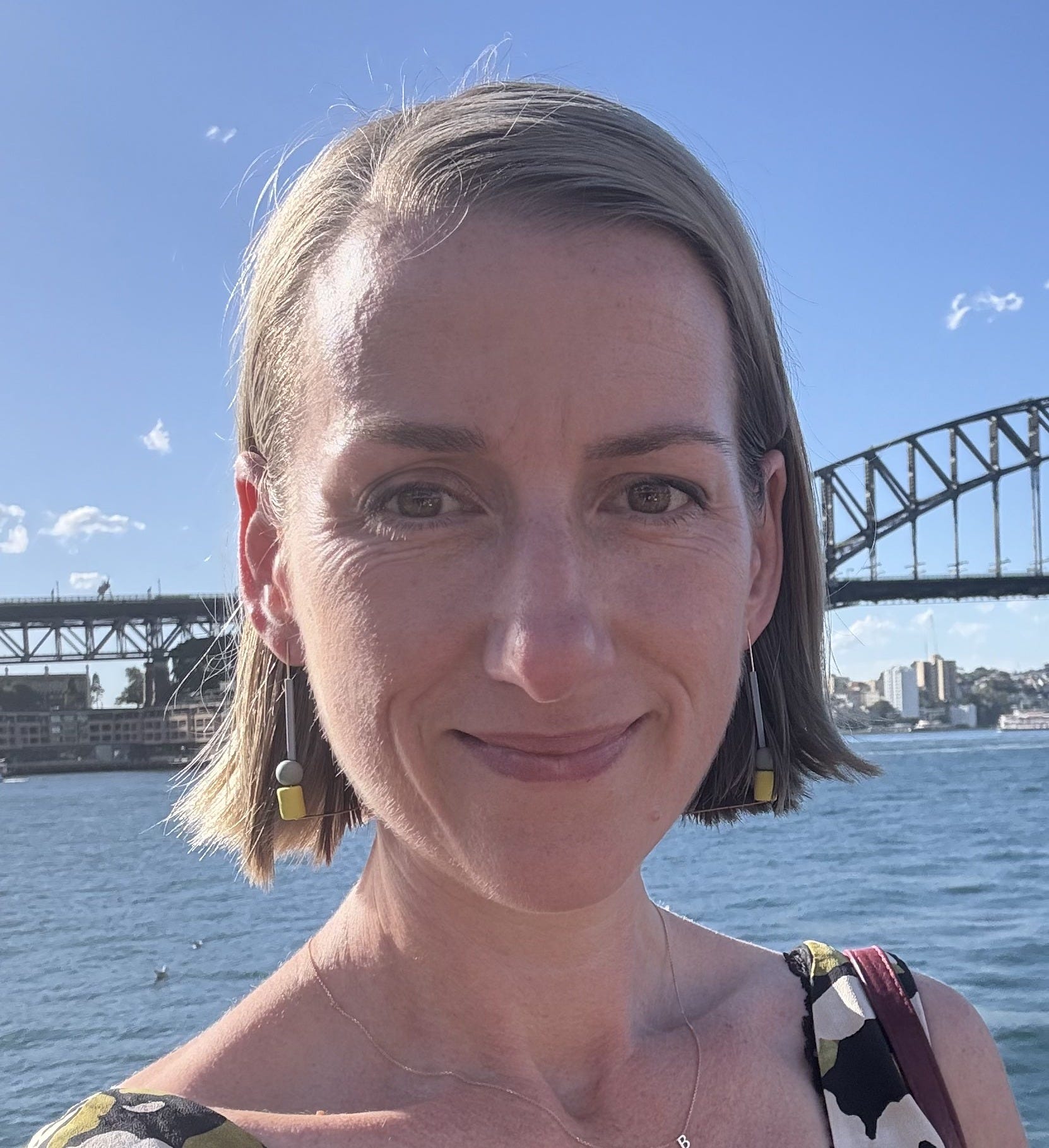
Dr Rebekah Hoffman is a Sydney GP, practice owner, researcher and Chair of the RACGP NSW and ACT Faculty. She works across clinical practice, research and health advocacy, with a particular interest in preventive health, women’s health, healthcare access and translating complex medical evidence into practical, everyday advice. The views expressed are her own and do not necessarily reflect those of the organisations with which she is affiliated.
Thanks for reading Cheek Media Co. ! This post is public so feel free to share it.