
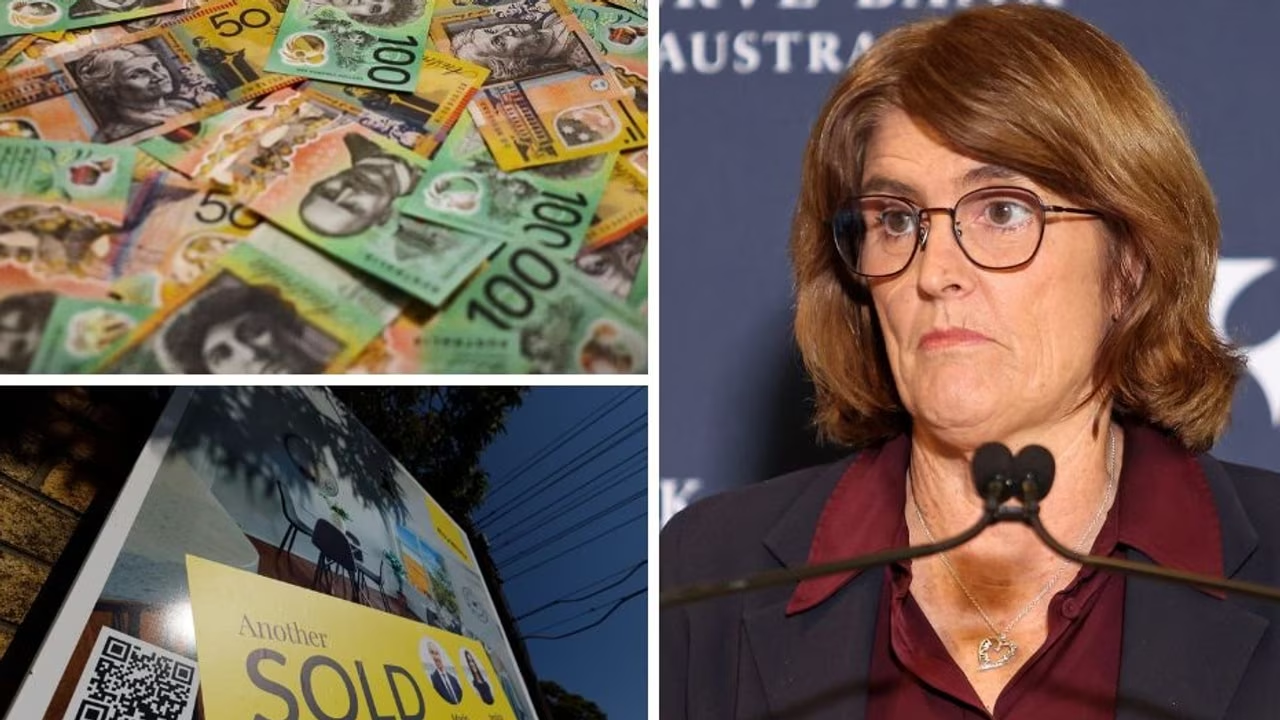
Australia could officially be in a recession by the start of next year, as a fifth straight interest rate hike pushes a cooling economy over the edge.
The call comes from HSBC chief economist Paul Bloxham, who puts the odds of a recession at 50 per cent.
Mr Bloxham told NewsWire a recession could occur due to consumer spending slowing due to the impacts that rate hikes have, particularly on the housing market.
“We think a fair bit of tightening has been delivered into the economy by the Reserve Bank due to its rate rises,” he said.
“We see a fairly rapidly cooling housing market and we think this is the main thing that will push the economy into a down swing.”
“We see growth stalling around the turn of the year, so in the fourth quarter and the first quarter of next year we think there’s very little growth in the economy and because we are close to that threshold of no growth we think there is some chance it could turn negative.”
While the definition of a recession largely varies depending on the country, in Australia it is having two negative quarters of GDP growth in a row.
When asked during a senate inquiry midweek about a cooling economy, RBA chief economist Sarah Hunter bluntly ruled out any risk of Australia’s economy going backwards.
“We are monitoring a very wide range of indicators across the real economy. At the moment none of those indicators are suggesting that the economy is in or is heading into a recession in the near term,” Ms Hunter said.
Mr Bloxham simply said the two organisations had a different interpretation of the data.
Cooling housing market a potential driver of a recession
While interest rates have a number of impacts on the economy, ranging from impacting exchange rates to changing consumer spending patterns, Mr Bloxham particularly focused on the impact a cooling housing market could have on the broader economy.
REA Group shows national house prices continued their decline in September, down a further 0.2 per cent.
This was the sixth straight month that house prices have fallen, as they are now off 3.3 per cent compared with their peak in March.
But on a yearly basis, housing affordability has barely improved, as houses are down just 0.1 per cent compared to September last year.
Data from Domain released last week revealed house prices fell 4.7 per cent in the September quarter – the biggest slump on record.
It was also the first time in 15 years that all capital cities went backwards.
The fall in house prices is due to a combination of interest rate hikes and changing tax policies which makes them less advantageous for property investors.
Mr Bloxham explained to NewsWire the fall in housing turnover hits a number of areas of consumption, while it also weighs on state taxes mainly through stamp duty.
He said there was another, often overlooked impact of hurting housing related industries such as real estate agents, transfer lawyers, and mortgage brokers – with the ‘ownership transfer cost’ component of GDP potentially having a significant negative impact.
Finally he said the construction cycle is going to weaken because falling house prices often lead to less properties being built.
“We think all of these things are in train already and as they continue over the next few quarters, we think that will stall growth in the overall economy in Australia and push the unemployment rate higher.
Inflation remains above the Reserve Banks target
The Australian Bureau of Statistics figures showed headline inflation came in at 4.3 per cent for the 12 months until September. It was 4.0 per cent in August.
The all-important trimmed mean inflation rate – which cuts the top and bottom 15 per cent of items – came in at 3.6 per cent in September.
Both figures were above the Reserve Bank’s target of 2-3 per cent inflation.
Mr Bloxham said the economy needed to cool down in order to get inflation back towards target.
“The RBA needs to get inflation back to target and the thing that has shifted in the last little while is that the bank has put a higher priority on getting inflation back to target soon,” he said.
“When we think about what the RBA is trying to do, they are focused on getting inflation back to target even if it means a harder landing in the economy.
Expectations of a Melbourne Cup day rate rise soared to 82 per cent from 66 per cent, after the ABS release and most economists said it would be hard for the RBA to keep the official cash rate on hold.
The Commonwealth Bank, NAB, Westpac and ANZ updated their forecasts on Wednesday after the September inflation print came out.
The ANZ is expecting another rate hike could be on the cards at the December meeting – the last of the year.
Commonwealth Bank head of Australian economics Belinda Allen said the country’s biggest home lender now expected the RBA to hike the cash rate by 25 basis points to 4.85 per cent.
She said inflation came in hotter than the market was expecting but in line with her bank’s forecast.
“The September quarter CPI print affirmed our view that a rate hike is on the cards next week,” she said.
This is the final inflation figure ahead of the RBA’s critical Melbourne Cup day meeting next week.