
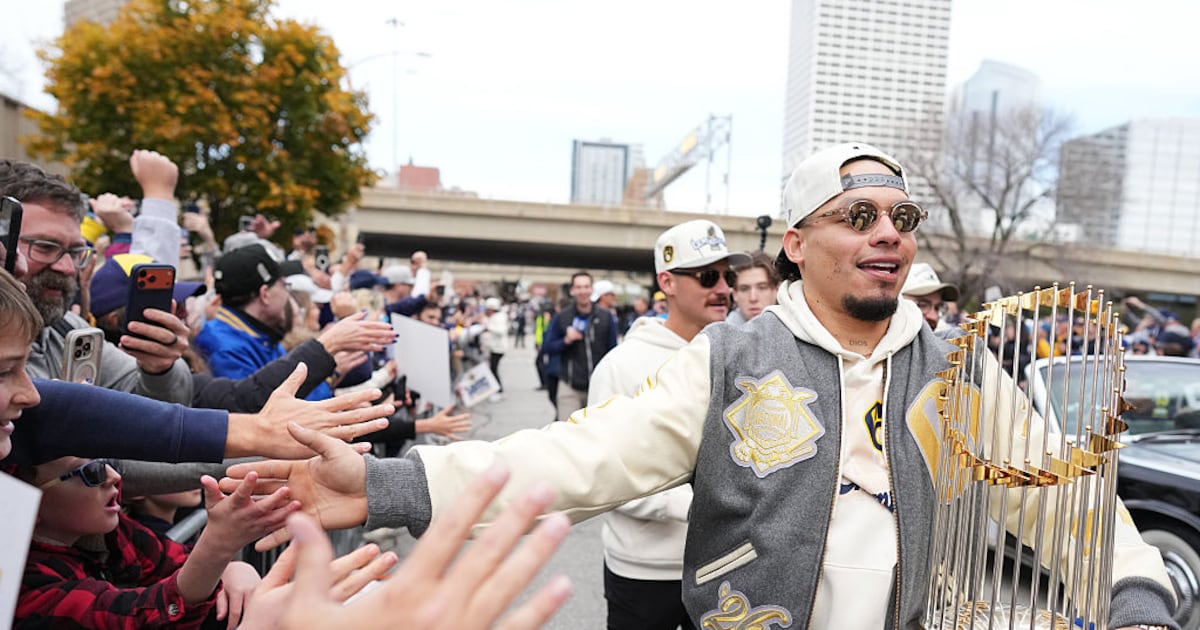
The Milwaukee Brewers are coming off the kind of postseason success that can transform a franchise’s business. But just as they prepare to capitalize on their first World Series championship, the threat of a labor stoppage could complicate what would ordinarily be a lucrative 2027 season.
“If things change, we’ll pivot,” said Rick Schlesinger, the Brewers’ longtime president of business operations. “But with the championship as a tailwind for us, we expect to have a very successful year, both on the field and at the turnstile.”
The runner-up Tampa Bay Rays face a similar challenge as they seek to capitalize on an unforgettable season in which new ownership also secured a permanent home in the market.
“We’re aware of the world ahead, and looking at all aspects of the business to be prepared for the future in all formats,” Rays CEO Ken Babby said. “We saw it through the postseason that the community really loves this team, and we expect that to transcend next season and into the new ballpark. I think the momentum is on our side.”
Typically, a World Series title or deep postseason run provides a massive business boost the following year, with increased demand for tickets, sponsorships and premium inventory. But uncertainty surrounding MLB’s next collective-bargaining agreement could make 2027 different.
MLB owners are pushing for a hard salary cap and floor system beginning in 2028, a proposal the players’ union has firmly rejected. A lockout is expected when the current collective-bargaining agreement expires Dec. 1.
A prolonged work stoppage that cancels games would affect all 30 teams. But there is a potential upside to the proposed economic changes for Milwaukee and Tampa Bay, which ranked 19th and 27th, respectively, in MLB payroll this season: Both could benefit from a salary cap and floor system designed to improve competitive balance.
“This has been our goal for 22 years [since I acquired the team], to compete,” Brewers owner Mark Attanasio said prior to the Fall Classic. “The system that’s being proposed, in terms of a revenue-sharing system, not only will help us compete, but more importantly, all of the teams with lower payrolls too, which is something also I think the fans want.”
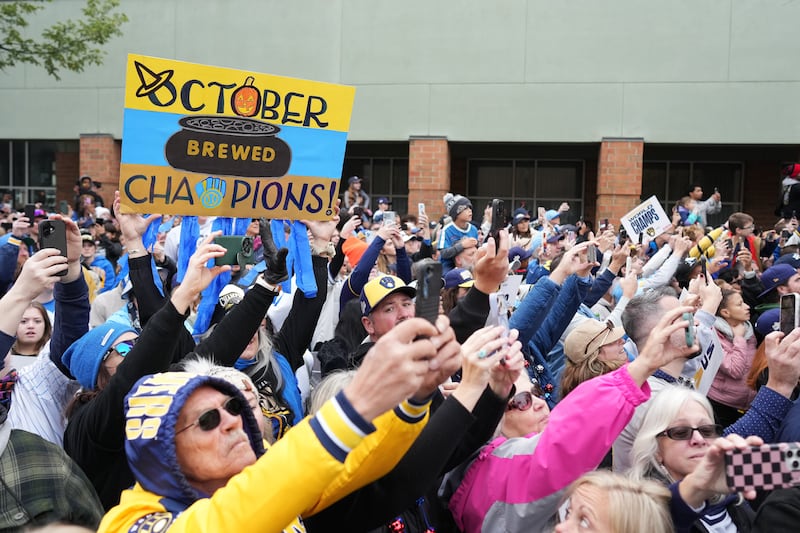 Brewers fans celebrate Milwaukee’s first World Series championship, which the franchise hopes will fuel ticket sales, sponsorships and other revenue in 2027. Getty Images
Recent postseason runs illustrate the financial opportunity awaiting Milwaukee and Tampa Bay.
Toronto attracted more than 3.3 million fans in 2026, a season after reaching the World Series, filling Rogers Centre with 97% capacity for the Blue Jays’ highest attendance since 2016 and driving a 9% year-over-year increase in Rogers Sports & Media’s third-quarter revenue.
The Los Angeles Dodgers, who won back-to-back World Series titles in 2024 and 2025, drew more than 4 million fans for the second consecutive season in 2026. The club also saw sponsorship revenue grow 14.5% year-over-year, according to SponsorUnited, after becoming the first North American professional sports team to surpass $200 million in annual sponsorship revenue in 2024.
The New York Yankees, meanwhile, reported $387 million in ticket sales and suite license revenue in 2025, down from a franchise-record $412 million the previous year when they advanced to the 2024 World Series. Average attendance rose slightly, from 41,896 to 42,408.
But even the anticipated business boost from a championship can be derailed by circumstances beyond a team’s control.
After winning the 2019 World Series, the Washington Nationals hoped to draw 3 million fans for the first time in franchise history, with roughly 20,000 season-ticket holders providing a solid foundation. The team’s business operations staff was flooded with inquiries from fans seeking ticket packages and companies interested in sponsorship deals.
Then came the COVID-19 pandemic. The season was shortened from 162 games to 60, forcing the Nationals to rework sponsorship agreements and find ways to retain ticket holders despite the loss of game-day revenue.
The team offered ticket holders a 50% bonus credit toward future purchases as part of its “Gratitude for your Natitude” program. The credits, which could be used for additional tickets, seat upgrades, food and beverage or merchandise, helped limit refunds and further job losses, though the Nationals still laid off 18 full-time business operations employees. The program, initially covering 2020-21, was extended through 2022, with fans using credits instead of making new purchases as they returned to the ballpark.
The damage, though, had been done. On-field performance plummeted, and superstars Max Scherzer, Trea Turner and Juan Soto were traded. Sales calls that once ended mostly with a yes now ended mostly with a no. The Nationals have only recently begun to turn things around, exceeding expectations in 2026 under new baseball and business leadership in Paul Toboni and Jason Sinnarajah, respectively.
The Nationals serve as a cautionary tale, albeit under vastly different circumstances, of how quickly championship momentum can disappear.
For Milwaukee, the title provides Matt Arnold, president of baseball operations and general manager, with more flexibility and payroll, “so that the goal is to repeat and not just be a one-time World Series champion,” Schlesinger said. “The best way to do that is to give him as many resources as we can — human, financial, technological — and a World Series title will help with the revenues that are associated with all those endeavors.”
It also gives a team with a rabid fan base that set a postseason retail revenue record the opportunity to draw 3 million fans at American Family Field for the first time since 2011.
Dennis Jenders, a lifelong Brewers fan and executive vice president and head of strategy at Milwaukee-based GMR Marketing, said the team should look beyond the immediate championship bump. “There’s something to be gained by positioning themselves as an enduring championship-level organization and inviting partners to come along for the ride,” he said. “Part of that is the Series championship, of course, but not all of it.”
The Rays recorded 34% sponsorship revenue growth in 2026, leading MLB, according to SponsorUnited. The team is also looking ahead, pursuing business opportunities tied to its planned $2.3 billion ballpark, projected to open in Tampa in 2029, and adjacent $8 billion to $10 billion mixed-use development. It will open a Rays Ballpark Experience Center at Westshore City Center in mid-January, featuring a virtual, immersive component and retail merchandise. In the meantime, refurbished premium spaces at Tropicana Field yielded double-digit growth in 2026.
“We’re deeply focused on partnerships in the new ballpark, and the very best gateway is through an existing partnership with the team,” Babby said. “We’re also having conversations for the new development, and that includes tenants and conversations with Fortune 500 companies considering moving into the district.”
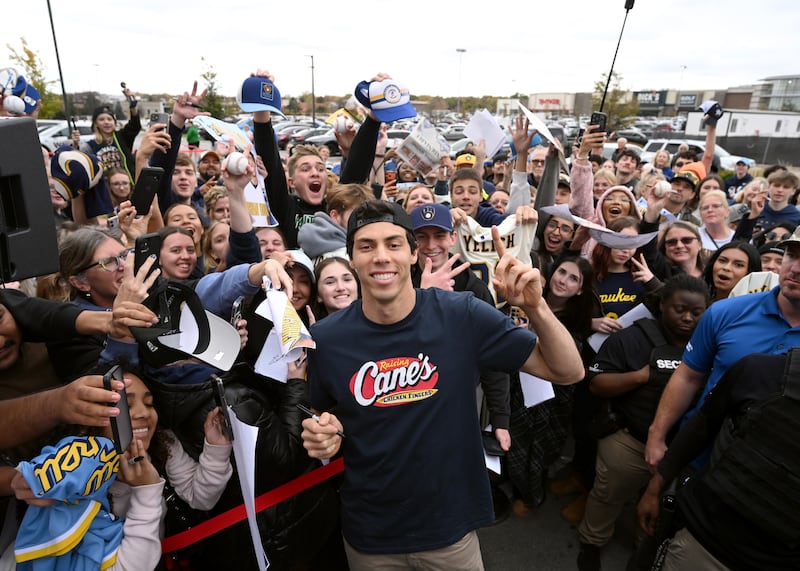 Brewers star Christian Yelich greets fans while working a celebratory shift at a Milwaukee Raising Cane’s following the team’s World Series championship, highlighting the marketing opportunities that come with a title. Getty Images for Raising Cane’s
Neither team has a major sponsorship deal expiring, though Schlesinger estimated that roughly 25% of the Brewers’ sponsorship revenue is up for renewal. “I expect, with our season, to get renewal percentages to be at historic levels,” he said.
Both teams are pleased with their local rights situations after shifting to MLB Media, despite declining rights revenue. The Brewers, whose TV deal pays $30 million in the league’s smallest media market, led MLB in local viewership share and surpassed 100,000 direct-to-consumer subscriptions. Meanwhile, Babby credited Rays media executive consultant Bob Ellis with elevating the team’s content.
The Brewers expect to have their championship rings ready by Opening Day but have yet to determine when to hold the ring ceremony.
“I don’t want to sound jaded or cynical, but when we start playing in 2027, I want the focus on the greatness that 2027 could be,” Schlesinger said.
For now, that means preparing for a full 2027 season. “I know baseball has a reputation of labor strife, but there’s been 30-plus years of no interruption of regular-season games,” Schlesinger said. “I can’t control the pace of the negotiations or how things are going to pan out. But from my perspective, we’re bullish and optimistic that we’ll reach a deal. And if not, we’ll pivot and figure it out.”
Staff writer Terry Lefton contributed to this report.