
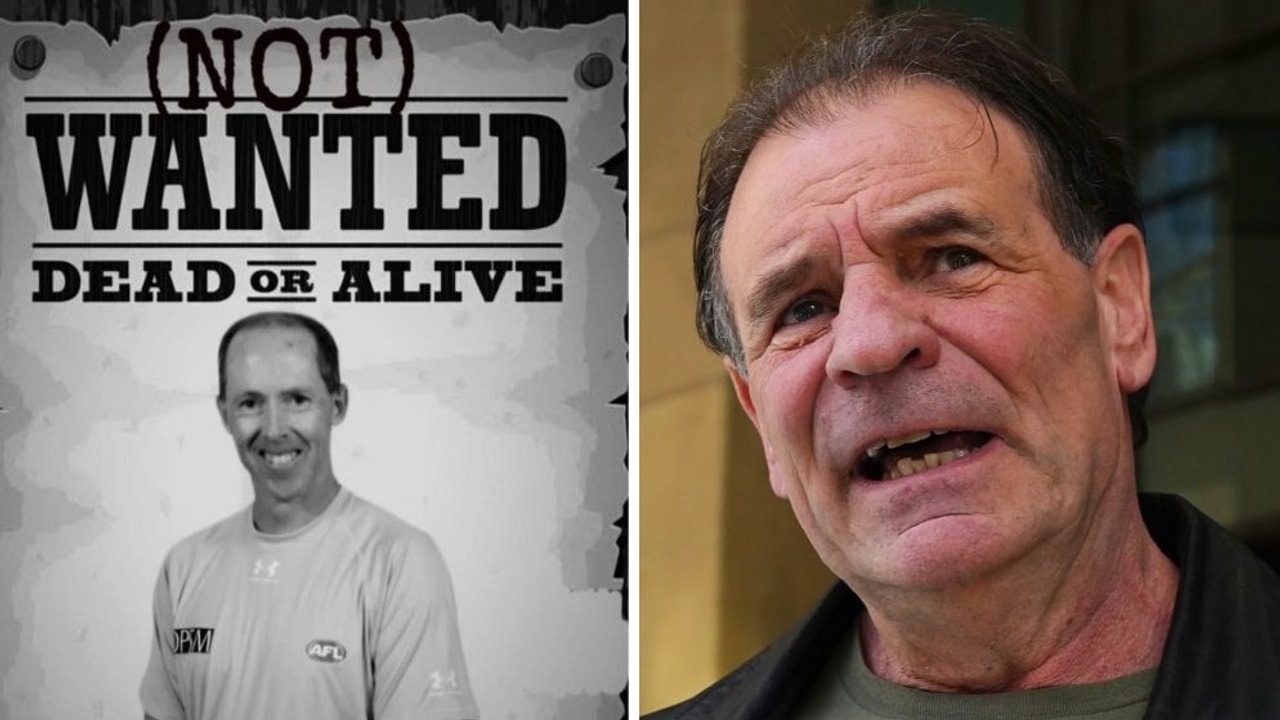
Former union boss John Setka has admitted he broke the law when campaigning for the AFL’s head of umpiring to be sacked.
Legal action was brought by the Fair Work Ombudsman (FWO) against Mr Setka and the CFMEU last year after the long-serving union figure attacked Stephen McBurney in the media in 2024.
Mr McBurney had clashed with the CFMEU in a previous role as Commissioner for the Australian Building and Construction Commission (ABCC), with Setka threatening union action at AFL sites if the sport’s governing body did not remove him as the Head of Officiating.
The case returned before the Federal Court on Friday, after both Mr Setka and the CFMEU admitted breaching the Fair Work Act by targeting Mr McBurney, for arguments about appropriate penalties.
Marc Felman KC, for the FWO, labelled the breaches a “very, very serious contravention”.
“This is a public call for the termination of a former individual because he exercised statutory powers which he was appointed to perform,” he said.
The court was told Mr Setka had admitted he breached Section 340 of the Act, while the CFMEU had admitted it breached both Section 340 and Section 355.
Mr Felman said Mr Setka was “likely not the only person” to want to have the AFL’s head of umpiring sacked but the way he went about it was unlawful.
“They were not off the cuff remarks, they were part of a calculated … national campaign at the very least encouraging the AFL to terminate the employment of Mr McBurney,” he said.
Campaign began with ‘dead or alive’ poster: FWO
The court was told the saga began in May 2024 when Mr Setka posted a “(not) wanted dead or alive” poster to Facebook about Mr McBurney before later embarking on a media blitz.
Among his media interviews, Mr Setka made comments including that the AFL would “regret the day they ever employed him”, said the union would “pursue the ex-ABCC till the ends of the earth” and that members of the union would “not be building or supporting any projects” until Mr McBurney was dismissed.
“No one quibbles with the idea there is freedom of speech and political expression,” Mr Felman submitted.
“The reality is that freedom of expression, freedom of speech are not untrammelled – there are guardrails in our legal system.
“Mr Setka needs to be reminded there’s a limit to how far you can go when attacking someone who’s fulfilling a statutory duty.”
In an affidavit, the court was told, Setka said union members had raised concerns about Mr McBurney’s role and he’d taken the issue to the CFMEU’s executive branch before making the public comments.
Mr Felman argued even if this was the case, there were lawful ways of expressing grievances at McBurney rather than attacking his role in exercising statutory powers at the ABCC.
In response, Mr Setka’s barrister Margo Harris told the court the campaign was not as “calculated” as the FWO had made it out to be but her client admitted the words used were unlawful.
She said the dead or alive wanted poster was a “common technique” used by the union against those they were campaigning against and the post had been picked up by the media.
“There is no evidence Mr Setka or the CFMEU actively sought the attention of the media – the media came looking,” she said.
“There is no evidence any harm was suffered by Mr McBurney or the AFL as a consequence of what Mr Setka said.”
Ms Harris explained there was a “background” hostility between CFMEU and the ABCC and Mr McBurney, with union members seeing him as the “fox in the hen house”.
“This conduct of his occurred as perhaps a last hurrah of him being the secretary of the Victoria-Tasmania branch,” the barrister said.
She said her client was now retired, looking after his elderly mother and going through a divorce.
CFMEU argues penalty for breaches should be reduced
Barrister Andrew White for the CFMEU told the court his client had co-operated with the FWO from an early stage in the case.
He argued the penalty to be imposed for the breaches should be reduced because the union was not the same place as it was when the unlawful conduct occurred.
The court was told that since the CFMEU was placed into administration in 2024, hundreds of office holders and employees had departed the union and the administrator had made substantial governance changes.
“A new culture of lawful but robust unionism has taken hold,” Mr White argued.
The court was told the CFMEU had previously built a “business model” of noncompliance with workplace laws, viewing penalties as the cost of industrial action.
In an affidavit supplied to the court, CFMEU Administrator Michael Crosby AM said he was of the opinion the work of the union’s administration was not complete and a request would be made to the Government to extend the administration.
The court was told the administration’s work was being “actively undermined” by some inside and outside the union still loyal to the old guard.
Justice Leslie Snaden reserved his decision on the penalties for Setka and the CFMEU to be handed down at a later date.
The court was told Mr Setka has a cross-claim against the CFMEU ongoing, in which he is seeking to have the union deemed liable for his expenses in the case.
Originally published as Ex-CFMEU union boss John Setka admits law breach in campaign against AFL’s Stephen McBurney