
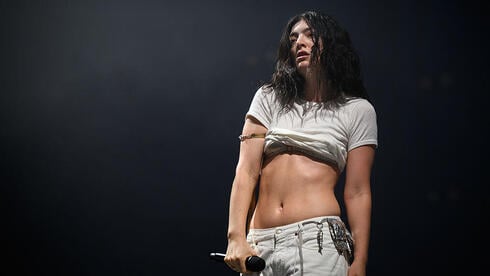
At just 10 years old, Lorde was shaken by a nasty remark from another girl: “You walk like a bitch.” Eighteen years later, that experience found its way into one of the New Zealand singer-songwriter’s most beautiful and revealing pieces of writing: the remix of “Girl, It’s So Confusing,” in which Lorde and Charli XCX resolved tensions born of the pressure cooker of a music industry that likes its women at odds with one another. “It’s just self-defense,” she explained of the cool, guarded persona she had developed, “until you’re building a weapon.” And that weapon, Lorde explained, had at some point been turned against Charli and the image she had adopted to survive: “Forgot that inside the icon, there’s still a young girl from Essex.”
Lorde’s confession in this beautiful song, which goes far beyond childhood trauma (she also opens up about her struggle with eating disorders), reveals a great deal about the journey she has taken since bursting onto the scene like a meteor at barely 16. Today, with major hits, awards and more than a few appearances in the gossip columns behind her, it’s easy to forget that, in the beginning, she seemed like an enchanting, almost otherworldly creature discovered at the far end of the earth. Back then, even the prospect of traveling abroad thrilled her. In the early song “Tennis Court,” one of the first to reveal the full extent of her talent, she writes excitedly about boarding her first plane and seeing the veins of her city from above, as though looking down from space.
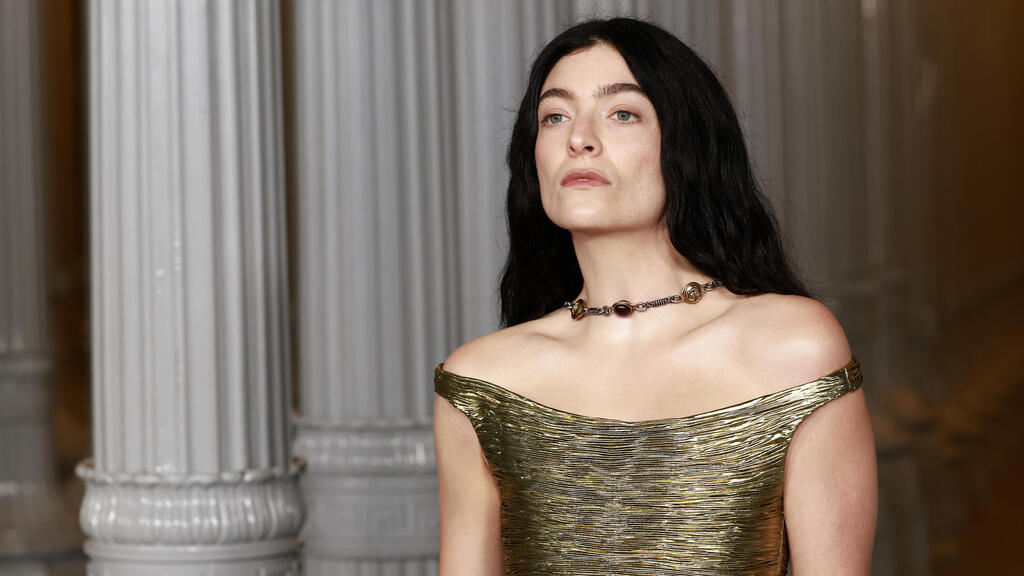
Lorde
(Photo: Frazer Harrison/Getty Images)
Indeed, Lorde’s captivating curiosity and ambition represented a generation for whom distances were shrinking and grand dreams seemed within reach, if only they could survive all the heartbreak along the way. “Royals,” the single that stunned the charts and made her a teenager admired even by David Bowie, announced her arrival not only as a compelling pop anthem but also as a song with the elements of a manifesto. Her second album, “Melodrama,” is considered part of the cultural canon of the past decade, alongside television series such as “Girls” and “Insecure” and the films of Greta Gerwig. It’s impossible to listen to it without being swept into the whirlwind of conflicting emotions experienced by its protagonist, emotions that aligned precisely with the widening cracks in the ground beneath her entire generation. The rise of populism, the death of truth and the realization that the planet is running out of patience may exist only in the background of Lorde’s personal melodrama, but they are inseparable from the catatonic mood of the songs. That is what separates an excellent album from a defining work of art.
By this point, Lorde was just about the coolest thing on Earth, and anyone who saw her onstage discovered that her magic was hardly confined to notebooks and recording studios. Quite the opposite: at barely 21, Lorde had gained enough experience as a performer without yet becoming worn down by celebrity, and the result was a rewarding live experience that almost made it to Israel before the concert was canceled under pressure from the boycott movement. Who could have imagined we would one day feel nostalgic for that period, when there still seemed to be a chance that things might change? The incident, of course, did nothing to interrupt Lorde’s golden age, and she finished the “Melodrama” era as a figure of almost universal acclaim. But in retrospect, it turns out she was carrying the ticking time bomb that threatens every talented woman, especially in entertainment: sooner or later, someone will simply call you a “bitch” and move on.
Nearly a decade later, Lorde is celebrating her 30th birthday at a crossroads. Her last two albums received relatively lukewarm receptions. Her third album, 2021’s “Solar Power,” took the most criticism, offering a sleepy sound that ranged from the softer side of Primal Scream (minus the original’s charm) to elevator music in Ibiza hotels. Her next album, 2025’s “Virgin,” brought her back to her comfort zone, a place where there is no comfort, where a restless soul moves constantly between the club and the bed, and the reviews reflected that return. But it produced no new major hits. “What Was That” came closest, but remained far from the achievements of “Royals.” The biggest disappointment came when the nominations for the 2026 Grammy Awards were announced and her name did not appear even once.
It isn’t difficult to understand what happened during those years. Billie Eilish stepped into the role of the mesmerizing young talent you couldn’t take your eyes off, following a trajectory similar to Lorde’s (and paying a similar price). Olivia Rodrigo recognized young people’s need for an updated version of rock, in contrast to Lorde’s aesthetic and carefully cultivated cool. Country music’s storytelling took over just about every available corner. Meanwhile, the dictatorship of TikTok’s algorithm transformed the way music reaches the masses and how it is marketed. What was possible with “Royals” in 2013 is hardly relevant in 2026. And while Lorde was making surprising statements about her gender (“Some days I’m a woman, some days I’m a man,” she sings on “Hammer”), it seemed that many had begun to see her as an out-of-touch auntie.
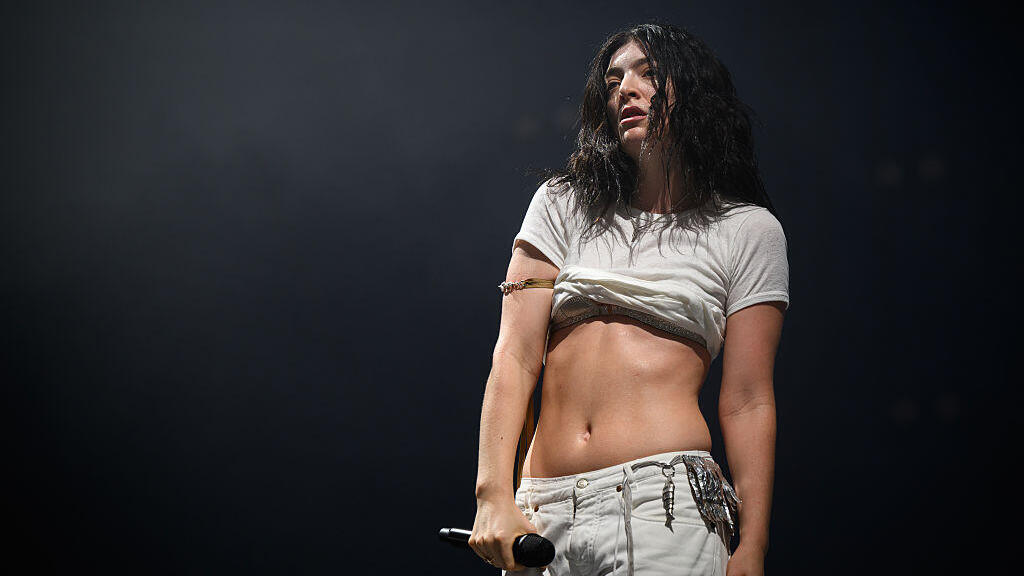
Lorde
(Photo: Leon Neal/Getty Images)
Perhaps the change in her commercial standing explains, at least tactically, her increasingly uninhibited political expression. Whereas she previously agreed to perform in Israel before backing out, she is now one of the most prominent artists to have removed their music from streaming services in Israel. On her latest tour, she repeatedly shouted “Free Palestine” as the stage was illuminated in the colors of the Palestinian flag. Following the controversy over Macklemore’s removal from Ed Sheeran’s tour, she appeared onstage at a festival in Austin, Texas, wearing a jacket bearing the words “Free Palestine.” In a photo posted to social media, she tagged Robert Kraft, the billionaire whose involvement led to the rapper being dropped from the tour. There’s no need to guess what that did to her popularity in Israel.
In the excellent song “Supercut,” from “Melodrama,” Lorde cannot tear herself away from the highlight reel playing in her head, compressing all the highs and lows of a relationship. “In my head,” she says, “I do everything right.” If the past 15 years were compressed into a single supercut, it would be impossible not to see an extraordinary, original, vibrant personality, sometimes also irritating and exasperating, but one who brought both youthful spirit and mature wisdom to pop music. That is why there is something unfair about the sour aftertaste as she leaves her 20s behind. She may not be the queen bee she proclaimed herself to be in “Royals,” but the sting is still there.