
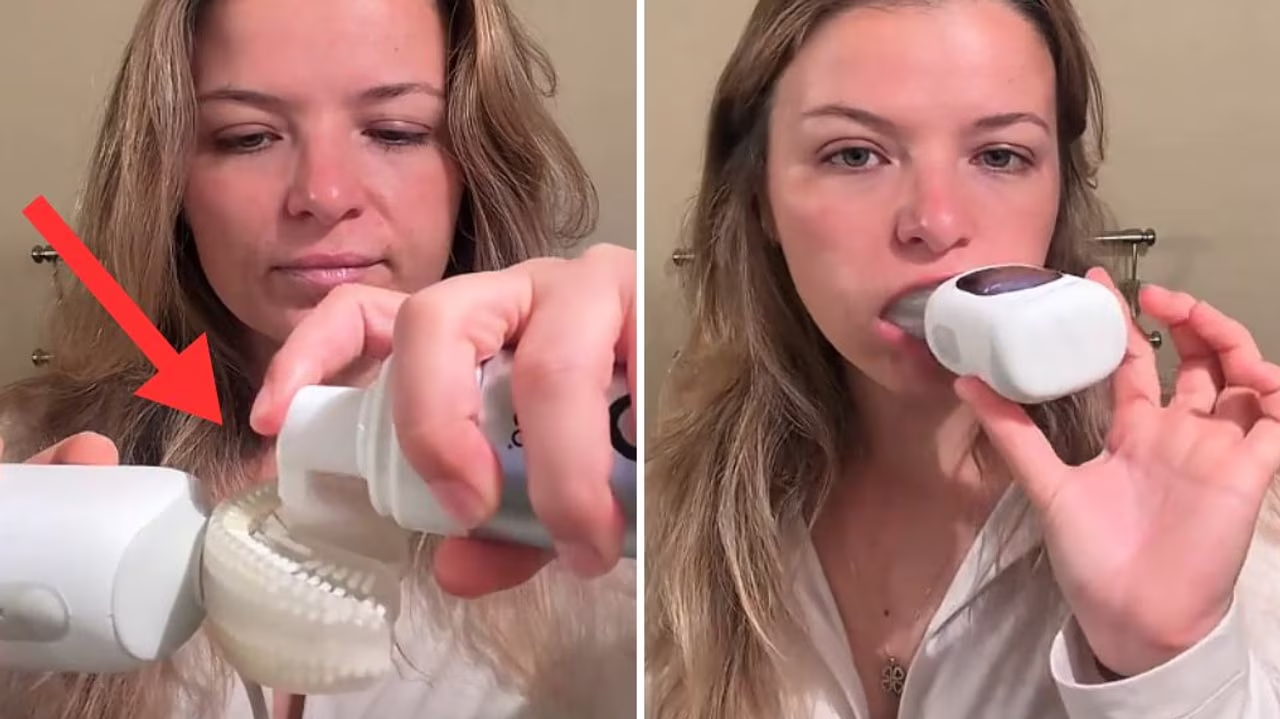
A futuristic toothbrush promising to clean your entire mouth in just 20 seconds has taken social media by storm, but dental professionals are urging caution before you ditch your regular brush.
The device, known as the Feno Smartbrush, has blown up across social media, where some creators have dubbed it a game-changer for people with ADHD, disabilities and sensory sensitivities.
Obsessed with viral finds? Download our new app and never miss a headline
Instead of moving a brush tooth by tooth for the traditional two minutes advised, people insert a U-shaped silicone mouthpiece lined with bristles, bite down, apply foaming toothpaste, and let the motor do the work in a fraction of the time.

The promise of cutting out mundane brushing routines has sent the tool viral, with fans declaring it a lifesaver, while sceptics question whether it can actually keep plaque and gum disease at bay.
The internet reacts
TikTok videos showing creators popping the gadget in their mouths have clocked hundreds of thousands of views, with comment sections split between desperate shoppers and bewildered onlookers.
For neurodivergent people who struggle with the executive dysfunction and sensory boredom of oral care, as well as other health conditions, the concept is being praised as a revolutionary “game changer”.
“This is great for people with mental and physical disabilities,” one person commented on TikTok.
“I feel like this is more efficient than having to do it manually; there could be areas that you don’t reach,” a second user wrote.
“As someone with braces, I need this,” a third echoed.
“I am physically disabled and would love this,” a fourth user praised with the love heart emoji.
“Brushing my teeth is low-key a sensory nightmare for me; this may be life-changing for me,” another person chimed in.
“I have it too; it’s low-key better than using a normal toothbrush, and you will feel your teeth way cleaner. It’s expensive but worth it,” another person revealed.
“This is actually a great device for anyone who has motor issues and for the elderly, truly,” another echoed.
However, other viewers weren’t convinced that a vibrating tray can replace a good old-fashioned toothbrush, and called the gadget a thing for “lazy people”.
“Mind you, we should brush our teeth for at least two minutes,” one person commented.
“What about the back side? Tongue? Roof of your mouth?” another user questioned its effectiveness.
“20 seconds isn’t long enough at all, no matter what you’re using,” a third user wrote.
“My teeth would just feel dirty still,” a fourth claimed.
“This is funky in all sorts of different ways,” another wrote.
“This is disgusting,” someone expressed, bashing the product.
“Worst way of brushing,” another person commented.
What a dentist really thinks
While mouth-tray brushes have circulated online for years, experts note that Feno is attempting to solve several historic flaws that plagued earlier models.
Dr Rick Iskander, Principal Dentist at Smile On, says he has watched mouthpiece-style toothbrushes cycle through hype waves since around 2016, and has been “disappointed” with them.
“The main reason we brush is ‘mechanical plaque removal’, and for that to work the bristles need enough force going through them to actually disrupt the plaque, and enough reach to get into the areas where we typically see it build up, like the inside surfaces of the lower front teeth and around the back molars while not being so hard as to damage the enamel,” Dr Iskander explained to news.com.au.
Has Feno cracked the code?
Unlike previous one-size-fits-all gadgets, Feno offers a mouthpiece across seven sizes following a scan of the user’s bite, paired with thousands of bristles and significantly higher vibration intensity.
But Dr Iskander warned that independent proof is still lacking.
“What I’d want to see is the same test we use on patients every day: plaque disclosing solution before and after brushing, which stains plaque so you can see exactly what’s been left behind, ideally scored by someone who doesn’t work for the company,” Dr Iskander explained, adding that tests should be done to assess the tool’s effectiveness.
“At the moment Feno’s plaque removal figures come from what they describe as internal pilot studies, and nothing has been published or independently tested as far as I can find.
“Until that happens, I’d treat it as something you use in addition to a normal toothbrush rather than instead of one.”
Is 20 seconds better than nothing?
Despite the scientific reservations, Dr Iskander acknowledged why the device is resonating so deeply with the neurodivergent community and those with limited mobility.
“For a lot of people with ADHD, the problem isn’t technique; it’s getting the task started at all,” he said.
“A 20-second brush that actually happens twice a day is going to do more for someone than a two-minute brush that happens twice a week.
“So if this gets someone brushing who otherwise wouldn’t, that could conceivably be a benefit, as long as they understand it probably isn’t cleaning as thoroughly as a normal brush and they keep up their regular check-ups.”
For shoppers looking to simplify their routine without taking an unproven gamble, Dr Iskander points out that reliable, cost-effective options already exist.
“If someone wants the same problem solved with something that’s already been tested, a standard electric toothbrush with a built-in two-minute timer and quadrant pacing takes a lot of the thinking out of it, costs appreciably less, and has decades of independent evidence behind it,” he said.
“It’s also worth knowing that Feno needs a new mouthpiece every three months, so the cost doesn’t stop at the purchase.”
News.com.au has reached out to Feno for comment.