
The Blazers are off to a nice start, but their first losing streak of the season after last night’s blowout loss to the Spurs is evidence that there is still room for improvement before Portland is considered a legitimate contender. While we can expect internal progress from within, as new additions to the team get better acquainted with one another and build chemistry, the prospect of improving the roster externally will be a temptation that’s hard to resist.
It’s still early in the 2026-27 campaign, but we’re deep enough in it to identify the players who have consistently contributed to wins and those who have not (whether it be due to a lack of playing time, injury, or poor play). NBA success is fickle—here today and gone tomorrow—and two of the Blazers’ standard bearers, Jrue Holiday and Damian Lillard, are 36 years old; greybeards by professional basketball standards. Portland might not be able to afford a wait-and-see approach while their window for a deep playoff run remains open.
As the siren song of a win-now move lures us in, how the Blazers handle the melody could be the key to determining whether the season sails to glory or crashes into wreckage, taking their long-term future along with it.
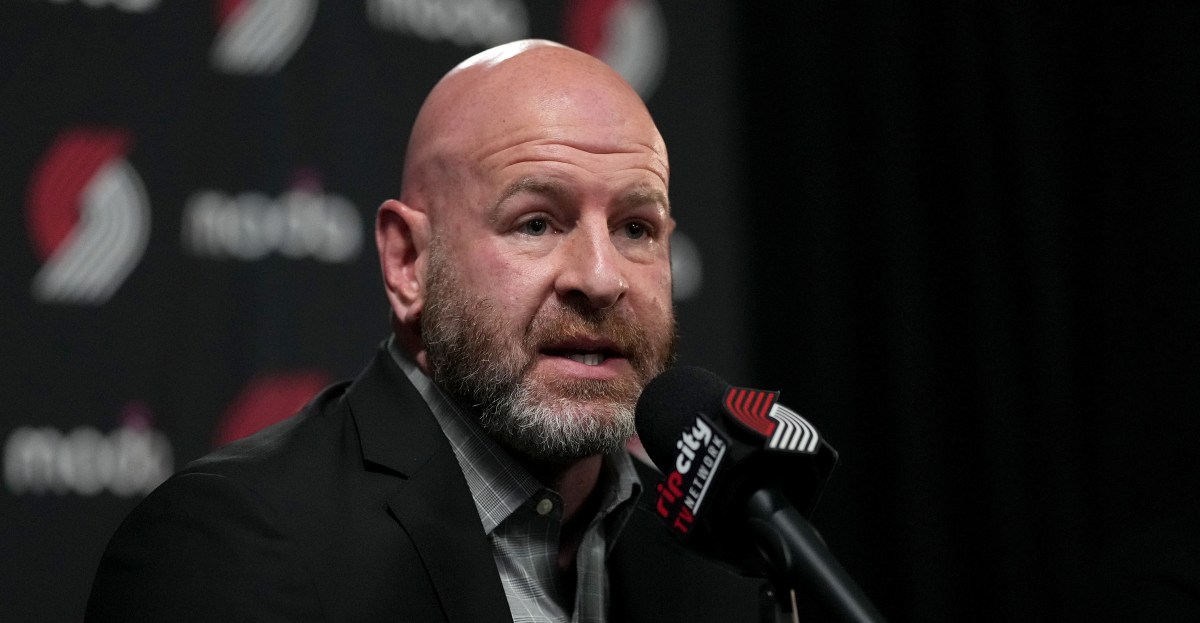
Let’s take stock of where the roster is at, what it needs, and the value of the assets available at General Manager Joe Cronin’s disposal to make a trade that impacts the team’s immediate outlook.
The Blazers have eight players who have been pivotal to their early season ascendance up the NBA power rankings: Deni Avdija, Damian Lillard, Jrue Holiday, Donovan Clingan, Toumani Camara, Ja Morant, Robert Williams, and Sidy Cissoko. Generally speaking, team chemistry is a delicate ecosystem that can be easily disrupted by haphazard roster moves. With these eight playing together this well, there’s no urgent need to shake up their roles to accommodate a newcomer.
Ja Morant was everything an optimist could hope for when the trade that brought him to Portland was made this past offseason. Unfortunately, he was only available for four games before a strained hamstring plucked him off the active roster. Ja’s place on the injury report isn’t anything new for him; he’s only played an average of 26 games in the three seasons prior to this.
In today’s NBA, eight-man rotations are largely a thing of the past. Roster depth matters when the game is played at such a fast pace and modern spacing demands defense cover so much ground on every play. It’s possible that adding players who can contribute at the bottom of the rotation will improve the Blazers’ margins enough to give them a higher ceiling, setting the table for a low-risk gamble with a reasonable payoff.
Portland’s on-court success this season isn’t the only reason to resist wholesale change at the top of the depth chart. By design, the Blazers’ cap sheet is pretty empty after next season. The reasons to keep it that way are twofold: the expiration of Deni Avdija’s contract and the Blazers’ investment in the 2028 NBA Draft.
Prior to the season, I wrote a short piece about the difficulty Deni’s unique contract situation presents to his long-term future here in Portland. The short of it is that it will be extremely challenging and highly unlikely for the Blazers to secure Avdija to an extension without sacrificing the quality of his supporting cast.
If the worst-case scenario plays out and Avdija leaves in free agency for nothing, Portland can pivot to a youth movement, anchored by Orlando’s unprotected first-round pick and a pick swap with Milwaukee they own in the 2028 draft. With both of those teams currently lurking in the cellar of the Eastern Conference, those assets have a chance to become winning lottery tickets in a class loaded with talent at the top end. If you haven’t taken a peek yet, check out online clips of the tantalizing play of 17-year-old freshmen Joaquim Boumtje-Boumtje and Nikola Kusturica.
And if the Blazers are able to retain the services of Deni Avdija beyond next season, it still makes sense to keep the cap sheet clean in order to surround him with winning talent after the contracts for Dame, Jrue, and Ja all fall off the books. That flexibility is a luxury in the second-apron era, which can make it difficult to build around a max-level player entering his prime.
In my view, everyone outside the seven-ish players currently contributing should be considered trade fodder. The Blazers’ current trajectory this season puts them outside the draft lottery, so I would definitely dangle this year’s first-rounder out there, too. The elephants in the room are Scoot Henderson and Shaedon Sharpe, two players whose initial promise has failed to materialize.
There’s just no way to sugarcoat Scoot’s performance this year. He looks like he’s auditioning for a starting role in another country next season. Maybe the Blazers can find a team to take a flier on him, thinking a change of scenery will help him get out of his head, but most likely Portland will have to attach some draft capital to net a contributor in a trade.
Assessing Shaedon Sharpe’s value is a much more complex riddle, made even more difficult to solve by his current injury. The prevailing opinion when he signed his 4-year, $90 million rookie extension was that it was a team-friendly deal for a young, exciting player who oozed potential. Now, I’m not so sure. The market for all-offense, no-defense guards has crashed harder than the AI bubble. The last time we saw him play, he was getting targeted by the Spurs on every postseason possession, so it’s safe to say his liabilities on that end of the court have been scouted.
Shaedon is one of the few players locked into a deal that keeps him in Portland beyond next season, which eats into the aforementioned cap flexibility. Trading him for a player committed to fewer years on their contract could address the Blazers’ goals in the long term and short term simultaneously.
Potential for Improvement
The Blazers’ roster needs are in the eye of the beholder. With Donovan Clingan and Robert Williams manning the pivot and protecting the paint, the rotation at the five is pretty solid. Maybe adding a “break glass in case of emergency” center for when the Blazer bigs get into foul trouble or get dinged up makes sense, but that won’t improve the regular rotation. The team is currently giving Yang Hansen backup minutes over Brandon Carlsen, when Williams has been rested for load management. A good sign for Hansen’s development sure, but is it enough?
After the trade that sent out Jerami Grant and Kris Murray for Ja Morant left the bench bereft of forwards, and now that Vit Krejci is out indefinitely, addressing the wing depth seems prudent. Targeting one that can play small ball center would kill two birds with one stone. The Blazers should also be on the lookout for a playmaking wing, to help bolster the fragility of the backcourt, and give them stability on the perimeter. Whether one is available for the price the Blazers are willing to pay is the big question.
Managing the Blazers’ somewhat unexpected success is a good problem to have, but it’s still a problem that needs to be addressed. As Portland weighs its options, General Manager Joe Cronin faces a delicate balancing act. The clock is ticking on the careers of veteran leaders like Damian Lillard and Jrue Holiday, which makes it difficult to simply stand pat, especially given the obvious rotational gaps on the wing and poor, or non-existent, play of some of the redundant guards.
Yet, pulling the trigger on a hasty trade could imperil Portland’s strategy for the future by compromising their pristine cap space and/or prized draft capital in beginning in 2028. Ultimately, navigating this pivotal crossroads will determine whether the Blazers can successfully capitalize on their current momentum without sacrificing the flexibility needed to build a sustainable future.
The longer their winning ways continue, the louder the calls for improvement will grow. Can the Blazers improve today and maintain their better tomorrow? The front office has until the trade deadline to answer that question.