
A 5th transition in a career spanning finance, telco, entrepreneurship and public-sector
Believes MDEC faces another reinvention as Malaysia pursues its AI Nation ambitions under Malaysia Digital 2030
.jpg)
PIKOM chairman Alex Liew described Gopi Ganesalingam as a “passionate champion of our technology companies, entrepreneurs and innovators” in a LinkedIn tribute following his departure from Malaysia Digital Economy Corporation (MDEC).
Rajen Dorairaj, who has known Gopi since 2015 and was an MDEC executive till end 2019, similarly praised his contribution to Malaysian technology companies through initiatives including GAIN and DEX CONNEX, which helped businesses reach international markets.
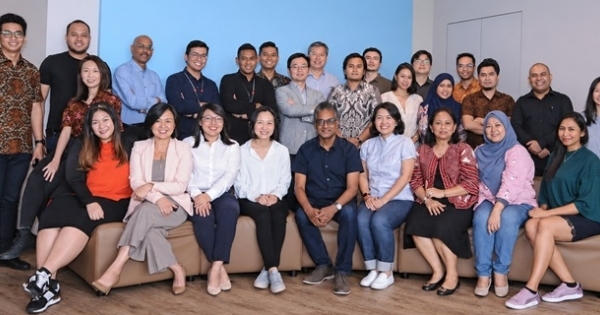
The tributes, and appreciation dinners and lunches, one of which the writer was invited to, reflect the regard in which Gopi is held across Malaysia’s technology ecosystem after serving almost 11 years at MDEC, where he helped Malaysian technology companies expand internationally, access investment and build industry connections.
Interestingly, when then MDEC CEO Datuk Yasmin Mahmood recruited Gopi to head the newly created Enterprise Development unit, she told Digital News Asia (DNA): “I need to put the right person in charge.” Her ambition then was to help Malaysian technology companies grow from annual revenues of RM20 million to RM200 million. The executive she chose to lead that effort was Gopi.
.jpg) Yet, 11½ years later (Joining in Feb 2015, Gopi left MDEC in Oct 2024 when his contract expired, before rejoining in July 2025) Gopi believes his departure was overdue. “I personally feel in senior leadership roles, you shouldn’t stay more than 10 years,” he told Digital News Asia (DNA). “I encourage senior leaders not to stay too long because you will stifle innovation, you will stifle growth.”
“I overstayed,” he said, although his actual tenure of 10 years and eight months put him only slightly beyond his own 10-year limit. His departure marks another transition in a career spanning finance, telecommunications, entrepreneurship and public-sector ecosystem development.
From entrepreneur to ecosystem builder
On his joining MDEC, Gopi said, “That was the first change in a government agency, bringing in somebody from industry to help change the mindset of all the initiatives to be very industry driven.”
His assessment was telling. “Both Yasmin and I realised that MDEC was not very connected to the industry.”
At the time, he said, it was difficult to identify Malaysian technology companies generating more than RM20 million in annual revenue, despite years of investment in the digital ecosystem. It was a sobering realization, for Malaysia had successfully attracted foreign investment through the Multimedia Super Corridor programme, yet its domestic technology companies struggled to expand internationally. “You’ve got your FDIs coming in. It creates a local ecosystem but we couldn’t globalise our companies. That was the problem statement,” he said.
MDEC had already conceived the Global Acceleration and Innovation Network (GAIN) initiative in 2014 to address this challenge. Gopi took responsibility for developing and implementing the programme, sharpening its focus on international expansion, financing, mentoring and visibility. “GAIN was brought in after realising that we don’t have really good marketing. We’re not good in branding. Our storytelling was weak,” he explained.
The programme focused on Gateway, Amplification, Investment and Nurturing, connecting Malaysian technology companies with overseas markets, financing, mentors and promotional opportunities. Between 2015 and 2017, Gopi helped organise three visits to Silicon Valley involving Malaysian technology entrepreneurs.
That was when he believed the needle started moving too – 2015. Because of the annual trips MDEC started making to the Silicon Valley? “We knew we could not recreate their ecosystem but you can bring the thinking, the mindset back.”
He cited companies such as iPay88, N2N Bhd and ViTrox Technologies Bhd as examples of Malaysian businesses that subsequently achieved significant milestones.
GAIN later expanded into regional market access, beginning with Indonesia in Nov 2017. Gopi recalled participating companies telling MDEC that government-backed introductions had opened doors that might otherwise have taken years to access. “Today we operate in 40 cities,” he said of the market-access network.
[Ed note: Although this interview took place in August, after Gopi had left MDEC on June 30, he continued to refer to the agency as “we” throughout the conversation.]
Building Malaysia’s technology ecosystem
Gopi’s efforts extended beyond international expansion to strengthening the ecosystem supporting entrepreneurs. MDEC introduced the Malaysia Tech Entrepreneur Programme to attract foreign entrepreneurs and Malaysia Digital Hubs to bring startups, technology companies, investors and mentors together. “We realised we needed co-working space,” Gopi recalled, emphasising that successful hubs required entrepreneurs, technology expertise and opportunities for collaboration.
The agency also strengthened its funding ecosystem around 2019 and 2020, connecting technology companies with venture capital and other investors. Those relationships became particularly useful when the Covid-19 pandemic brought physical meetings to a halt.
“Within two or three months we were able to help raise money for our companies without any physical meeting. It was all done online, your due diligence, everything,” he said, crediting the strong ecosystem ties MDEC had built. “That was because the ecosystem was strong.”
Gopi also worked with Bursa Malaysia and the Securities Commission to encourage more technology companies to enter the capital markets. “We now have more than 28 GAIN companies listed in Bursa,” he said, highlighting what he considers an important outcome of the programme.
Another initiative, DEX CONNEX, which falls under GAIN, helped Malaysian technology companies connect with overseas customers and partners. In Sept 2025, MDEC reported more than RM1 billion in potential digital export opportunities through the programme.
For Gopi, these initiatives were interconnected. “Investments create opportunities. Opportunities create local companies, local companies create exports. Exports create wealth.” This was his “Circle of Life” model for building a sustainable technology ecosystem.
Fifth reinvention: From leadership to stewardship
Gopi is now preparing for what he describes as his fifth career reinvention, moving towards board and strategic advisory roles with established corporations. “I am not retiring. I am actually pivoting. I am reinventing myself, which I have done four times before in my career.” His focus will be helping corporations navigate AI-driven changes to business models, costs, revenue and competitiveness.
“From leadership, why don’t you go to stewardship?” he recalled being advised by executive search consultants. He is exploring opportunities across Malaysia, ASEAN and Australia, with discussions already taking place through headhunters.
However, he also wants more time with his family, particularly his youngest son. “Career and money is not everything,” he reflected, describing plans to travel through Germany and Switzerland together with his youngest son.
As for MDEC, Gopi believes the agency faces another reinvention as Malaysia pursues its AI Nation ambitions under Malaysia Digital 2030. “MDEC now needs to reshape to be part of the AI Nation agenda under MD2030.” He believes this demands fresh leadership, younger talent and a willingness to challenge established practices.
“Otherwise you’re putting old wine in a new bottle,” he cautioned. “You need a set of leaders who are fast, who are agile, who are forward looking, who are inspiring the industry.”
His final message to MDEC captures the philosophy that guided his years there. “Because without the industry, there is no MDEC.”
AI was used in the first draft of the article with the writer responsible for the published version.