
Tuesday 10 November 2026
Good morning team, and welcome to another episode of Tuesday news, and it is a pretty sombre Tuesday after a very tough to watch Wallabies performance against England on Sunday night / Monday morning. Let’s start with some good news stories first.
Some better news stories
Treyvon Pritchard set to return on Reds international tour
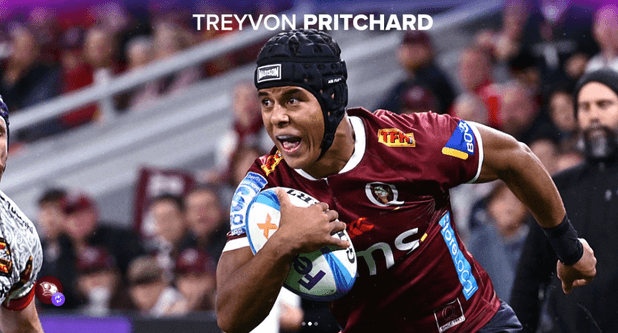
News out of the Qld Reds is that Treyvon Pritchard is back from injury and will be joining the Reds on their pre-season tour of Japan and Italy. It’s a huge boost for the Reds and Pritchard who in incredible form at the U20 world cup before being injured in a horrible hip drop tackle. Hopefully his return to playing goes smoothly and we see him back in the Reds in Super Rugby to add to his 12 caps in 2026.
Reds on tour
The Reds next game on tour is against the Wild Nights this Saturday 14 November at Kumagaya Rugby Stadium in Japan. They will then head off to Europe to play Italy XV and Benetton Rugby in Treviso on November 20 and 27. That’s a great opportunity for the Reds players to travel and get some playing time.
Sevens Rugby in Brisbane
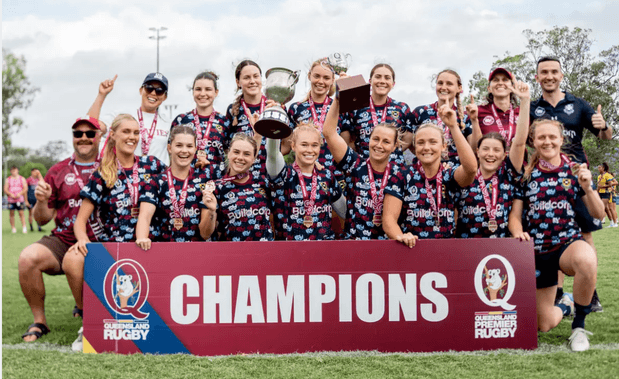
Last weekend saw the State Sevens Championshis played at Norths in Brisbane where the Caslick Cup and the Stannard Shield were on the line for the Women’s and Mens teams respectively.
UQ took out the Caslick Cup, and Wests knocked off UQ in the Mens to claim the Stannard Shield. Congrats to both teams and to everyone involved in organising the sevens season.
Wallabies at Twickenham, a bad game, or a brutal reality check
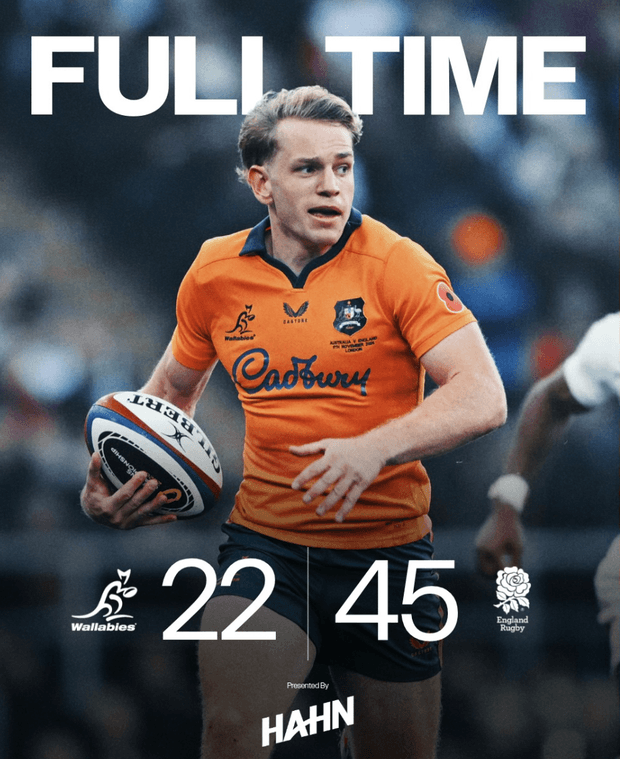
There was plenty of discussion in the Monday news comments about how poorly Australia played, and it’s hard to argue with the sentiment. There were also a few comments about how well England played, and again it should be hard to argue with that sentiment. As with most situations in life, I think the answer is a combination of the two, starting with England were very good, they created a game plan, picked players who could execute that plan, and then went out and did exactly what they had planned to do. In doing that, they scored more points against the Wallabies than any side that has gone before them.
This was an English side that was poor during the six nations, with media articles reporting that the coach was drinking at the last chance saloon, and had lost the dressing room. And what did the squad do, they turned in a top quality performance when they needed it. They dominated almost every stat that I could find measured as shown in the image below, courtesy of Rugbypass. You can find the full match analysis here.
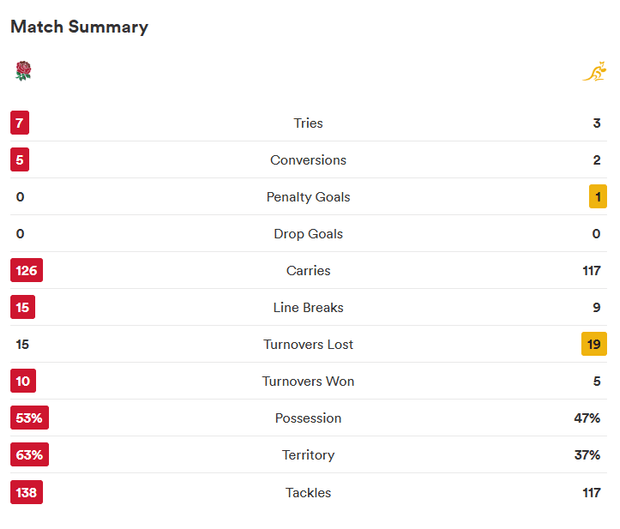
The two that Australia led in the image above were turnovers lost (not really one you want to win), and penalty goals, which feels like bringing a knife to a gun fight when you see the final score, but it did get the Wallabies on the board relatively early, which is not a terrible thing.
Australia also won lost the penalty count by conceding 11 times compared to England 7, the yellow card race by 1 to 0, the missed tackle count by 28 to 23, and conceded a whopping 15 line breaks while managing only 9 themselves. Filipo Daugunu accounted for 3 of those line breaks in his 20 minutes or so on the pitch.
England did dominate pretty much all facets of the game and truth be told could have scored another 3 or 4 tries. Australia were lucky to not concede more than 50 points against England for the first time ever. The English attack was outstanding at times (or the Wallabies defence was terrible), much like the French in Brisbane, and the All Blacks in Auckland and Sydney, the English were excellent at creating overlaps with a lot of players in motion and making the Australian defence make choices under pressure. Credit to the English team for being able to move the game around, identify the space, and make sure their players ran into those spaces. They took a relatively simple concept (load up with attacking players where there are less defenders) and executed it brilliantly.
Plus their ability to contest the high ball with more numbers chasing hard paid dividends, and their support play, both in close and out wide was top class.
On the other hand, Australia couldn’t find a way to make a dent, or even a scratch in the English defence. England showed genuine urgency to rush up across the line and shut the Aussie players down before they even had a chance to get started. Australia seemed to freeze in the face off that onslaught, resorting too often to one off runner, getting the ball standing still and then trying to make an impression in the defensive line, which was made exponentially more difficult by doing that without other players in motion. The English defence had a day out, picking off our forward runners (and backs) and smashing them backwards, which in turn led to the Wallabies resorting to kicks while under pressure. Kicks that weren’t chased with any real urgency most of the time, or if they were it seemed to be by one or two players, compared to waves of English players when they kicked. Speaking more of the kicking, it seemed that our contestable kicks went too far, and our clearing kicks to touch didn’t make much ground.
As a rusted on Wallabies fan, the most disappointing part of this loss is that the Wallabies were completely dominated in the first half and it was only a Max Jorgensen intercept try that had Australia even close at half time, when they really didn’t deserve to be. You expect good teams to have times in games where they dominate territory and possession, but then the momentum will shift back the other way. Australia were seemingly incapable of taking control of the game for any sustained period of time and putting England under any real pressure when it mattered.
So, what were the three things we learned?
England were very good, they attacked with pace, power, width, and great support play, they put the Australian defence under pressure and the defence failed too often.
England defended as a seemingly impenetrable wall, and scrambled when they had to, they hit breakdowns and forced errors and turnovers from Australia. When faced with that defensive pressure, the Australian attack failed.
Our game leaders were found wanting, they couldn’t find a way to improve the performance on the field or to change tactics when they needed to. Wilson, McReight, Lonergan, Meredith, Wright, Ikitau, are the senior players or the players given the 9, 10, and 15 jerseys, and they needed to be better.
A reality check, or a bad game?
Probably a bit of both. Definitely a bad game, with none of the Australian players outperforming their opposite numbers, and definitely a reality check. When we look back at this year in 2026 we can point at some decent performances against second tier teams (Argentina and Japan) but for every good or great game against top tier opposition (Ireland and South Africa), we have 2 or three poor games against other top teams (France, New Zealand, New Zealand, and now England). It feels like a reality check and one that the Wallabies need to take heed of.
So, as a fan, it’s frustrating, Australian Rugby and the Wallabies have been in decline for more than ten years (2015 World Cup), and we haven’t been able to build any sort of sustained high level performance.
There was some hope in 2020 under coach Dave Rennie, but then of course RA sacked the good coach to hire Eddie Jones, and the World Cup in 2023 happened and despite some encouraging victories over South Africa, and a good series against the British and Irish Lions, the Wallabies seem stuck in a cycle of good then underwhelming performances. So our current world ranking seems appropriate and represents where we have been for most of the time since 2015.
Where to from here
Which of course leads us to the question of where to from here? What are Rugby Australia to do to make lift the standard of performance that the Wallabies can deliver on a regular basis?
performance , and the Wallabies going to do, what changes will they make to
should it be to pay the Wallabies more, as RUPA have suggested and are even threatening to take RA to court over
should we reduce the number of super rugby teams to three to concentrate the talent, and reduce the number of spots for professional rugby players in Australia even more
should we continue to focus on schoolboy prodigies who are probably successful because they are bigger, stronger, and faster than their opponents
should we continue to be seduced by the sugar hit of buying rugby league players at above market rates
It’s been claimed that compared to previous years, that the adults are in charge of RA now and that things are improving, and if there is one positive that came out of the 2023 World Cup it is the realisation the we as a rugby playing nation have to improve if we want to climb back to the top of the world rankings.
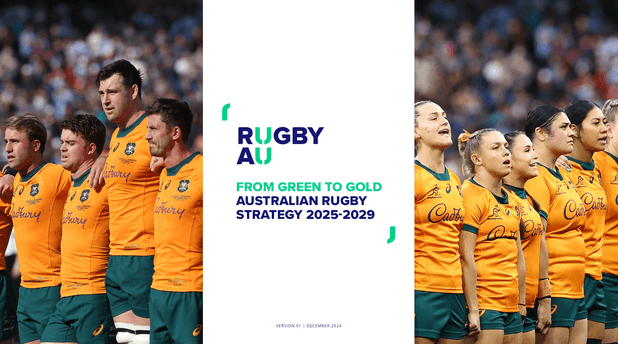
RA developed From Green to Gold in 2024, which you can find here, outlines some ambitious growth and performance targets for the five year period from 2025 to 2029. Unfortunately, we missed out on the first one, which was to win the Lions Series. Success for the Men’s and Women’s World Cup in 2027, and 2029 respectively means playing in the final weekend, so a top four spot. That means making the semi finals, which at the moment seems a long way off for the Wallabies. There are also some targets for growth in participation in mens and womens rugby and lifting the win rates across all of the Australian teams.
How to turn a strategy into actions
It’s great to have a strategy, or a strategic plan, it shows that an organisation has a vision that it wants to achieve, but where the rubber needs to hit the road is the implementation plans, what are RA and the state unions doing to hit the ambitious targets in the strategy. As fans, we should look to have visibility of those plans, and expect to see them reported on, to measure the areas that are successful, and to identify what needs to change.
Without having seen the implementation plans, and without really bothering to research it on a Monday night after the Wallabies were routed at Twickenham, what are the things that can be done to improve Australian Rugby? In no particular order:
Continue to invest in Women’s rugby, including by expanding the Super Rugby W season and paying the players more to slow the drain to Rugby League and the Aussie Rules
Invest in coaching, not just at the professional level, but at all levels. Matt Rowley used to talk about the coaching materials that England made available to clubs and coaches alike, it came from the RU, and was made available to all levels
Find and nurture play makers, where are the next two generations of players who can play 9, 10, 12, 15 going to come from? Having representative teams at all age levels will help with this and show young players that there are options to stay in Union. To add to that, is there a way to have these younger players exposed to super rugby coaching from the likes of Stephen Larkham and others.
Expand the Australia A program as much as possible. Nutta wrote about this last week, that the Australia A tours could do a lot to increase the number of players that are gaining experience playing in international matches against the emerging nations.
Hire a mental skills coach. The Wallabies and Australia’s super rugby teams seem to lack mental resilience. If there is a way of improving this and improve performances, then RA should chase this harder than any league player who wants a crack at the world cup next year
continue to use Super Rugby Aus to provide opportunities for the top club players to make the step up. Not all club players want to be professional rugby players, but for those that would like a crack at it, then Super Rugby Aus is a great vehicle.
Find a strength and conditioning coach that can keep our fly halves fit and on the field.
Find a strength and conditioning coach that can keep our fly halves fit and on the field
Find a strength and conditioning coach that can keep our fly halves fit and on the field
What else can Rugby Australia do to improve the game from the grassroots level to the Wallabies and Wallaroos? Keen to hear your thoughts in the comments.
Player Ratings from Twickenham
I thought about it, doing player ratings using the legendary GAGR player rating scale, but I couldn’t find the energy for it on Monday night. Collectively the Wallabies should have score something like 2 or 3 out of 10 maybe. And I don’t think any of the players would have scored more than 5. Daugunu was probably the pick of the Australians including the starters and reserves, followed by Donaldson.

That’s a wrap
As always, thanks for making it this far, and reading these ramblings. Have a great Tuesday, and hoepfully the comments are fun.
Cheers
RAWF
Stay in the loop with G&GR