
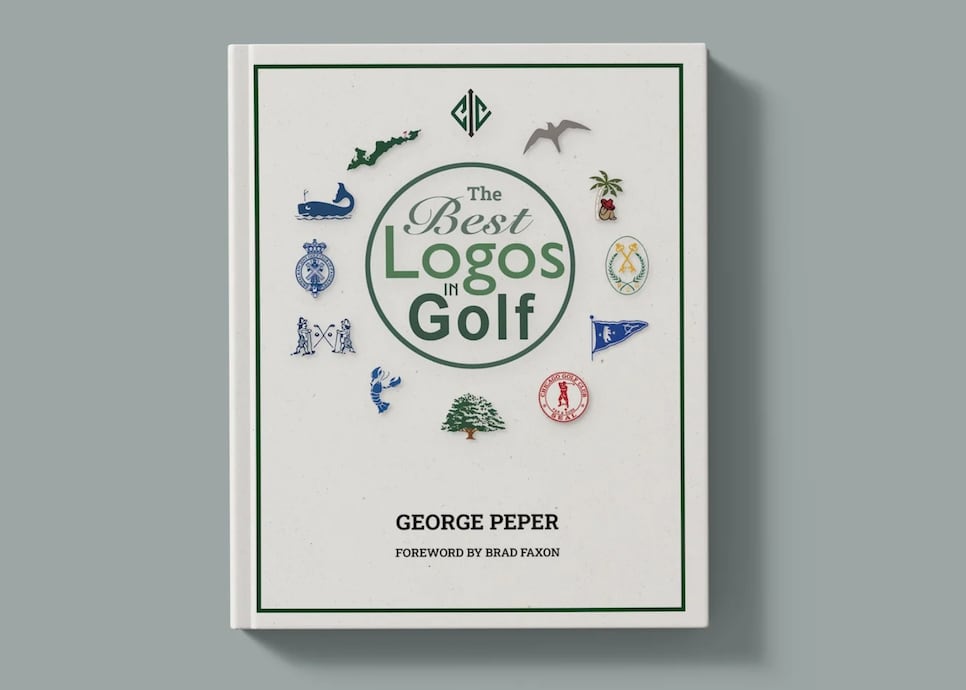
By what criteria does one rate the logos of golf? First, it must be said that my good friends who helped me produce the list for my new book—Clay Jackson, Lou DiLorenzo and Gee Aldridge—each applied his own definition of greatness, producing an objective tally of subjective judgments. However, certain qualities consistently separated the best from the rest.
The first is distinctiveness. A great golf logo is immediately recognizable and unmistakably its own. Closely related is heritage. The strongest marks reflect something real about the club’s story, culture or physical setting. Design quality matters as well: balance, clarity, thoughtful typography and symbolism that rewards closer inspection while remaining legible from a distance. Timelessness and simplicity are essential. The best logos avoid trendiness or clutter. They carry a quiet authority that allows them to endure for generations. Symbolism deepens the connection between club and place—whether drawn from geography, heraldry, wildlife or history. Versatility is another hallmark. A golf logo is an unusually migratory creature and must function comfortably whether carved above a clubhouse door, tiled into the bottom of a swimming pool or embroidered over a member’s heart. Finally, there is the backstory. As the one tasked with sharing the saga behind each of these logos, I will admit I was biased toward those with the most interesting evolutions.
Back Nine Press
A golf club logo is rarely mere ornament. It carries memory, identity and meaning. Sometimes it serves as an invitation; at others, a barrier—or even a passport. An enamel pin exchanged across a clubhouse bar can open doors continents away. A bag tag swinging from a travel cover in an airport speaks volumes without a word. In the end, the mark does what it has always done since Cain, marked by God for killing Abel, walked east of Eden: It tells who we are. And in golf, perhaps even more pointedly, it tells where we belong.
All this week we’ll reveal a handful of the logos that made the top 100, excerpting from the book and offering a peek into the fascinating stories of the marks many golfers have grown to love.
OHOOPEE MATCH CLUB 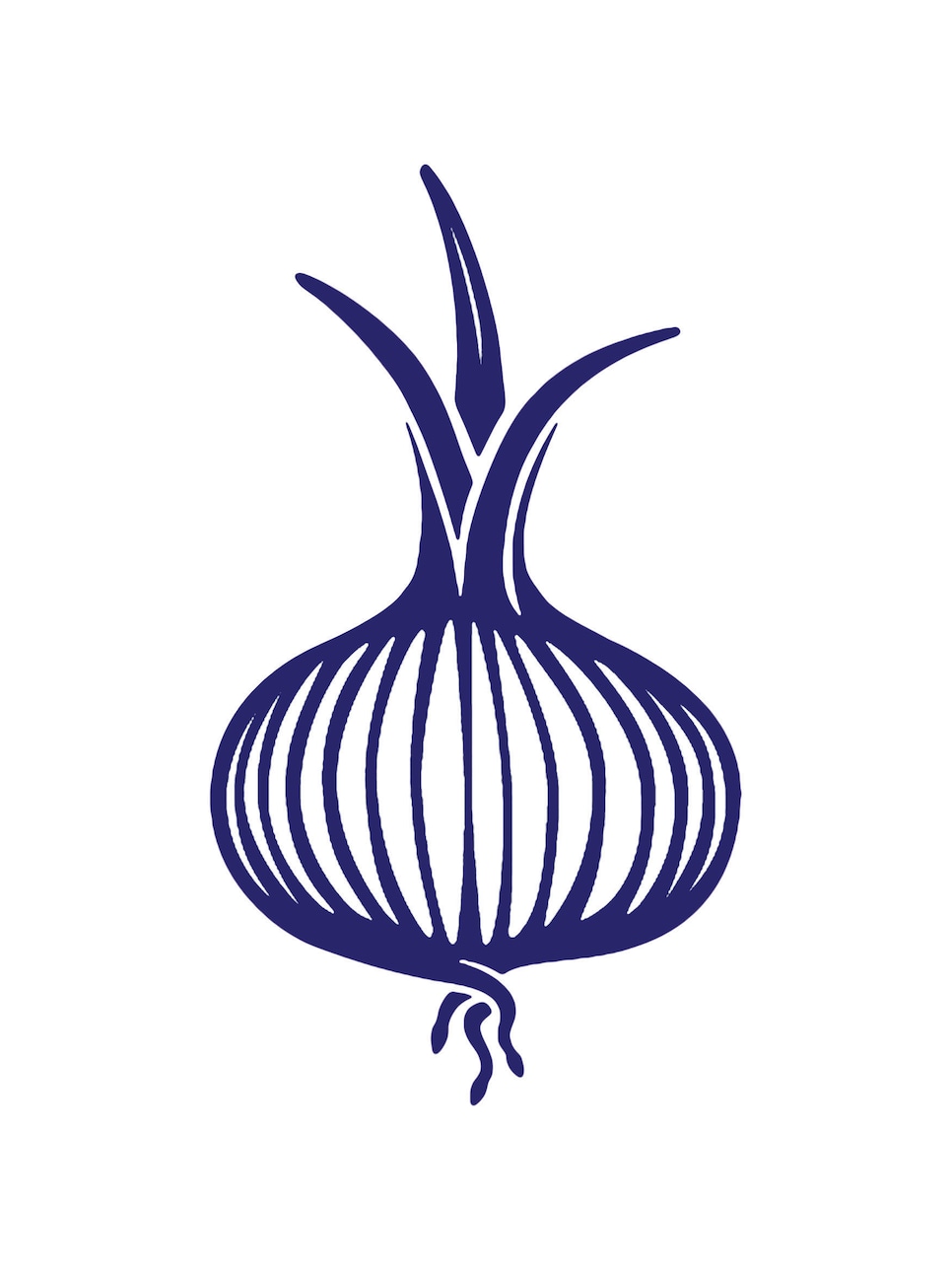 Cobbtown, Ga.
When you build your dream course in the middle of a 3,400-acre onion farm, there’s only one option for the club symbol, and tech magnate Michael Walrath went with it. That, however, may be the only predictable move he made in creating one of the game’s truly unique places to stay and play.
The Ohoopee Match Club arose as a result of Walrath’s 40th birthday, when he took a bunch of his high school and college buddies on a celebratory golf trip. At some point during that weekend—likely, he admits, after a sufficiency of alcohol—he promised to make it an annual event. Over the next few years, he and his pals made visits to a number of different resorts and private clubs. During that time, he took note of the aspects he liked and didn’t like about each club, course, and experience. And those notes evolved into a 20-page manifesto outlining his vision for the ideal club.
In 2018, it came to life about an hour from Savannah, on the outskirts of a small town in rural Georgia, bordered by the Ohoopee River. Architects Gil Hanse and Jim Wagner had been involved with the land a decade earlier in a separate project that was scrapped because of the global financial crisis. Walrath brought them back with the directive to create a golf course designed purely for match play—a fun-filled journey replete with halfpar holes and risk/reward strategies, where every assignment demanded thought, every situation was pivotal.
Hanse and Wagner responded with not just 18 holes, but 22—the four additional holes available as an option to replace Holes 2 through 5 and form a shorter, alternate loop known as the Whiskey Routing. Along with the course came first-class hospitality—high-end food, service, and accommodation—with an aim of creating a memorable experience. The club has just 100 members but actively encourages both accompanied and unaccompanied guests to sample the Ohoopee atmosphere.
The iconic onion appears in indigo blue in homage to the Indigo Snake, a non-venomous and generally docile resident of the property. Look closely at the logo, designed by Walrath in collaboration with Greyson Clothing CEO and Ohoopee member Charlie Schaefer. Poking out of the top of the onion are three snake tails, and at the bottom are three heads.
MYOPIA HUNT CLUB South Hamilton, Mass. 
At first blush, the notion of a club named Myopia—the medical term for nearsightedness—being represented by a fox—an animal with famouslysharp vision—seems like a twisted joke. But the club’s history shows it all makes sense.
Regarded by some historians as the oldest country club in America, Myopia had its beginnings in the town of Winchester, Massachusetts. In 1875, the four sons of Frederick Prince—who would eventually become the mayor of Boston—formed a neighborhood baseball team. It just so happened that all four brothers, as well as a couple of their pals, had eyesight poor enough to wear spectacles, so they good-naturedly dubbed themselves the Myopia Nine. Four years later, after their sporting interests had expanded to include tennis, water sports, horse racing, fox hunting, and steeplechase, they incorporated themselves as the Myopia Club. They built a clubhouse overlooking a nearby lake named, ironically, Mystic. That hillside site would eventually become the home of the Winchester Country Club.
When the equestrian pursuits began to take precedence, several members sought to move closer to Boston, and the result was the founding of The Country Club in Brookline , several of whose charter members were Myopians. Meanwhile, the Myopia sportsmen began to feel the lure of another game, one that had just arrived in America: golf. The appeal was so strong that those members who felt protective of the club’s horsey origins pushed through a club by-law: for every golfer joining the club, two new equestrian members would be admitted. The golf movement was inexorable, however, and in 1882 the club relocated once again, this time to a large farm in nearby South Hamilton. In 1894, they opened a rudimentary nine-hole golf course, laid but initially by member R.M. Appleton.
The first tournament held on that course was won by a former Harvard baseball and football player named Herbert Leeds, who later revamped Appleton’s work and added a second nine. His design has remained substantially unchanged for 125 years. Myopia hosted four U.S. Opens from 1898 to 1908, with the 1898 edition staged as eight rounds of nine holes, as the club’s second nine was not completed until 1901. The champion that year was the Scotsman Willie Anderson, who shot a record-high total of 331—and even after that he had to defeat Alex Smith in an 18-hole playoff, in which they shot 85 and 86. Interestingly, Anderson’s caddie in that Open, a fellow named John Jones, finished 12th, playing an additional two nines of his own each day. Willie Anderson would go on to win four U.S. Opens, including an unequaled three consecutive titles from 1903-05, the last of them back at Myopia.
Through it all, the Myopians never gave up their horses. Myopia Hunt Club remains just that: a venue for polo matches open to the public on Saturdays throughout the summer, and fox hunts throughout August and September. Today the club practices the more humane method of “drag hunting,” where hounds follow an artificially laid scent rather than a live fox.
And so, Myopia’s fox-and-horn logo remains: a proud symbol of the club’s rich history and the legacy of a quartet of lads who, despite their impairment, displayed remarkable vision.
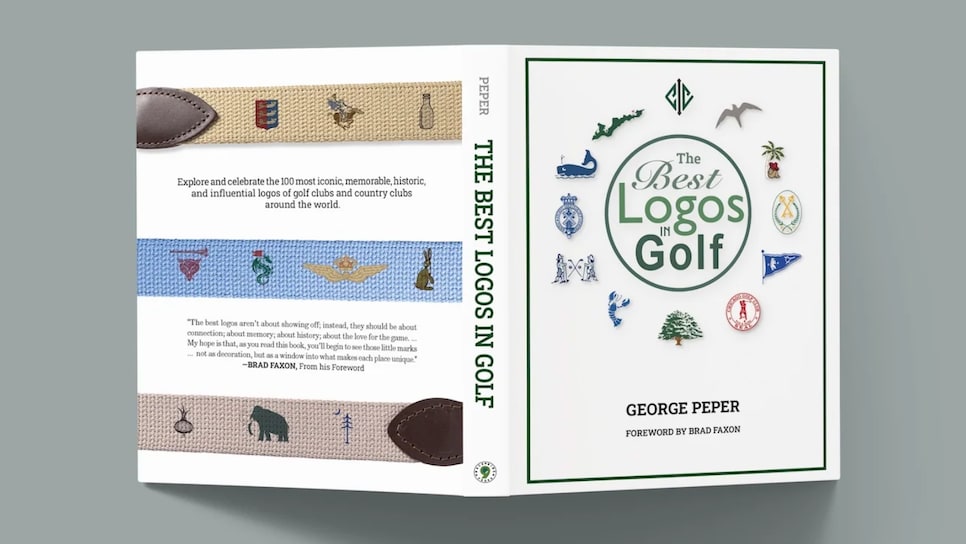
The Best Logos in Golf, by George Peper and published by Back Nine Press, is available at www.back9press.com. The standard edition is $90 and the limited Edition is $150.
This article was originally published on golfdigest.com