
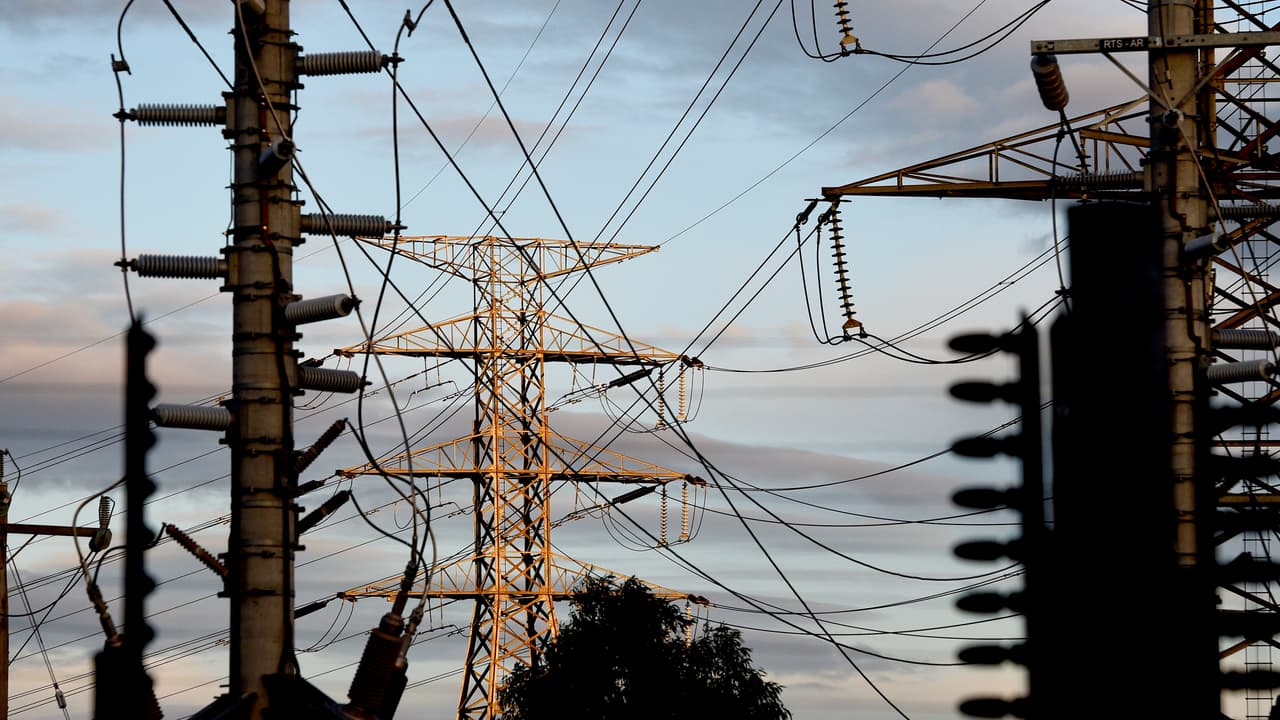
Wholesale energy prices could almost double in Australia by 2029 as the shuttering of coal-fired power stations outpaces renewable energy builds.
New modelling from research firm Rystad Energy shows electricity prices will surge up to $110 per megawatt hour from the current $60MWh, with the number of large-scale wind and solar farms needing to triple over the next two years for the Albanese government to hit its 82 per cent renewable energy target by 2030.
First reported by The Australian, Rystad senior analyst David Dixon said the Capacity Investment Scheme – which underwrites large-scale renewables projects – is failing to meet its goal of pumping 40 gigawatts of new capacity into the national grid by decade’s end.
“The whole purpose of the CIS was to have capacity online by 2030 for the impending coal closures,” Mr Dixon said.
“But it’s already too late as they haven’t started construction yet.”
The CIS is the cornerstone of Labor’s plan to scale up clean energy generation.
The Energy Department last month revealed that almost a quarter of clean-energy projects backed by the CIS had fallen over, with an official putting it down to “material change in capital and construction costs”.
“Some have had difficulty obtaining network connection or access rights to the network, delays with planning and environmental approvals,” the official told a parliamentary hearing.
“Some have difficulties securing power purchase agreements.”
Junior minister Julian Hill plays down Rystad modelling.
Pointing to data last month showing wholesale spot prices fell 27 per cent compared with the July to September period last year, junior Minister Julian Hill said he did not think households need to brace for high power bills.
“Those projections are put out regularly, and they go up and they go down,” Mr Hill told News24.
“I take them with a grain of salt,” he said.
“They’re not a they’re not a sort of a prophecy, because as new capacity comes online … the projections continue to change.
“But we have a record level of investment in the pipeline – committed investment, stuff under construction – to bring new renewables online, which are the cheapest form of new power.
“That’s what the market operator continues to say.”
The modelling comes as Anthony Albanese and Energy Minister Chris Bowen attend world’s premier climate conference in Turkey, where world leaders are under pressure to adopt more ambitious emissions reduction policies.
Global temperatures are set to soar past a 1.5°C increase above pre-industrial levels in the next three-four years.
The latest UN climate data shows the world is on track to heat 2.6°C by the end of this century.
Ahead of his departure for Turkey on Tuesday, Mr Albanese said his government “knows how important action on climate” is.
“Australia’s influence matters, and the progress we make abroad matters to Australians at home,” he said.
“We’re not watching from the sidelines.
“We’re showing up and working with our partners to make sure the decisions that affect Australians are shaped by Australia.”