
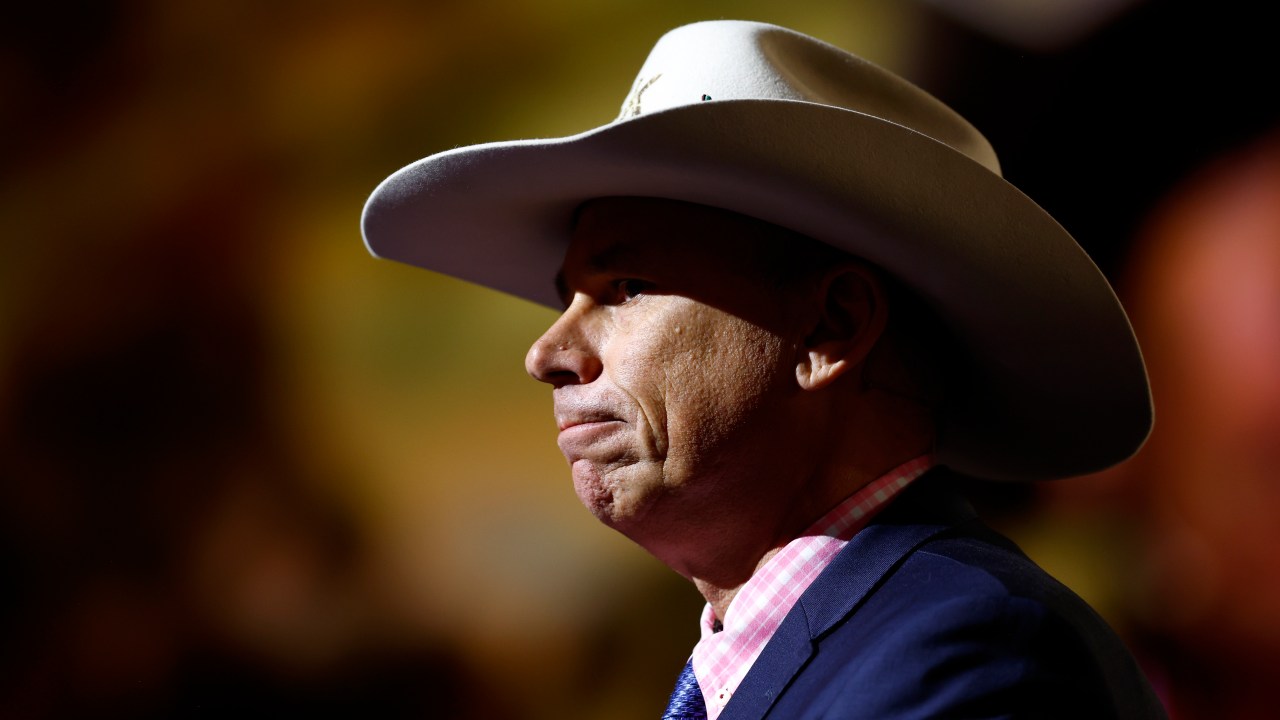
Former Northern Territory chief minister, and now Hancock Agriculture CEO, Adam Giles, has launched a fierce criticism of the Albanese government’s proposed domestic gas reservation scheme.
Speaking to the members and guests of the Queensland Petroleum Explorers Association, Mr Giles was scathing of successive federal governments across several key policy areas, saying they’d failed Australians with regard to cost of living, taxation, law and order, and education.
He said politicians on both sides of the Labor and LNP “uni-party” had “completely forgotten the people that it was elected to serve”.
Mr Giles was most critical of the Albanese government’s management of national fuel security, calling the proposed federal domestic gas reservation scheme a “catastrophic mistake”.
The scheme was announced in December 2025 and legislation was introduced to the federal parliament in October this year.
Under the scheme, exporters of liquefied natural gas would be required to allocate 20 per cent of their output for domestic use, depending on forecasts of local gas demands.
Energy and Climate Change Minister Chris Bowen argues the scheme would drive down household gas prices and ensure secure supply for Australia.
“More affordable Australian gas for Australian users will support our economy and our transition, while remaining a reliable energy partner to our region,” Mr Bowen said in announcing the scheme.
“We acted in the midst of a global energy crisis to address gas shortfalls, ensuring supply and protecting consumers from the worst price spikes – now is the time to seize the opportunity and deliver lasting reform to our gas market.”
Mr Giles, who was the Northern Territory chief minister from 2013-2016 and now heads up Gina Rinehart’s Hancock Agriculture and Kidman & Co clothing brand, said the proposal would punish an industry already “doing the heavy lifting” and damage Australia’s international reputation as a place to invest.
“When you tell investors that governments can arbitrarily seize or redirect or cap the price of their production, the capital will just flee. It’s basic economics. If you penalise investment, you’re going to get less of it,” Mr Giles said.
“Australia once had the global reputation as a safe, predictable rule of law destination for major resource investments.
“That reputation is now being spread around the world. International capital markets are looking at Australia and seeing an unpredictable jurisdiction, where sovereign risks is rising because politicians are making up the rules as they go.”
There’s bipartisan support from Labor and LNP for the principle of a gas reservation legislation, which is now before the parliament.
Shadow energy minister Dan Tehan last month said “the Coalition would like to work with the government to fix this legislation to make sure it functions as appropriately as it possibly can.”