
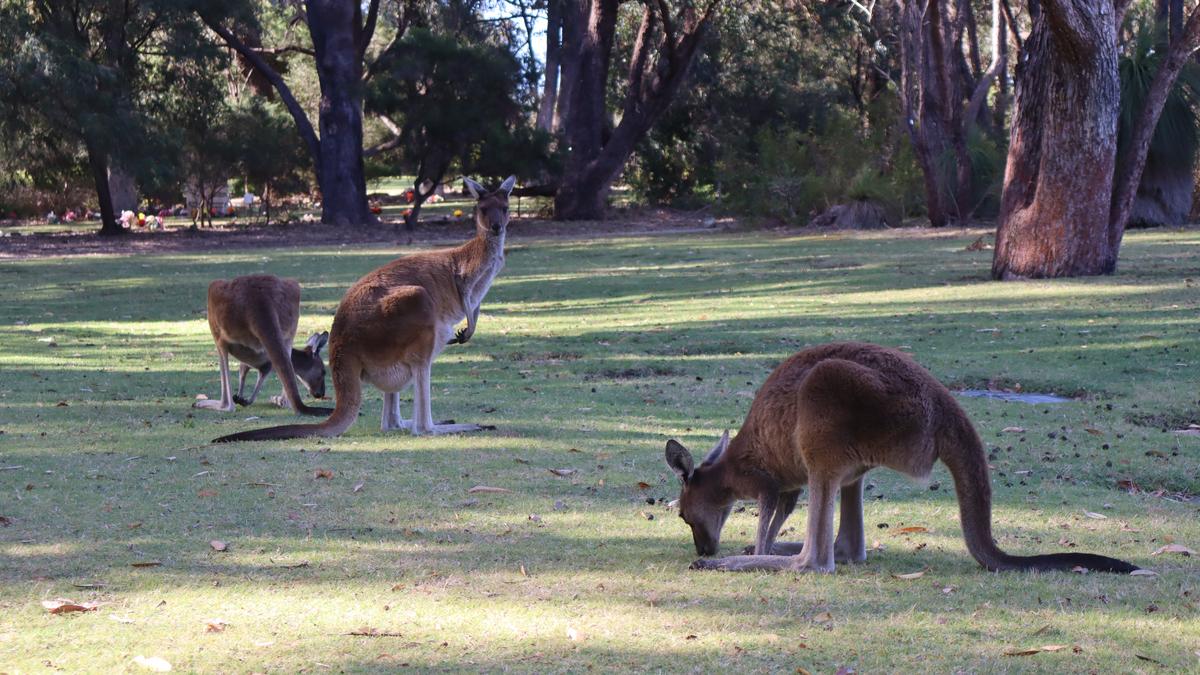
Visitors to Pinnaroo Valley Memorial Park in Padbury will soon see fewer kangaroos when visiting their loved ones, but not everyone is happy.
Metropolitan Cemeteries Board CEO Kathlene Oliver said about 100 kangaroos would be relocated after visitors and neighbours of the site had expressed concerns about droppings and floral tributes being eaten.
The kangaroo population currently sits around 300 to 350. The relocation operation is expected to cost about $50,000 and take place early next year.
Wildlife advocates have raised concerns about animal welfare.
Paws for Wildlife president Jacqueline Huntley said overpopulation should be addressed, but finding suitable places for relocation could be challenging.
“When a mob is landlocked like that, the numbers keep building on the same patch of ground. The grass gets eaten down, the bushland suffers, and disease builds up. This can only be solved by reducing numbers,” she said.
“DBCA (Department of Biodiversity, Conservation and Attractions) do not help in finding release land and the more urban development occurs in the native bushland these animals come from, the more we struggle to find suitable areas with similar habitat outside the urban areas and with available water.”
The Department of Biodiversity, Conservation and Attractions determines how many kangaroos can be released in one area.
“That makes sense for protecting the land, but it means mobs get split up and scattered across several sites, and that’s when they struggle,” Ms Huntley said.
“They need a proper staged release compound where they can settle, recover and get used to new grass and water before they return to the wild.
“They also need supplementary feeding after release while they learn their new country.”
A MCB spokesperson told PerthNow the board was still looking for a suitable relocation area but was working with a wildlife group to guarantee animal welfare.
“The current kangaroo population has reached a point where it is no longer sustainable in ensuring animal welfare and balancing environmental, operational and public safety considerations,” they said.
“The relocation would include veterinary oversight, animal welfare controls, monitoring and reporting requirements, health assessments, post-release monitoring and regulatory oversight.
“The objective is to ensure Pinnaroo Valley Memorial Park remains both a respectful memorial environment and an appropriate habitat for native wildlife.”
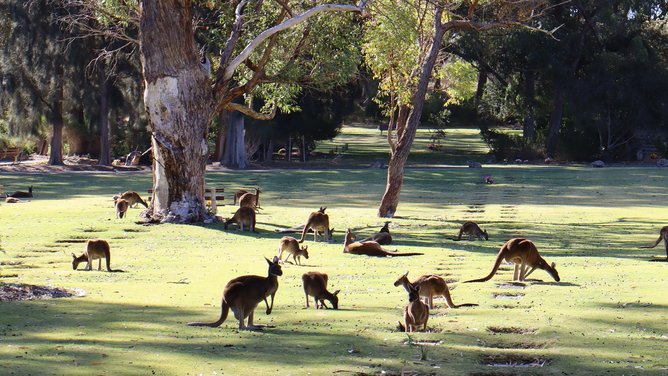 Camera IconThe species of kangaroo living at Pinnaroo Valley Memorial Park is the Western Grey Kangaroo. Credit: Liam Murphy
Ms Huntley said timing was important when relocating the kangaroos.
“Hot weather is no time to sedate or move any animal. The heat makes capture myopathy far more likely,” she said.
“From late November through to March, relocations shouldn’t happen at all, and only essential rescues should be carried out.”
Ms Huntley said WA was missing an essential tool for managing overpopulation.
“Even done well, relocation is expensive, it depends on finding suitable land, and it doesn’t stop the same problem coming back,” she said.
“There’s a contraceptive vaccine, GonaCon, that can be given to female kangaroos by dart.
“The ACT has been using it on its kangaroos for years. WA doesn’t allow it, and cull licences are issued instead.
“The same remote darting equipment licensed carers already use to sedate kangaroos could deliver it.”
Wildlife advocates are not the only ones with concerns.
Visitors also fear the relocation could change the atmosphere of the place.
Richard Johnson’s mother and sister are buried at Pinnaroo, and he also expects to be buried there.
“My sister was only 23 when she had a brain bleed, which left her in a persistent vegetative state,” he said.
“She was quite an animal lover. She’d lived in Queensland for a year or two, and she’d been out at Mt Isa, where she connected with Indigenous people and nature.
“So when my mother and I started to plan, we drove around, looked at a few places and when we saw Pinnaroo, we knew that was it.”
Mr Johnson said his family chose Pinnaroo because of the nature and wildlife in it.
“The day of my sister’s funeral, it made us so happy to see the kangaroos come up and start pulling out the roses. It was amazing and changed the mood of everyone there,” he said.
“Every time I go down to visit, I’ll take some flowers and wait until a kangaroo comes up and grabs them before leaving because it’s just something Tina, my sister, would have loved.”
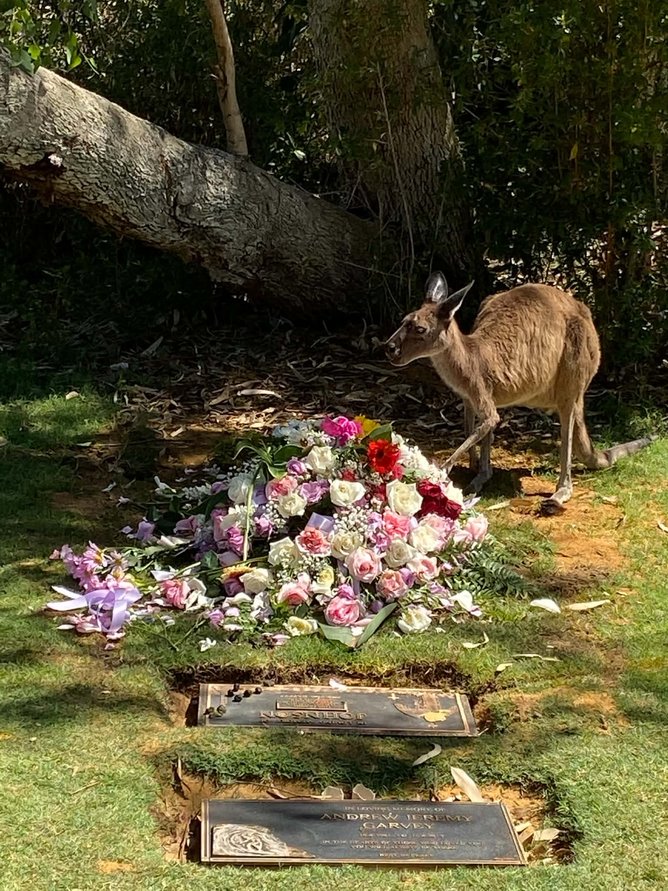 Camera IconA kangaroo eating Mr Johnson’s floral tribute for his mother. Credit: Supplied
To protect the floral tributes, the cemetery offers to place cages over them.
“It upsets me to see people putting cages over their flowers. The flowers are going to die. Let the kangaroos enjoy them,” Mr Johnson said.
He is worried the relocation could change the place he had chosen to rest.
“Like if the 100 went and nothing changed, then I’d be OK, no troubles. I wouldn’t want to see the dynamics and the atmosphere change,” he said.
“The kangaroos were there before we chose to bury people there.
“I wouldn’t have picked anywhere else for my mum and sister.”