
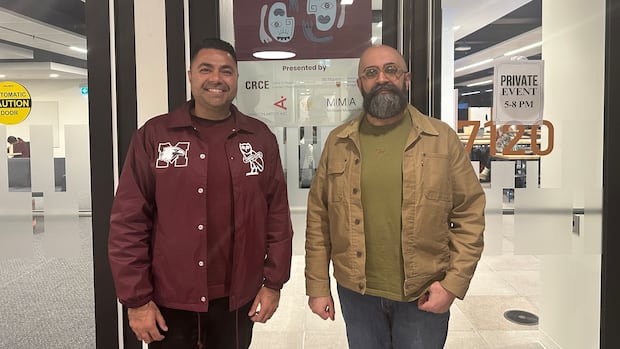
A new program at McMaster University aims to help Hamilton artists turn their creative talents into sustainable businesses.
The free, 10-week Artist Entrepreneurship Incubator brings together local artists and university students for workshops on everything from pricing artwork and managing finances, to promoting work on social media and building an audience.
Organized by McMaster’s DeGroote School of Business, the pilot program was developed by associate director Tej Sandhu and postdoctoral fellow Javid Nafari, with the goal of making business training more accessible to artists who might not have access to it.
Nafara said there’s a “gap in terms of skill development” and what artists says is the “administrative” part of the arts.
He said artists are often entrepreneurs by necessity, navigating uncertainty, finding customers, organizing exhibitions and figuring out how to sustain their creative practices.
But many entrepreneurship programs are geared toward startups and high-growth businesses rather than independent artists and people running smaller creative operations.
“We are not looking for people to be millionaires,” Nafari said. “Our approach to learning is basically at the end of the program. The goal for us will be for you to have increased your self-efficacy, to believe in yourself that you can do it.”
The program partnered with the downtown organization Hamilton Artists Inc. and the TuneIn Foundation to reach artists in the community.
More than 80 people expressed interest in the pilot, Nafari said, and about 40 were selected to participate.
“Artists make Hamilton vibrant and bright, and we would love to see more artists being able to actually make a living off their art, be able to sustain themselves and have that be their livelihood,” Sandhu said.
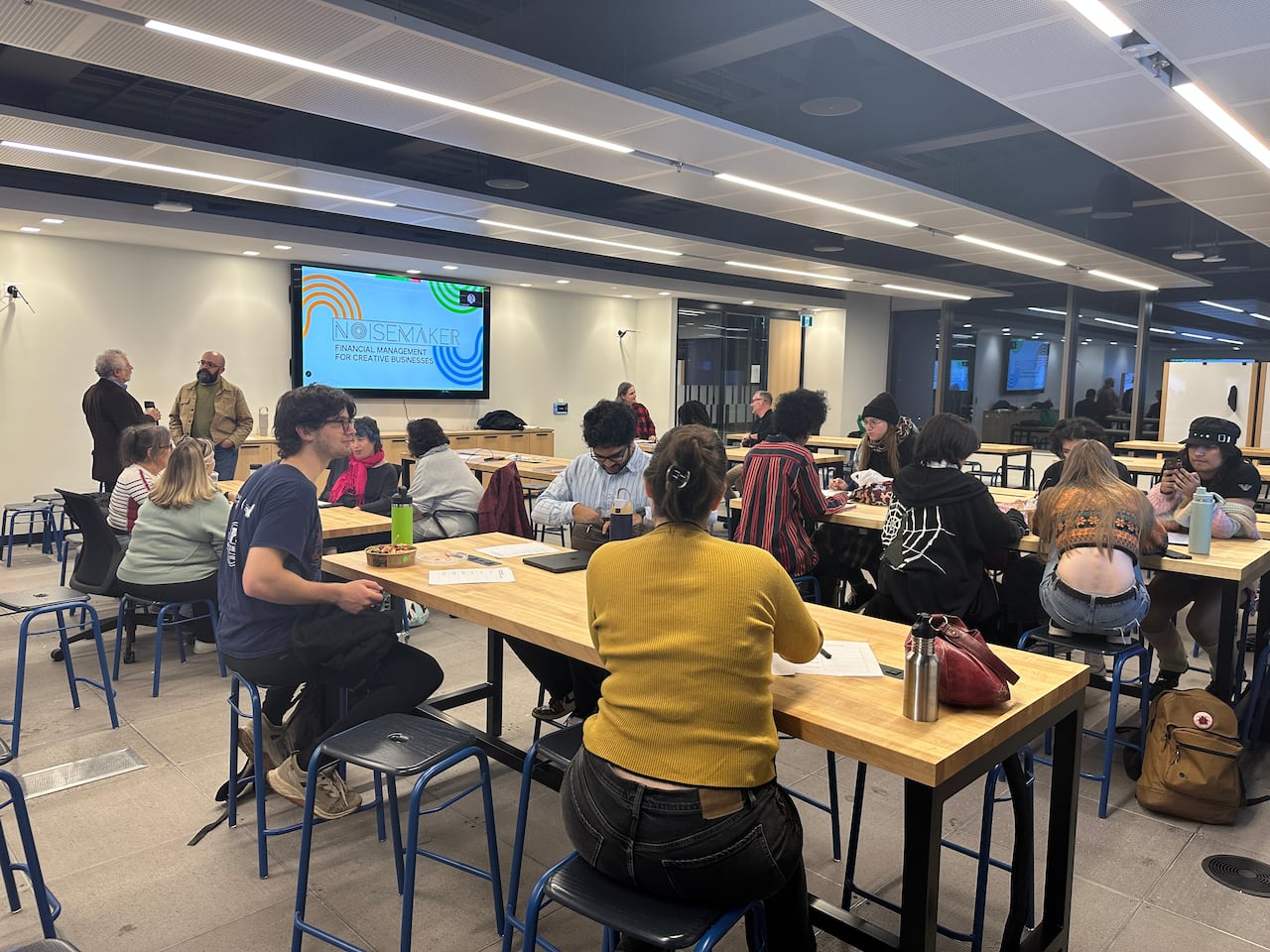
Now in the sixth week of the Artist Entrepreneurship Incubator, students learned on Monday night how to balance creative output with managing finances. The sessions were in the McLean Centre for Collaborative Discovery at McMaster University. (Jeffery Tram/CBC)
Helping artists navigate the business side
Nafari said the workshops are designed around the needs of artists rather than a traditional business-school curriculum.
Everyone should be aware of how to manage themselves in the work that they create.Michelle Lepine, Hamilton artist known as Bombchow
The program was built based on conversations he has had with members of Hamilton’s arts community to identify the skills they wanted to develop.
Sessions cover areas such as pricing and selling artwork, financial management, contracts, grant writing, audience development and social media promotion.
Nafari said the goal is to give artists practical tools they can apply to their own work without taking on more than they can manage.
“Artists are already being asked to do a lot.”
Sandhu said the workshops are also interactive, with sessions led by people who have experience working in the arts.
“It’s not just sitting in a lecture hall listening,” he said. “They’re actually able to apply it to their own business, their own art.”
‘It’s been eye-opening,’ artist says
For Hamilton artist Michelle Lepine, who works under the name Bombchow, the program has helped bring together business concepts she had previously been trying to learn on her own.
Lepine is a multidisciplinary artist who works in painting, sculpture, animation and set design.
She said she joined the program after her sister shared news of it on Instagram, and wants to strengthen her knowledge of business as she continues working independently and helping foster an art collective.
“It’s been eye-opening,” she said. “This program has helped me streamline a lot of my thoughts regarding business for artists.”
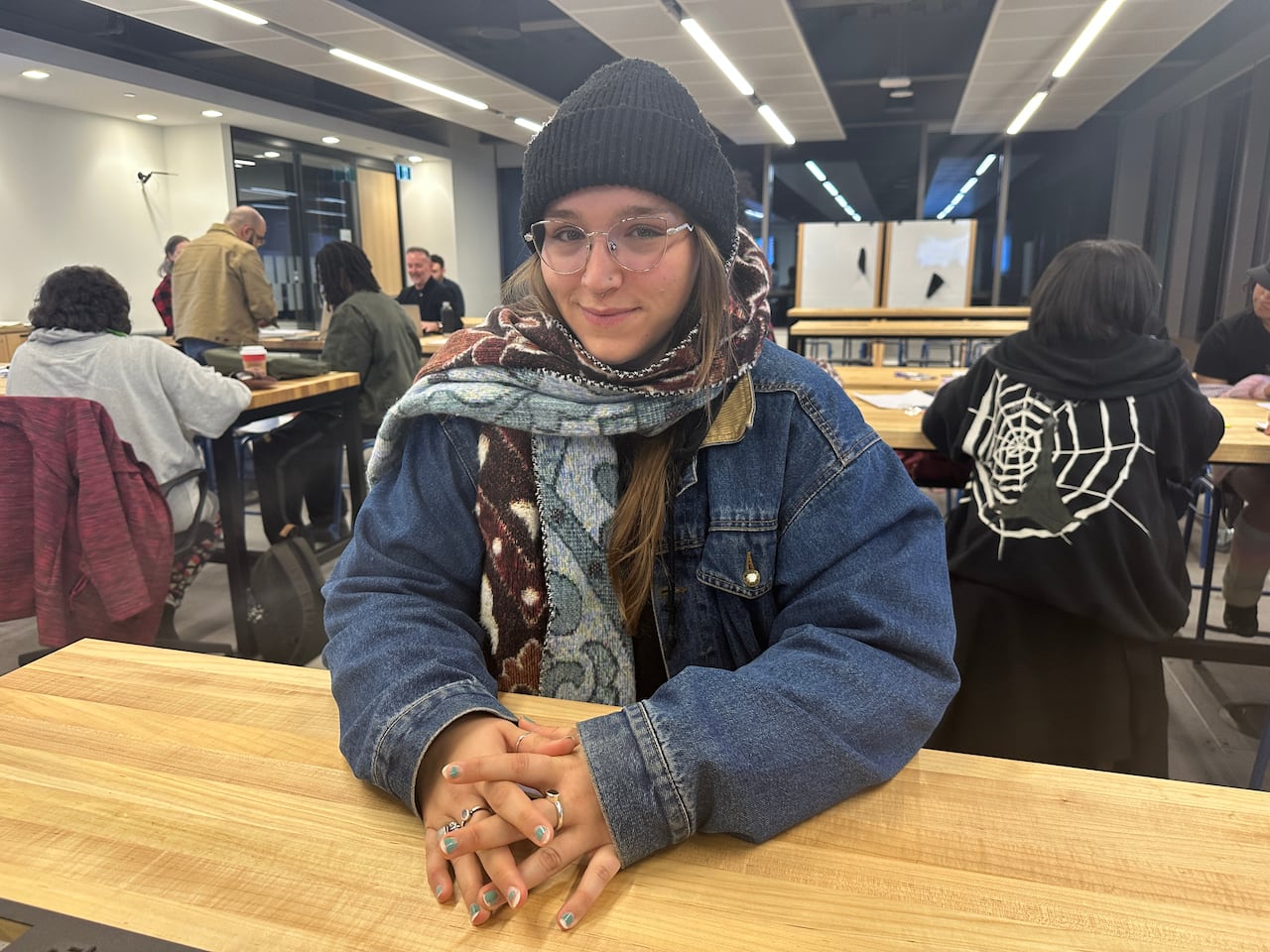
Michelle Lepine is a Hamilton-based multimedia storyteller and animator who uses the creative handle Bombchow. (Jeffery Tram/CBC)
Lepine said art school taught her how to develop creative skills, but not necessarily how to turn them into a sustainable business.
The incubator has helped her better understand how to present her work, identify the value she offers and create opportunities for other artists.
“This has helped me have a better insight on how I can be a better friend to the people around me and also posture myself in a way where I’m able to create opportunities not only for myself but for others around me.”
She said she would recommend the program to artists regardless of their experience level.
“I think everyone should be aware of how to manage themselves in the work that they create.”
Helping artists sustain themselves financially
Sandhu said the workshops have become a two-way conversation, with participants sharing their experiences and learning from one another.
He hopes the program can help strengthen Hamilton’s arts community by giving artists more financial independence and greater control over their work amid arts funding threats in parts of the country.
In 2025, the Canadian Taxpayers Federation called on the Saskatchewan government to cut arts funding, calling it “wasteful spending.”
“If artists are fully reliant on the government grants, they might be at risk of having advocacy against them kind of impact their livelihood,” Sandhu said.
He hopes the program empowers artists to believe their work can become a viable career, and that creating multiple revenue streams would help fund an even better creative output.
“If we can enable and empower the arts community, I think that’s where the magic is.”
The program also comes as Prime Minister Mark Carney proposes a new Canada Creative Credit, which could provide a non-refundable tax credit on up to $45,000 in qualifying annual income from original creative work.
In Budget 2026, we’re backing the Canadian artists who tell our stories.
That means if you’re a Canadian artist, you won’t pay tax on up to $45,000 of income derived from your creative work.
The proposed credit isn’t yet law and eligibility rules haven’t been finalized. The federal government says more details are expected in the spring economic update in 2027.
Nafari welcomed the proposal, but said artists need more support beyond tax relief, including funding for organizations that provide training and other resources, like themselves.
Sandhu and Nafari are looking at ways to secure funding to run the incubator again next year while keeping it free for participants.
“We didn’t really think we would get too many people coming to the program, maybe 20 people,” Nafari said. “Main takeaway for me is there is a need, there is acceptance and there is value through these type of programs.”