
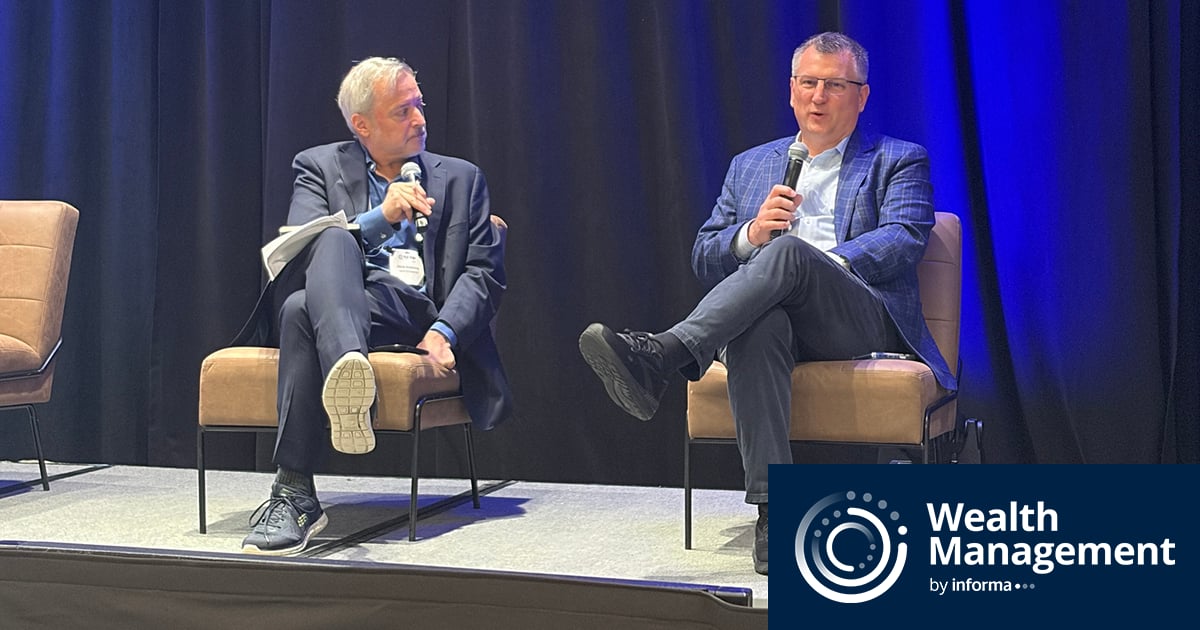
Daryl Seaton was climbing the career ladder at New York Life when he decided to pivot into the registered investment advisor sector and eventually partner with a firm based in Little Rock, Ark.
Fast-forward to this year, and Seaton found himself taking the leadership role at Sowell Management in a planned succession from founder Bill Sowell.
“There’s nothing harder I’ve tried to do in my life,” Seaton told an audience of advisors at RIA Edge in Austin on Tuesday. “This was a long-planned succession … but in many ways it was harder than navigating to the top at New York Life.”
Seaton, who had been chief operating officer and then president of Sowell, said the challenge of stepping into the CEO role was balancing the “gut instinct” of an entrepreneur with the need to grow the firm while ensuring profitability for partners and stakeholders.
“When you look at capital partners, they want to know that you’re doing both, right, and that you’re doing a good job on both sides,” Seaton said.
During the conference that gathers founders and C-suite leaders, several RIA CEOs discussed the challenges of pivoting from working as an advisor to running a firm with a growing number of stakeholders, employees and clients. As RIAs grow to manage multi-billions in assets and sometimes take on external investors, it’s a decision more RIA founders are facing.
Seaton said he keeps focused by trying to “foster a culture of honor” at Sowell.
“It started with saying that we are going to honor Bill—we are going to let him leave the legacy that he wants in this firm,” he said. “He’s developed a great culture, and we’re going to see it through. So, those are some of the key highlights and components. But it’s not easy.”
Since its founding in 2001, Sowell has grown to manage $7 billion across 50 advisor partner firms.
Founder Sowell, after stepping down as CEO, has remained active at the firm, including this April, leading the launch of a private wealth division focused on households with $5 million or more in net worth called Cache River Private Wealth.
In May, Sowell also sold a minority stake to the wealth management investor Merchant to fund what the firm calls its Advisor Partnership Program. That effort, Seaton said, helps more advisors share in the firm’s equity ownership while also launching a minority investment program for partner advisors.
“They have a long track record of supporting independents, taking minority positions,” he said. “That aligned with what our vision was for working with advisors moving forward.”
On the sidelines of the conference, Seaton mentioned Sowell joining Merchant’s network of RIAs. That network includes other 1099 model RIAs that make minority investments in firms such as $28.6 billion in AUM Concurrent Investment Advisors and $27 billion Summit Financial.
During his conversation with Wealth Management Director of Editorial Strategy and Operations David Armstrong, Seaton stressed Sowell’s dedication to allowing advisors to keep their brand and client relationships while, should they choose, leveraging Sowell’s wealth technology platform, back-office operations and turnkey asset management platform.
“Our job is really to listen to advisors, to partner with them at the deepest level, to provide first-class tools, support, resources and service, so they can bring value to their clients,” he said. “There’s only one thing we don’t do, and that’s the client.”