
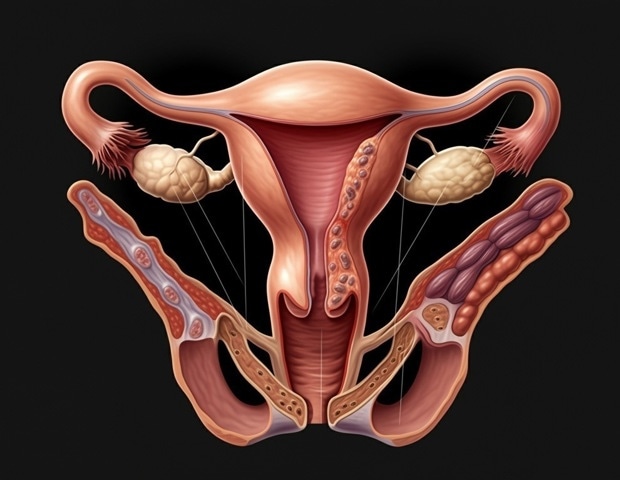
Affecting 200 million women of reproductive age, endometriosis is a chronic inflammatory disease that causes pain, infertility, and increased ovarian cancer risk. Hormone therapies are often used to manage pain and prevent the growth of uterine-lining-like tissue outside of the uterus, but these therapies can be ineffective and lead to recurrence. In a new study, published by Wiley in Advanced Science, researchers identified TREM2+ macrophages as a potential future target for endometriosis therapies.
The immune system has been implicated in endometriosis progression. Highly abundant and promoting harmful growth during endometriosis, macrophages are immune cells that destroy infections, cancer, and cellular debris and modulate the adaptive immune system, which is a strong line of defense remembering past invaders. Members of the immune system shown to be dysfunctional in endometriosis are CD8+ T cells and natural killer (NK) cells. While macrophages have been suggested to impair CD8+ T cells and NK cells in disease progression, how they drive these defects in the adaptive immune system remained unclear.
Using single-cell RNA sequencing of endometriosis patient samples, researchers found an enrichment of macrophages expressing the receptor TREM2 compared to control samples. They also found that CD8+ T cells and NK cells in endometriosis samples were terminally exhausted and had reduced ability to kill damaged or foreign cells. The authors hypothesized that TREM2+ macrophages compromise CD8+ T cells and NK cells, which they validated by culturing CD8+ T cells and NK cells with macrophages with and without TREM2 from mice.
The researchers identified the ligand-receptor pair by which TREM2+ macrophages and CD8+ T cells could be communicating. Further, the cellular recycling process called autophagy was connected to CD8+ T cell dysfunction downstream of TREM2+ macrophages. Finally, the scientists tested these findings in mice, showing that mice without TREM2 increased CD8+ T cell and NK cell cytotoxic behavior and protected against endometrium growth.
In this study, the researchers discovered that TREM2+ macrophages disrupt the adaptive immune system in endometriosis, contributing to disease progression. These results point to TREM2 as a potential therapeutic target, though the safety of TREM2 inhibition in general immune regulation and specifically in reproductive tissues require further evaluation. In addition, larger cohort sizes of patient samples should be used for validation of these findings.
Our research reveals that a specific subset of macrophages contributes to immune dysfunction in endometriosis by suppressing the activity of cytotoxic immune cells. These findings provide new insights into disease progression and may open new avenues for developing non-hormonal therapies. However, further research is needed before these findings can be translated into clinical practice.”
Guoyun Wang, PhD, senior author, Shandong Provincial Hospital Affiliated to Shandong First Medical University, China
Source:
Journal reference:
Yuan, M., et al. (2026). TREM2 + macrophages promote immune evasion in endometriosis through BAG3‐associated regulation of CD8 + T cell autophagy. Advanced Science. DOI: 10.1002/advs.78385. https://advanced.onlinelibrary.wiley.com/doi/10.1002/advs.78385