
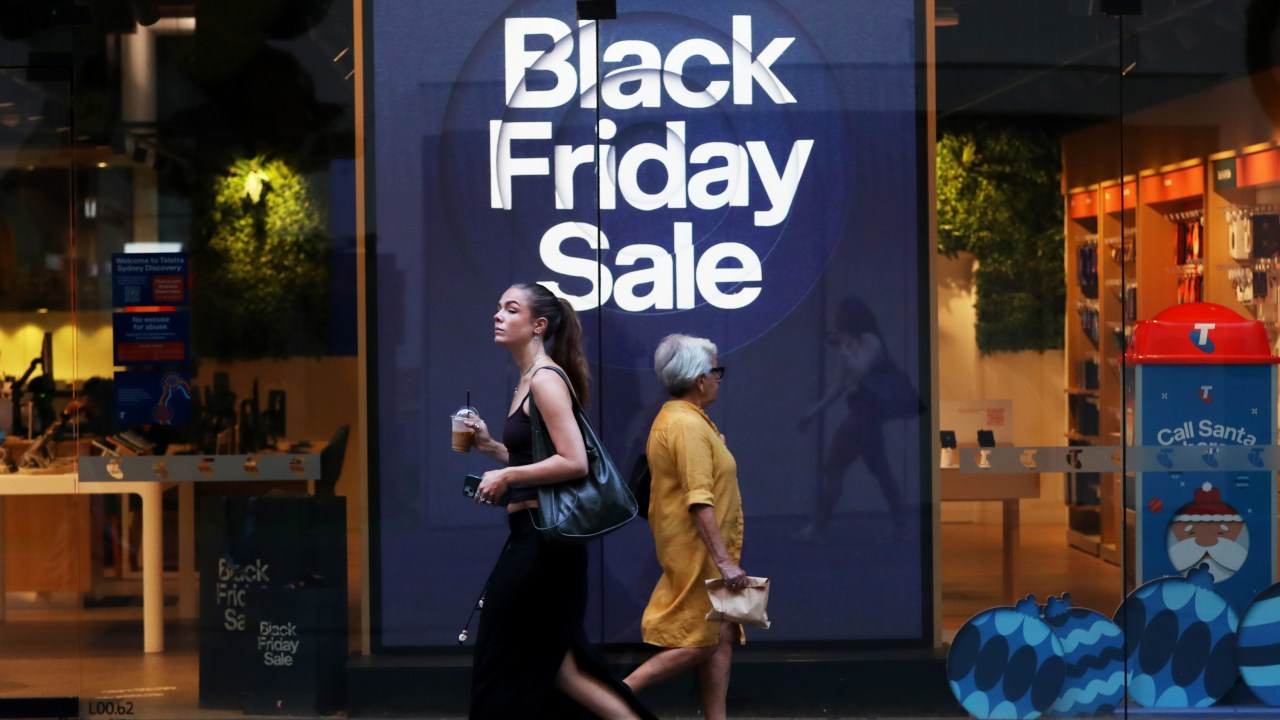
Australian households are set to spend an extra $390 this Black Friday as cost-conscious shoppers look to snap up deals.
New analysis of ABS consumer and spending data by PRX Vault showed the Black Friday spending bump amounts to $4.2 billion across the nation.
Before Black Friday sales took off in Australia, November spending was typically about four per cent above an average month.
This has ballooned to nine per cent higher with total household spending expected to hit $89 billion this month.
PRX Vault’s founder Antini Brown said shopping for clothes and footwear typically surges over Black Friday, with sales up 34 per cent last November.
“Clothing and shoes are cheaper over Black Friday, and that’s where the bargains are,” Mr Brown said.
The analysis also showed that electronics are cheaper in December, meaning shoppers are better off waiting for Christmas sales.
Small appliances cost 2.4 per cent above average in November, compared to costing 3.7 per cent less in December.
Major appliances cost three per cent less than a usual month in December and electronics are 3.3 per cent cheaper.
Mr Brown said there was a substantial difference for shoppers who waited the extra month.
“Appliance and electronics prices were three to six per cent lower in December than in November in each of the past two years, so the Black Friday rush is the wrong time to buy them,” he said.
The heightened spending in November and December over the past three years is lower than trends seen in the 2010s.
Spending during these months ran about 20 per cent higher than average between 2023 to 2025, but it was close to 22 per cent higher from 2013 to 2016.
December’s lead on November between those periods fell from 18 per cent to 11 per cent as more shoppers opted for Black Friday sales.
Mr Brown said the analysis showed more shoppers were spending their cash before the Christmas sales.
“For big household items, that means many are paying the usual price a few weeks before lower December prices arrive,” he said.
This new analysis comes as inflation has remained elevated over the past five years.
This has heaped pressure on the economy, forcing the Reserve Bank of Australia to increase the cash rate 18 times since 2022.
Read related topics:Australian businessInflation