
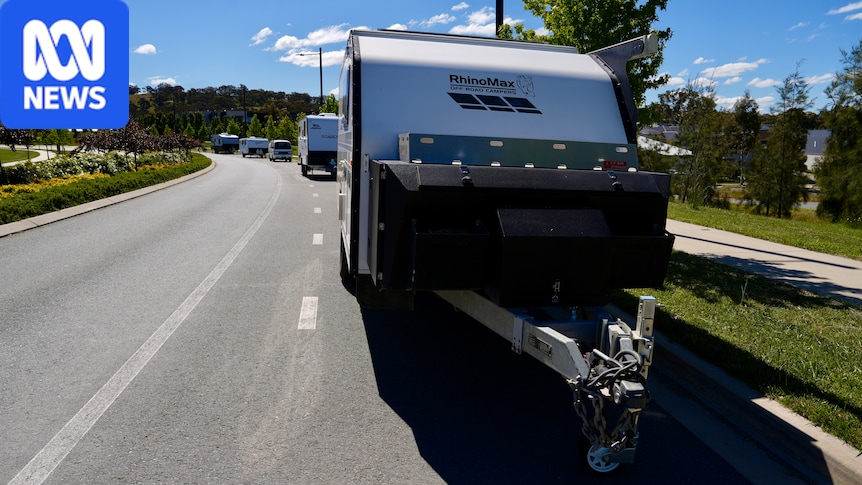
The Queanbeyan-Palerang Regional Council has begun enforcing strict residential parking rules banning large caravans, boats, and trailers from long-term parking in residential streets.
The push is part of the council’s effort to crackdown on large vehicles being left for long periods of time in prime parking spots.
Under the new rules, which came into effect last month, vehicles longer than 7.5 metres cannot park in residential streets for more than an hour.
Vehicles smaller than 7.5 metres will be allowed to park in residential streets for up to 28 days before being required to move.

The council’s push is aimed at reclaiming street space, and is being met with mixed reactions. (ABC News: Ruby Thomas)
Queanbeyan-Palerang Regional Council Mayor Kenrick Winchester said the issue was prominent in the NSW town of Googong, where he said people were using on-street parking to store large vehicles.
The mayor said people had “bought houses where they can’t fit their boat or their trailer in their own backyards, or sheds, or driveways, and so they’re parking them randomly throughout the suburb”.
“You bought a house out at Googong and you didn’t plan to fit your big boat or caravan on the property that you bought, then that’s all on you I guess,” he said.
The new council rules also ban any vehicles from parking on the verge — the area between the road and the boundary of a property.
The council’s pursuit to reclaim street space has been met with mixed reactions.
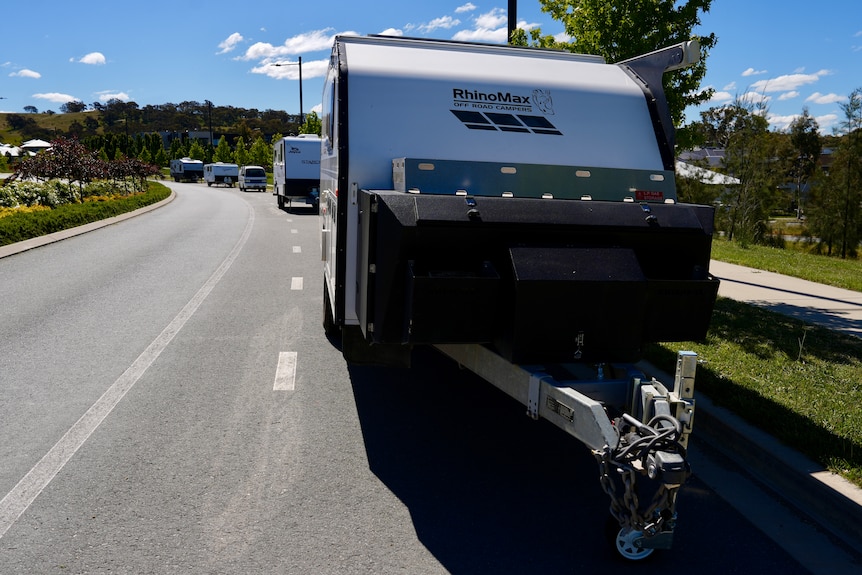
The council is concerned that vehicles are being left for long periods of time in prime parking spots. (ABC News: Stuart Carnegie)
‘A good thing’: home owners
Local couple, Sarah and Parveen, have lived in Googong for nine years and said they had recently seen more caravans parked on their street, for months at a time.
The couple said they now referred to their street as a “caravan park”.
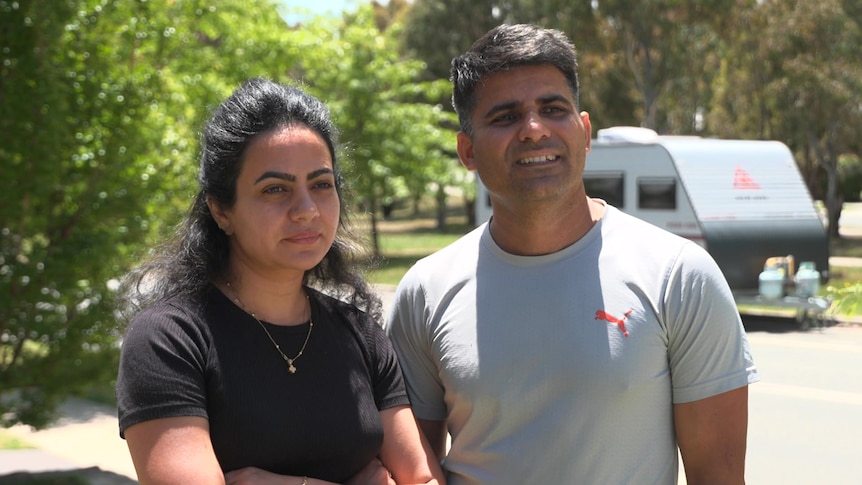
Googong residents Sarah and Parveen welcome the enforcement of strict residential parking rules, targeting caravans, boats, and trailers. (ABC News)
“In the beginning it was not bad, but now this whole street sometimes is full of caravans,” Sarah said.
“Most of the year they just stay there, except the few times people will take them for holidays.”
Parveen said the vehicles, which he speculated were not always owned by people who lived on the street, created a safety hazard.
“This street … has a bend in it and caravans are a bit wider, they take [up the] whole lane. It’s hard to see over the bend … so I think [the decision] is a good thing,” Parveen said.’Drive around the corner, don’t be afraid to exercise’
But the move has also resulted in some not-so-happy campers.
The Campervan and Motorhome Club of Australia (CMCA) has criticised the crackdown as heavy-handed and unnecessary.
Chief executive Richard Barwick said people would now have to pay for storage sites for the vehicles, on top of rising fuel costs.
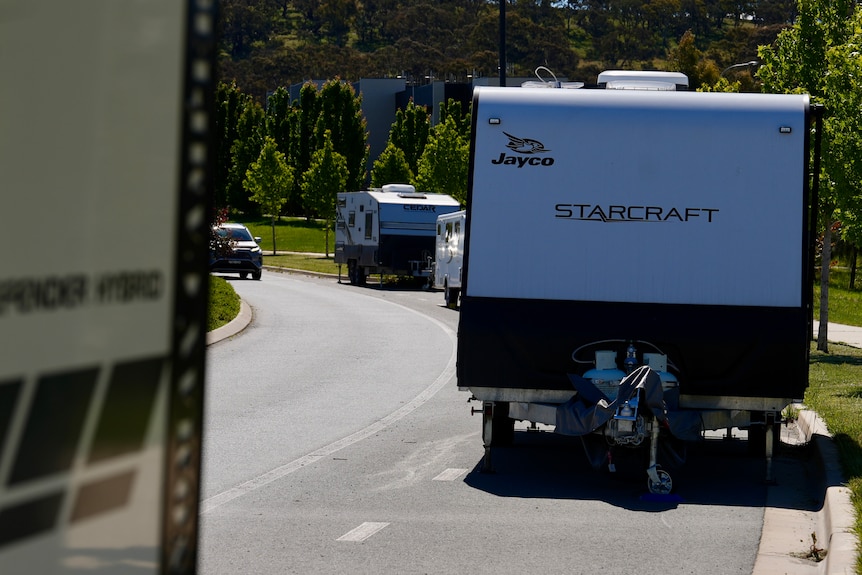
Vehicles longer than 7.5 metres can no longer park in residential streets for more than an hour. (ABC News: Stuart Carnegie)
“Don’t pick a certain market because they think it’s an easy target and that they are wealthy because not all people that own an RV or that own a boat are wealthy people,” he said.
“We have a lot of pensioners in our organisation that are struggling with the cost of living and this extra burden will affect [them].”
Mr Barwick said he also did not believe that the area had the population or density to warrant the new rules, saying there was likely plenty of parking available for local residents.
“I know Queanbeyan reasonably well; to me there’d be parking. Drive around the corner, don’t be afraid to exercise.”