
An Aussie businessman has sparked heated debate after claiming everyday Australians are falling victim to an astronomical “scam” at the hands of the country’s largest banks.
Matt Cameron, 48, was born and raised in Sydney’s eastern suburbs before uprooting his life and moving to Bali, where he became one of the island’s most successful property developers.
The 48-year-old is now worth millions and claims Australia won’t be seeing a cent of that fortune any time soon.
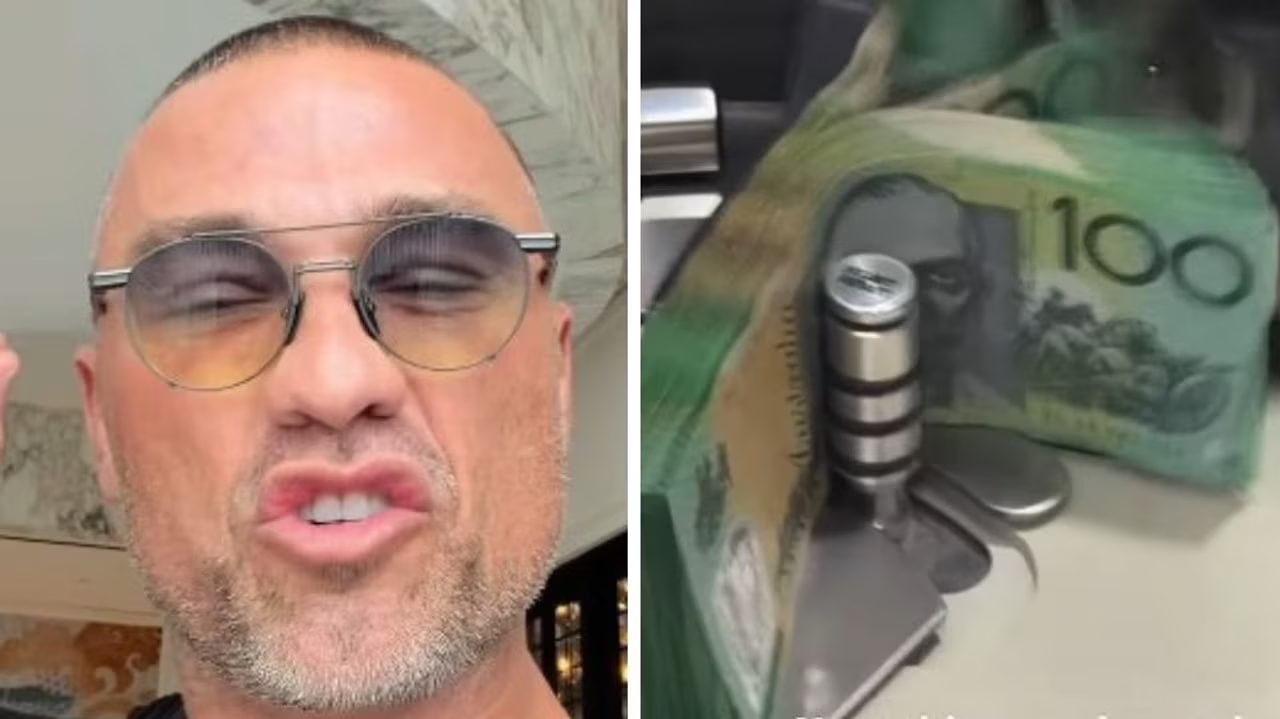
In a clip posted to Instagram, Mr Cameron walked viewers through the surprisingly simple process of withdrawing A$30,000 at a bank in Jakarta.
“To prove that Aussie banks are criminals, I’m going to walk into a random Indonesian bank and see how hard it is to get out A$30,000 in cash,” he said.
Mr Cameron said that within 15 minutes he had signed one document and had the entirety of his cash withdrawn and placed in his hands.
“They were holding more Australian cash in there than any of the big banks at home,” Mr Cameron told news.com.au.
Mr Cameron claimed one of the greatest frustrations for Aussies at the moment is feeling restricted when it comes to accessing their hard-earned money.
“It’s already so hard for Aussies to make that money and when they go to withdraw it they’re grilled by staff and sit there feeling guilty.”
In 2023, the father of two uprooted his entire life in Australia after revealing the extent of regulations and fees had made it impossible for his business to thrive.
“I love Australia, the people are legends – but the challenge I’ve got is that Australia has become unlivable,” said Mr Cameron.

Aussies ‘locked out’ of accessing their own cash
Before his departure from Australia, Mr Cameron claimed he was subject to intense questioning at his local bank branch after attempting to withdraw $5000 from his account.
“I had some locals doing renovations on my home before I left Australia and needed some cash to tip them for helping me out during COVID,” Mr Cameron said.
“The bank grilled me. They didn’t have the money and told me I’d have to come back the next day. Why are they making it so progressively harder to get my own cash?”
Mr Cameron claimed Australian banks are “motivated to make it as difficult as humanly possible” for people to access their own money.
“What’s brilliant about it is that when the money is sitting in the account, it doesn’t exist. It’s just a digital fallacy, they’re trading your dollar while they don’t even have it.”
“It’s the biggest scam that Australians are being dragged through,” he added.
Under current Federal legislation, all Australian banks are required to report cash transactions
of $10,000 or more (or foreign equivalent), including details of the relevant account holders, to the Australian Transaction Reports and Analysis Centre (AUSTRAC).
The rules, which came into effect in 2011, were introduced to assist in reducing the risk of money laundering or terrorism financing activities.
At many of the country’s largest banks, Aussies are limited to withdrawals of $2000 to $2500 at ATMs, while at least 24 hours notice is required for a withdrawal over $5000.
On top of that, tellers are trained to spot red flags and rehearsed scam stories, saying their training allows them to act as a vital safety net to stop scammers.
However, Mr Cameron believes the difficulty of accessing his own cash has led to a fundamental distrust in the Australian banking system – and he’s not the only one.
The 48-year-old revealed he has been inundated with messages from other Aussies who are weighing up relocating overseas.
“There’s two types of people that follow my content and reach out to me: People that want to move and have a higher quality of living or people that are trying to invest overseas,” he said.
The Kiss Developments owner recently sold an entire development in less than six hours, with 28 Aussies buying in on its launch day.
“They were people that couldn’t make enough money in property to handle the taxes. They were people that were sick of being controlled by the system,” he said.
Small businesses copping the brunt
The debate comes just weeks after a news.com.au survey of more than 2000 Australians revealed a nation desperate to support its entrepreneurs.
In Australia, companies are subject to a federal tax rate of 30 per cent on their taxable income, except for “small or medium businesses”, which are subject to a reduced tax rate of 25 per cent.
The reduced tax rate applies only to those companies that fall below the aggregated turnover threshold of $50 million.
The Back Australia survey found that 71 per cent of Australians believe small businesses should be paying less tax, while only 29 per cent believe they should not.
Speaking to news.com.au, Council of Small Business Organisations Australia (COSBOA) CEO Skye Cappuccio, said Australia needed to be thinking more seriously about the environment it was creating for the next generation of small business owners.
“Small businesses are still operating in an incredibly difficult environment. Costs have risen, consumers are cautious and margins remain tight, while business owners are also trying to keep up with an increasingly complex regulatory environment,” said Ms Cappuccio.
“When small businesses are under pressure, the impact extends well beyond the individual business. It affects jobs, investment and the communities that rely on those businesses.
“We need to make it easier for small businesses to put money back into their businesses, hire people, adopt new technology and improve productivity.”
Mr Cappuccio said COSBOA firmly supported reducing the small business company tax rate to 20 per cent and seeing the instant asset write-off threshold increased to $150,000.
“Small businesses are already facing significant cost pressures, and we need to ensure tax changes don’t add further financial and compliance burdens,” she said.
“We want people to look at starting or buying a small business and see opportunity, not an overwhelming compliance burden. That means getting the fundamentals right: tax, regulation, skills, digital adoption and the cost of doing business.”
Mass exodus of Australia’s richest
Mr Cameron is among a growing cohort of multi-millionaires that have left the country in the last few years, as frustration mounts over Australia’s strict business regulations and taxes.
Earlier this year, Melbourne billionaire Adrian Portelli announced his move to Dubai, declaring Australia was “genuinely finished under its current control and leadership in the form of the government and media.”
The 37-year-old later revealed he was bullied out of Australia and “treated like a criminal” despite paying more than $100 million in taxes.
“(The ATO) were in my books, in my bank accounts … when you hear all these stories happening 10 years before I was successful, you’d be like ‘oh yeah it’s made up stories’ but I’ve witnessed it now and it’s scary to know how much control they have,” Mr Portelli told Dubai podcast One on One with Kris Fade.
Similarly, Finder co-founder Fred Schebesta declared he’d “had enough” of Australia during his move to Singapore earlier this year.
“It’s time to move out of Australia and go to a country where you can build a business and take risks,” he said at the time.
Mr Cameron, who was one of the first millionaires to jump ship, described somewhat of an “multi-millionaire exodus”, warning that Adrian Portelli would not be the last.
“Bali welcomed us with open arms. We employ hundreds of people in Bali now and we’re profitable. We couldn’t make our money in Australia due to the volume of rules, red tape, the taxes and the fees.”