
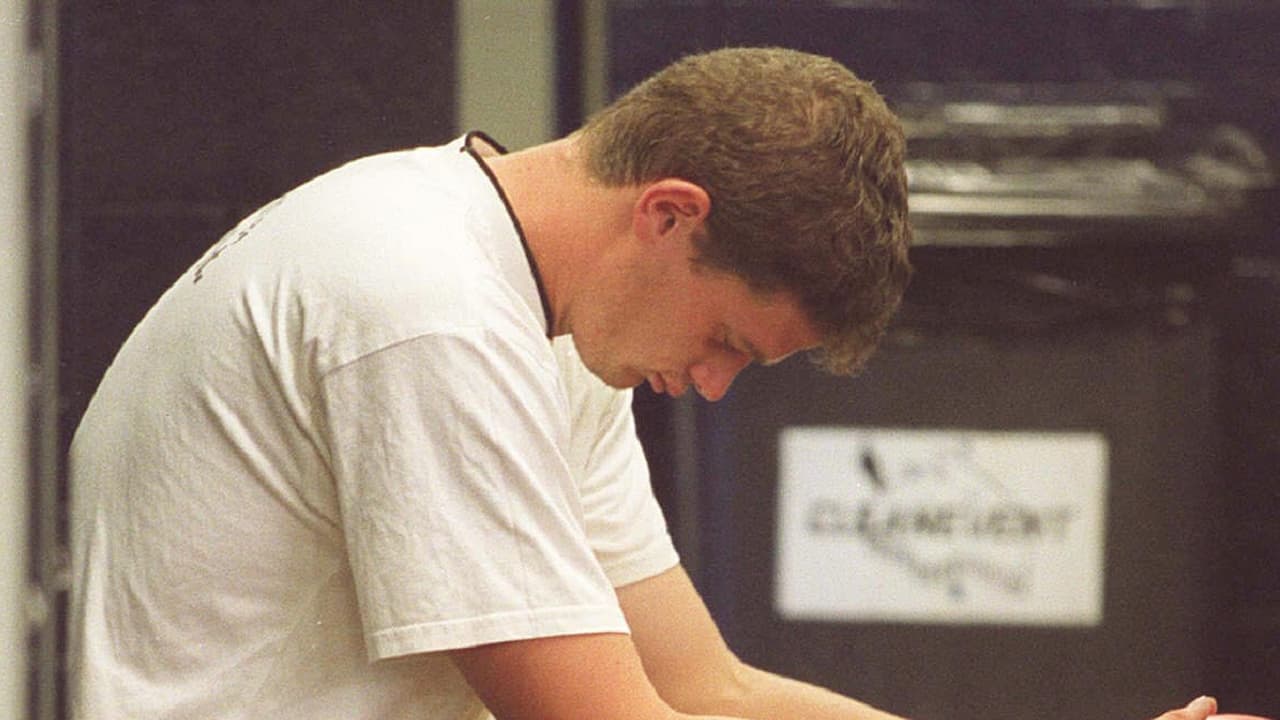
Paddy Steinfort knows about pressure and how to deal with it.
Over more than a decade, the 47-year-old Aussie has worked at the forefront of mental resilience training for some of the biggest sporting organisations in the world, mentoring some of the biggest sporting stars.
Some of those big names? Steinfort is reluctant to single anyone out, but …
“Patrick Mahomes. Shouts me out after a Super Bowl,” he offers after some gentle prodding.
“Brianna Stewart, one of the best female basketball players on the planet.”
“And then there’s the teams: I’ve been at the [Boston] Red Sox, the [Toronto] Blue Jays (Major League Baseball), the Socceroos and the Matildas and the Philadelphia Eagles in the NFL. And I have a NASCAR team I’m working with at the moment.”
Steinfort has come a long way in the pressure game.
30 years ago, he was a 17 year old ruck prospect fresh off a Larke Medal for the best player at the Under 18 National Championships and approaching the Draft with the knowledge that it was when he will be picked up rather than if he would be an AFL draftee.
“I was like, I’m going to get drafted. It was just a matter of where,” Steinfort remembers from his base in New York City.
“And then I got drafted to the team that I barracked for, so that was pretty, like, surreal and very cool and very good for my family because they were all mad Tigers.”
Steinfort had to quickly change his focus from Tigers fan to Richmond footballer (“I had a kick of the footy with Matty Knights and then Benny Gayle and I went home and decided I should probably take their posters off the wall now”), but he had no doubt that he was destined to be an AFL footballer.
“I thought it was like, I’m going to be a star and this is what I was born to do, but I think that was more just because I believed a lot about thinking positive and manifestation and sh*t like that.”
Steinfort’s older brother Carl had been drafted two years prior and had struggled to gain a foothold at Geelong in his first few years, so Paddy knew it wasn’t going to be handed to him easily.
“But, at no point did I not think that by the time I was 25 I’d be a 100 game player and getting Brownlow votes and all that sort of stuff.”
Unfortunately for the young Steinfort, that wasn’t how his footy dream played out.
In his first season with the Tigers he’d played well in the seconds and was even best on ground in the Reserves grand final, but things went downhill from there.
“At the end of that first season, I’m going into my first pre-season trip, having finally settled into the footy club, and then they drafted Brad Ottens while I was in Bali. Looking back now, that’s probably the first sign that things aren’t going to go perfectly.”
Steinfort’s dream of playing for his childhood team quickly became a nightmare as injuries and frustration took over.
Groin, knee and thigh injuries kept his football to a minimum, and by the time he faced posterior cruciate injuries in both knees in his fourth and fifth years on Richmond’s list, he saw the writing on the wall.
“It just seemed to get deeper and deeper into a hole that I might not be able to climb out of as far as my career goes.”
But the end still came as a shock, and caused bad blood with his beloved yellow and black for years to come.
Steinfort had worked his arse off to come back from injury and into contention for a place in Richmond’s team for the 2001 finals, and had it on good authority that the selection panel were looking at him seriously.
“They’re like, look, we don’t know when you’ll get your shot but we really want to give you a shot and we think you’re a great person to play on someone like … [Carlton ruck] Mark Porter. We go in and we play Carlton … and I’m like ‘f*ck, I’m going to debut in a final on the MCG. How good. After five years, after all I’ve been through, this is brilliant’.”
But the club went a different way, and the way Steinfort found out was just cruel.
“I sit there and I look at the board and I’m trying to find my name on the field but I’m not, okay, I’m starting, where am I? I’m on the bench, where is my name?
“And then it dawned on me that I wasn’t being picked and if I’m not being picked for this game then I’m probably never being picked … and I started bawling because that was when I was like, sh*t, this is not going to happen.”
Steinfort is comfortable to admit now that he didn’t handle the end of his AFL dream well when it came.
“I didn’t handle, arguably, the next three or four years of my life very well because I was a bit immature and I didn’t seek help in terms of just telling people that I was feeling sh*t. And the way that went down didn’t help at all, for sure.”
It took 16 years – and a move to the other side of the world – for Steinfort’s childhood love to rekindle. A drought breaking premiership for the yellow and black didn’t hurt either.
“The Richmond forgiveness part was fun and funny, but also quite emotional,” he remembers.
“I was in the pub in New York, it’s 4am watching the granny and [they] obviously spanked the Crows. And then all my family are at the game in the crowd and we FaceTime afterwards and they’re all bawling and I start bawling and I’m like, oh, this is great … and that was a moment where I came to terms with and probably made peace with it.”
Steinfort’s discomfort at identifying as a former professional footballer also lasted until long after his playing days finished.
“I reckon I carried that for a good decade … I never wanted to talk about it to anyone because in my eyes I’d failed and that was the identity that I wanted and I didn’t have it.”
A qualified physiotherapist, Steinfort avoided footy for a few years post-AFL, but was drawn back into the industry first in player development and then into wellbeing and performance.
“That was my way of healing myself, I guess, or making myself okay with it. If I wasn’t going to have a career, I’d help other people’s careers.”
These days, Paddy Steinfort is very comfortable with his AFL journey not playing out how he had dreamed of, 30 years ago.
He’s based in New York City but spends his time jetting around the USA and the world assisting elite sportspeople and business leaders as a highly sought after performance consultant
“My dream at Richmond didn’t come to pass and it was more of a nightmare in the end but had that happened there’s no way I would have lived this life where I couldn’t have dreamed of this, I was dreaming of something that I didn’t get and then I ended up getting something arguably better.”
Steinfort’s experience in dealing with pressure is something that he delves into in a soon to be released book, Pressure Point.
“Every time we are under pressure it’s because our identity is on the line and that sets off this stuff inside us that if you don’t know how to face it and you end up making bad decisions.
“That to me is the most rewarding thing that I do these days is helping people avoid that pain or discover that they’re doing it and then set about fixing things before they end up losing what they want.”
And 30 years on, what would Steinfort say to 17 year old Paddy on the verge of an AFL contract?
“You’ll be OK,” he says finally.
“Whatever happens, you’ll be OK.”
“I think as it got worse and worse for me, I tried harder and harder because I was so scared of finding out that the identity that I had and thought that, you know, that’s why people like me and why I have friends, but in reality … it is not why you’re valuable.
“It’s great if you can do it, but if not, it’ll work out.”
Originally published as ‘In my eyes I’d failed’: How a pick 16 went from AFL wilderness to getting a Pat Mahomes shout out