
Industry executives from Schwab, LPL Financial, Fidelity and Pathstone have launched Bridge Operating Partners, an executive advisory and artificial intelligence platform aimed at helping wealth management firms and family offices fill the gap between strategy and execution.
The firm combines veteran operating partners with a proprietary technology stack, the Bridge Embedded AI Lab and the Bridge Operating Sovereign System, known as BOSS.
Bridge’s founders characterize the launch as a response to what they describe as a consequential inflection point for the industry. Where early AI adoption in wealth management centered on advisor productivity, they said the next phase must serve firm leadership directly, supporting executive judgment while safeguarding proprietary company intelligence.
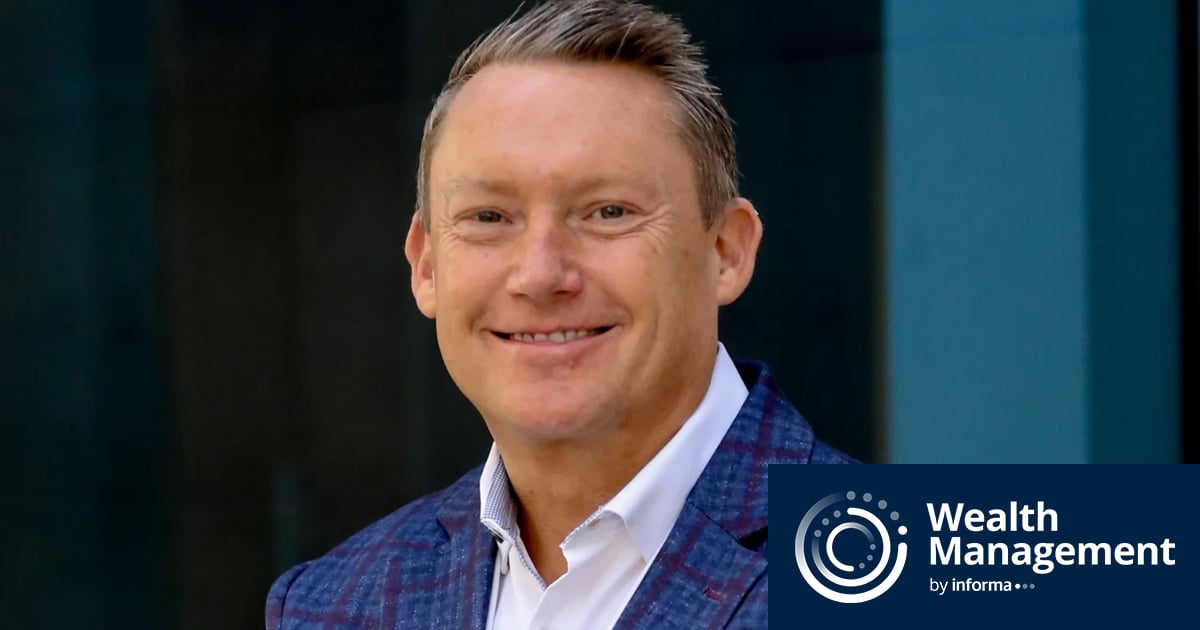
The founding partners include CEO Eddie Brown, who previously led Schwab Advisor Family Office and Premier Wealth Group at Charles Schwab. He later served as the first chief growth officer at Pathstone. Paul Ferguson, a former managing director at Schwab Advisor Family Office, is also a founding partner, along with Stephen Chien, who led AI advisor solutions at LPL for the last 2 1/2 years, and Tim Ramza, former CEO of Liveoak Technologies, which was acquired by DocuSign in 2020. Most recently, Ramza was the chief innovation officer at Brighton Jones. He also spent seven years at Fidelity.
“Growth firms rarely stall because they lack vision, talent or market opportunity. They stall because of execution,” Brown said in a statement. “I know growth creates complexity. Multiple status meetings per week, decks that report on problems instead of solving them, and too little time left for the strategy itself; I’ve been in their seat. I sought a better way to serve the leaders I worked with, and it led me to build the system I wish I’d had when I was in their position.”
Brown said growth-stage firms typically falter not for lack of vision or talent, but due to execution gaps exacerbated by administrative overhead. The firm’s offering is intended to address that shortfall amid broader industry dynamics, including consolidation, private equity investment and rising client sophistication, that have outpaced many firms’ existing operating infrastructure.
The company’s model is built around three practice areas: leadership and growth, in which operating partners work with chief executives to align capital, personnel and organizational design with growth objectives; firm architecture, which addresses client segmentation, service offerings, pricing structure and differentiation; and sovereign AI, which helps firms transition from AI tools toward AI-enabled operations, beginning with compliance and security.
“UHNW families face extraordinary complexity,” Ferguson said in a statement. “Standard wealth management models fail to address the complex interplay between family governance, risk management and dozens of other family needs. Our mission is to help firms from strategy to execution by designing a firm architecture of the future through frameworks for segmentation, differentiation, service offer, family office and pricing.”
BOSS, the platform underpinning Bridge’s Sovereign AI practice, provides each firm leader with a centralized Command Center for operational reporting, milestone tracking and decision escalation. Bridge said client data and institutional knowledge remain within the client firm’s own environment throughout and following the engagement.
Chien has been appointed chief product and technology officer and head of Sovereign AI, while Will Preble will serve as CEO of the Bridge Embedded AI Lab. He’s also co-founder of Covenant Labs, Bridge’s engineering and research partner. Tyler Hanson, co-founder and CTO of Covenant Labs, will serve as CTO and chief scientist of the Bridge Embedded AI Lab. They have a total of five employees in research and development.