
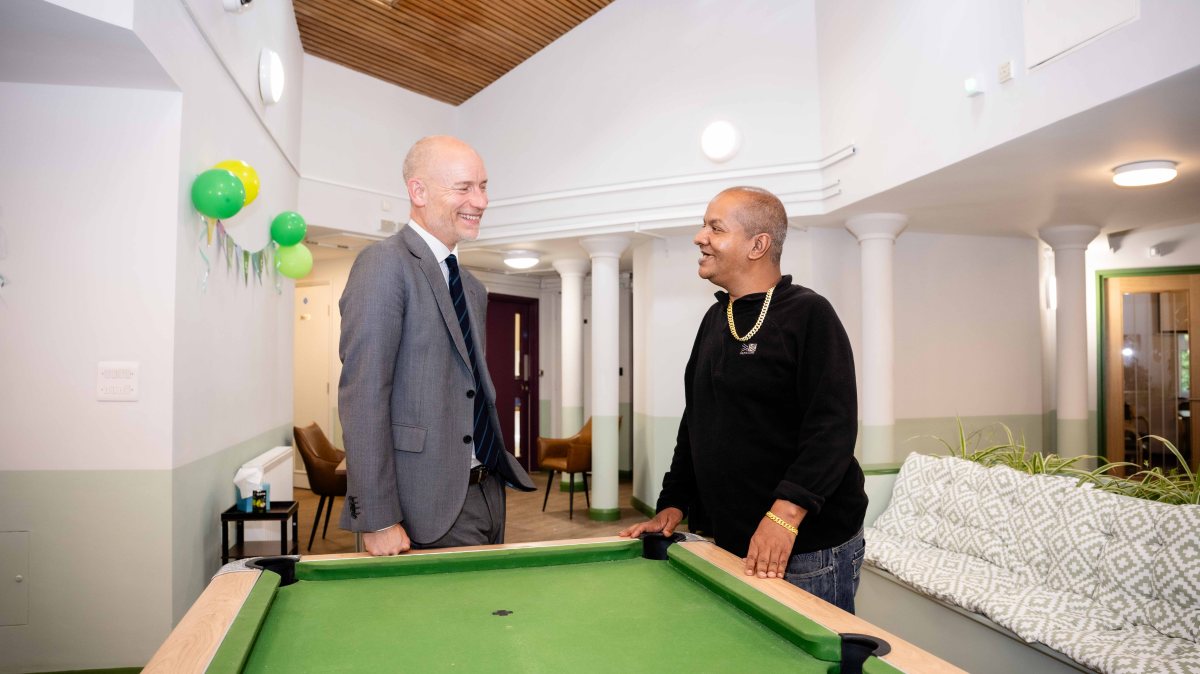
Patients with psychosis and schizophrenia will be given help finding jobs at NHS walk-in centres to ensure they are no longer “condemned to a life of worklessness”.
The new “one-stop shops” for people with severe mental illness will be open 24/7 and aim to stop patients “bouncing around” between different services such as hospital wards, A&E and the police.
As well as providing routine appointments and specialist NHS psychiatric care, the centres will have employment advisors and partner with local organisations to offer help with housing, debt and domestic violence.
Stephen Kinnock, the minister for care, said the clinics aim to “catch people before they fall”, providing wraparound care for hundreds of NHS patients already known to local services and helping to prevent hospital stays.
The Bethnal Green hub, which opened last week
JOHN NGUYEN FOR THE TIMES
It will be run by a team of 40 staff who will offer drop-in sessions with psychiatrists, nurses and social workers
JOHN NGUYEN FOR THE TIMES
About one in 110 people in England have a severe mental illness, such as schizophrenia, bipolar disorder and psychotic disorder. NHS figures show that less than one in ten of such patients are in paid employment, despite 80 per cent wanting to work.
The hubs will open on high streets and are designed for people with long-term serious mental health problems, as part of a “neighbourhood care” model unveiled by Labour’s ten-year NHS Plan.
The first centre — Barnsley Street Neighbourhood Mental Health Centre — opened last week in Bethnal Green, east London, and has a team of 40 staff offering drop-in sessions with psychiatrists, nurses and social workers. It will also have six beds for those who need to stay overnight.
A further five clinics will launch this year. Trained employment advisers will also be embedded in the hubs to help patients find a job or volunteering opportunities.
The centres will be open 24 hours a day, so those in need don’t have to turn to A&E or other services like the police
JOHN NGUYEN FOR THE TIMES
The Barnsley hub has six beds for those who need to stay overnight
JOHN NGUYEN FOR THE TIMES
Kinnock said: “People have been badly let down by the mental health system for far too long. This is a supportive and welcoming environment to demonstrate to people that they’re not being shunned by society. They are being brought into the community.”
• After my father died I was sectioned with severe psychosis
Helping patients with mental health problems find work was a “key priority”, he said, adding: “The vast majority of psychiatrists and psychologists will tell you that human interaction, social interaction, is vitally important for people with mental health conditions, and work is one of the best ways of having that interaction.
“Many patients have a huge amount to offer. They may well be facing mental health challenges, but they’re also extremely creative and very bright people, so they can bring a lot to a work environment.”
Kinnock added that ministers were “pretty convinced” the centres would help reduce the number of people ending up in hospital wards or A&Es, saving the NHS money. “Often, going on to the hospital ward is not the right way for somebody to be treated. It can actually be very counterproductive and worsen the state of distress, trauma.”

Kinnock said visits to A&E can worsen states of distress for patients suffering from mental illness. The Barnsley Street hub offers calming activities like drawing for service users
JOHN NGUYEN FOR THE TIMES
Kitchen facilities at the centre
JOHN NGUYEN FOR THE TIMES
One patient at the London centre, Moynah Miah, 47, has paranoid schizophrenia and has been in the care of mental health services for most of his adult life. He has started coming every day. “I come here and have a cup of tea. The staff are very friendly and helpful. They helped me with my housing when the council wanted to evict me,” he said.
Claire Murdoch, the national mental health director for the NHS, said that most severe mental illnesses, such as schizophrenia, are lifelong conditions. The centres will enable patients to “dip in and out” whenever they need support, providing continuity of care, whereas patients are currently “bounced around between teams” and can end up in police cells.
She said: “This is a one-stop shop that you can come to again and again, that might help you with housing, debt, employment, relationships.”

Miah, a Barnsley Street service user, has paranoid schizophrenia
JOHN NGUYEN FOR THE TIMES
• Bella Mackie: What doctors never told me about quitting antidepressants
Murdoch said many people never work again after being severely mentally unwell, which is “devastating”. Patients “don’t want to be held back by their diagnosis”, she said, “they want to be a volunteer, to have a meaningful day, to make a contribution, to go back into education … why should we condemn somebody to a life of worklessness?”
Only six to eight per cent of people with severe mental illness are in paid employment, compared to 75 per cent of the general population.
Dr Sheraz Ahmad, a consultant psychiatrist and clinical lead at the Tower Hamlets service, said the centre will be a base for about 600 local patients who are currently under the care of community mental health services, and provide a better alternative to hospitals.
He said: “I’ve worked on [psychiatric] wards for years. I don’t think anybody would argue that wards are good, yet they often seem to be the only option.”
Dr Sheraz Ahmad, a consultant psychiatrist and clinical lead at the East London service
JOHN NGUYEN FOR THE TIMES
Ahmad said NHS staff are partnering with organisations specialising in areas such as domestic violence and asylum seekers, to build trust with patients and reach “communities that often run away from us”.