
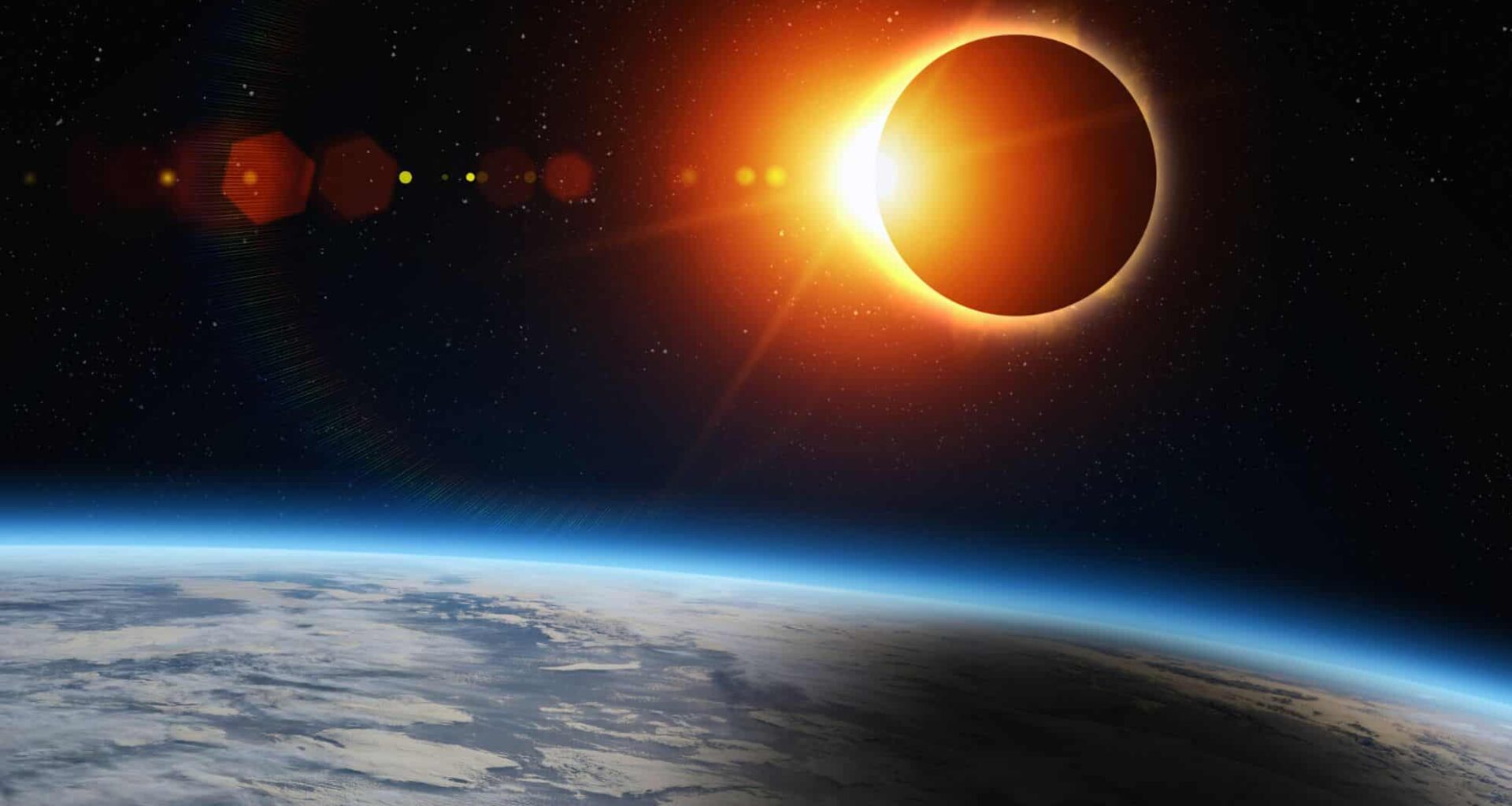
On August 2, 2027, the world will witness one of the most breathtaking astronomical events in recent memory: a total solar eclipse that will last an incredible 6 minutes. Described as the “Great North African Eclipse” and widely regarded as the eclipse of the century, this phenomenon is expected to captivate millions of viewers across Southern Europe, North Africa, and parts of the Middle East. While it won’t be visible in North America—except for a brief partial eclipse in Newfoundland, Canada—the path of totality promises a once-in-a-lifetime viewing experience. According to Time and Date‘s detailed guide, the path of totality will offer precise timings and locations for this remarkable celestial event, making it an invaluable resource for those planning to witness the eclipse.
The Path of the 2027 Total Solar Eclipse
A total solar eclipse occurs when the Moon passes directly between the Earth and the Sun, obscuring the Sun entirely for viewers in the narrow path of totality. For the upcoming eclipse on August 2, 2027, the path will stretch across multiple regions, from the Atlantic Ocean to parts of Europe, Africa, and the Middle East.
The Start Over the North Atlantic
The path begins in the North Atlantic Ocean and will first touch land in Southern Spain, specifically in the Costa de la Luz (Coast of the Light) in the Andalusia region. From here, the eclipse will continue to Gibraltar, the British Overseas Territory, before making its way southward into North Africa.
The Eclipse Across North Africa and the Middle East
As the path moves south from Spain, it will cut through countries such as Morocco, Algeria, Tunisia, Libya, and Egypt. Egypt will experience the longest totality duration, with a remarkable 6 minutes and 22 seconds of complete darkness in some areas. This will occur in cities like Luxor and Berenike, which are perfect spots for eclipse chasers.
The eclipse will continue through the Middle East, crossing into Saudi Arabia, Yemen, and parts of East Africa, before ending its journey at the Chagos Archipelago in the Indian Ocean. The eclipse will impact roughly 89 million people, offering them the rare opportunity to experience the total solar eclipse.
Choosing the Best Viewing Locations for the Eclipse
Choosing the right location to watch the 2027 total solar eclipse is crucial for maximizing the experience. The path crosses several countries, each offering unique viewing opportunities depending on the weather conditions and the length of totality. Here are some of the best options to consider:
Luxor, Egypt: The Prime Spot
For many eclipse chasers, Luxor, Egypt will be the ultimate destination to witness the eclipse. With a totality duration of 6 minutes and 20 seconds, Luxor is the best location on land to witness the longest duration of the eclipse between 2009 and 2114. Additionally, Luxor is home to some of the world’s most iconic ancient sites, such as the Valley of the Kings, Karnak Temple, and the Luxor Temple, providing both a cultural and astronomical experience.
Tunisia: A Cooler Alternative
For those looking to avoid the extreme heat of Egypt, Tunisia offers a more temperate climate and still provides a lengthy eclipse duration. Sfax, for example, will experience a totality lasting 5 minutes and 41 seconds, making it one of the best alternatives to Egypt while avoiding the summer heat and desert dust.
Spain and Gibraltar: A European View
If you’re based in Europe, there are excellent options for viewing the eclipse. Southern Spain—especially Tarifa and Cadiz—will offer totality durations of up to 4 minutes and 39 seconds. Gibraltar will also provide a fascinating vantage point for those wanting to experience the eclipse as it first touches land, albeit with a shorter duration.
Why the Eclipse Will Last So Long
One of the most intriguing aspects of the 2027 total solar eclipse is its exceptional duration. The totality will last for up to 6 minutes and 22 seconds, making it the longest total solar eclipse to occur on land between 2009 and 2114. But why does the eclipse last so long?
The length of a total solar eclipse depends on the Moon’s elliptical orbit and its proximity to Earth. When the Moon is closest to Earth, its shadow travels across a larger area, resulting in a longer totality. The 2027 eclipse will also occur near the equator, where the Moon’s shadow covers a larger surface area. The combination of these factors makes this eclipse one of the longest and most spectacular to witness.
Tips for Viewing the 2027 Total Solar Eclipse Safely
Watching a solar eclipse can be an awe-inspiring experience, but it’s important to prioritize safety when observing this celestial event. Never look directly at the Sun without proper eye protection, as it can cause permanent damage to your eyes. Use eclipse glasses that meet the ISO 12312-2 standard, or use a solar viewer or pinhole projector to safely view the eclipse.