
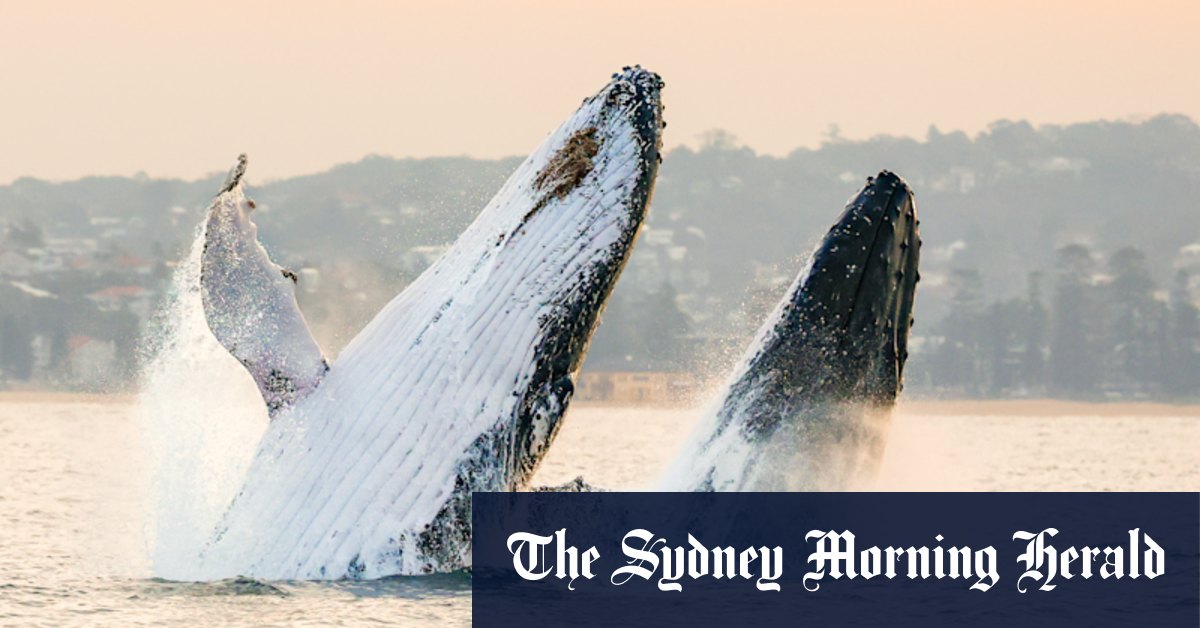
The iconic procession of humpback whales down Australia’s eastern seaboard is peaking earlier and earlier, likely because their epic migration cycle has been sped up by rising sea temperatures.
Humpback whales are frequently spotted travelling the 8000 kilometres between Queensland’s Great Barrier Reef, where they breed and raise babies, and Antarctica, where they spend most of their year feeding on krill.
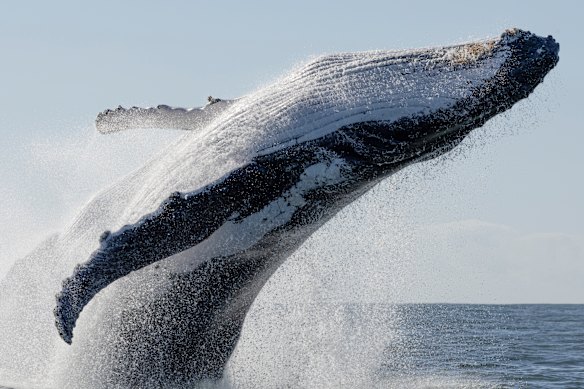
Whales dancing off the coast of Lennox Head, in northern NSW.Credit: Danielle Smith
In the early 2000s, their return journey – with calves by their side – would peak in early October.
But, if you want to catch the spectacle, start whale watching early, said University of Queensland Associate Professor Rebecca Dunlop, lead author of a study that finds the number of humpbacks migrating south is peaking three weeks earlier than in 2003.
Loading
“My advice is to start looking in the first weeks of September to get the most of them,” Dunlop said.
Whales must feed for long enough in Antarctica to build fat and protein stores to power their breeding and travel to and from tropical Queensland.
Rising sea temperatures are putting pressure on the food web whales depend on.
Dunlop said there had been a pronounced decline in sea ice coverage, leading to less algae, which, in turn, means less food for krill, the tiny crustaceans whales feed on.