
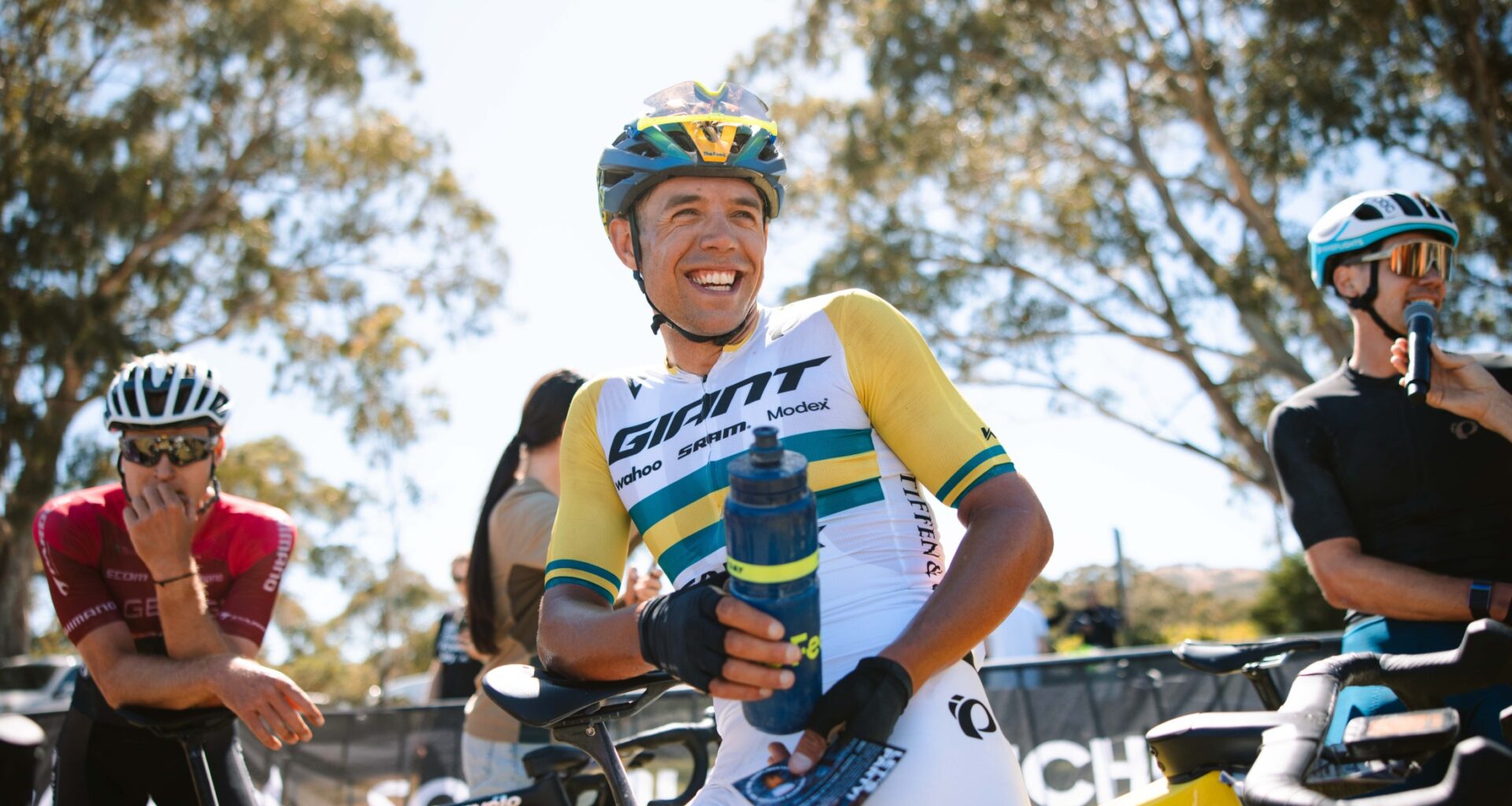
“Oh my gosh, he doesn’t even have a tyre,” commentator and former pro Meredith Miller said on the Leadville 100 livestream.
Brendan Trekky Johnston was on screen, cruising down the road on his dropbar-equipped Giant Anthem franken-bike, riding the rim.
Not just riding the rim with a flat tyre. It was bare carbon rolling along the bitumen.
The town of Leadville is 867m higher than the top of Mount Kosciuszko, and the iconic mountain bike race tops out at 3,786m. Simply existing at this altitude can leave you breathless, and Trekky — having grown up in Australia — readily admits he struggles with altitude. Johnston’s plan for the day was to ride into the race.

With newly crowned XCM World Keegan Swenson — who is seemingly completely unaffected by altitude — already off the front, Johnston had settled into a group with Norwegian rider Torbjørn Andre Røed. A little over 30km into the 165km/103mi race, the pair hit the first major and most technical descent on the course, Powerline.
“I’d been out there (in Leadville) for three weeks, and ridden down Powerline probably ten times,” he says.
“I was following Torbjørn, which was fine — he’s a good rider — and it just happened that he passed this rock, and it dislodged from the bank and tumbled across the track. It didn’t even hurt my rear tyre; it just smashed into my rear wheel. It was like a big boulder, and it just destroyed my wheel, instantly,” he says.
Related:
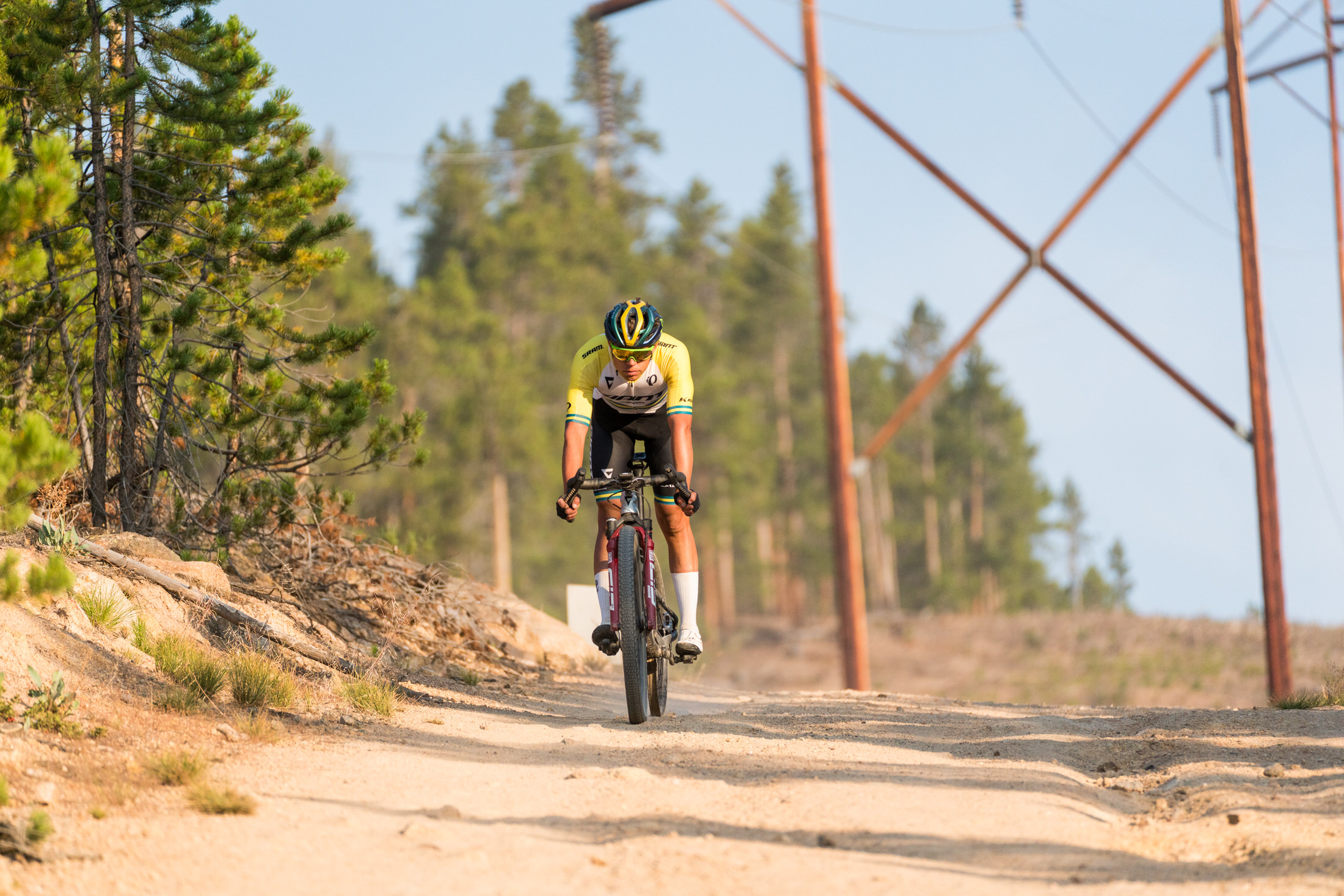 Trekky’s day in Leadville was over almost before it started when a rock blew up his rear wheel. Funny enough, the tyre was undamaged, but it kept getting caught up in his drivetrain, so he took it off to ride to the next aid station.
Nearly a month living at altitude and a remarkably restrained and regimented training block to help him adapt to the thin Rocky Mountain air, blew up when a coin flipped and the odds were not in his favour. He tried to get moving again, but the tyre kept coming off the rim and fouling his drivetrain.
“I stopped, took the tyre off and ended up riding the rim down to the road. By this point, I’d lost a lot of time and was way out of the standings,” he tells Flow.
Limping to the next aid station, the call was made to stop the bleeding, abandon the race and look ahead to the next event on the calendar.
Unfortunately, this saw Trekky drop from second place in the Life Time Grand Prix overall standings to ninth place, having finished fourth at both the Sea Otter Classic and Unbound Gravel.
Now in his third year chasing the Life Time Grand Prix, Johnston has learned a lot about life as a gravel pro and racing overseas. We caught up with him while he was in Canberra between North American racing blocks.
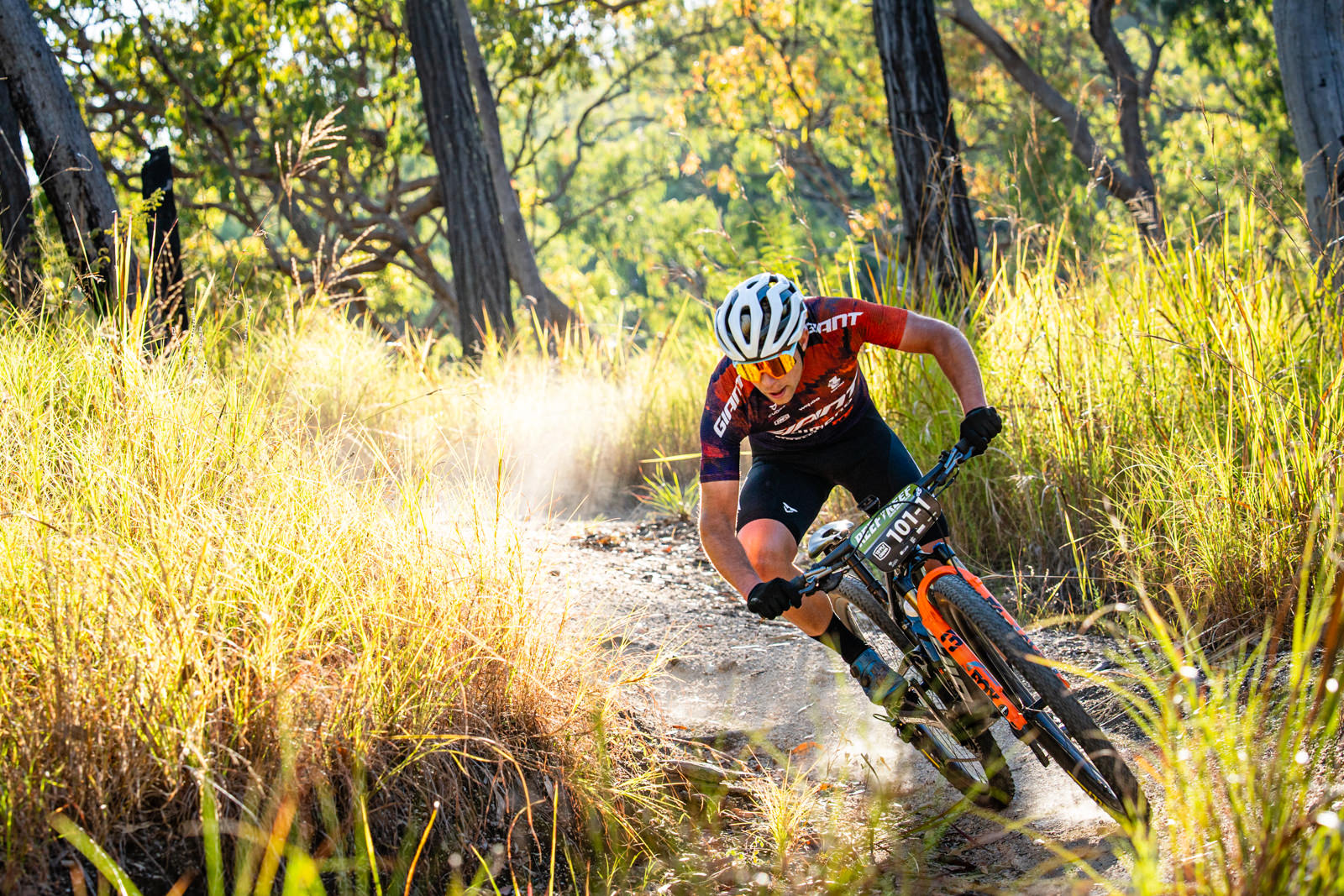 Johnston has been floating around the upper echelons of the Australian racing scene for ages, both on and off road.
From Australia to the pinnacle of North American racing
Hailing from Moruya, NSW, Johnston has been rattling around the Australian off-road scene for yonks. He has eight Australian National Championships to his name (six XCM and two gravel). He’s also won the National Road Series overall in 2020, and countless editions of the Cape to Cape, Port to Port, Reef to Reef, Otway Odyssey; he also won the first edition of the Dirty Warrny — all of that is to say he’s pretty darn fast.
Before all of that, he was an up-and-coming junior rider. Two weeks out from the 2009 UCI Mountain Bike World Champs in Canberra, having just come back from a broken collarbone, Johnston was diagnosed with a rare form of testicular cancer at the age of 17. He underwent surgery to remove a paratesticular lump. A fortnight later he raced World Champs, and commenced his first round of chemotherapy the following week. In a compromised state — physically and emotionally — he still finished in the top 50 in the XCO. It was a long and difficult road back to health for Johnston.
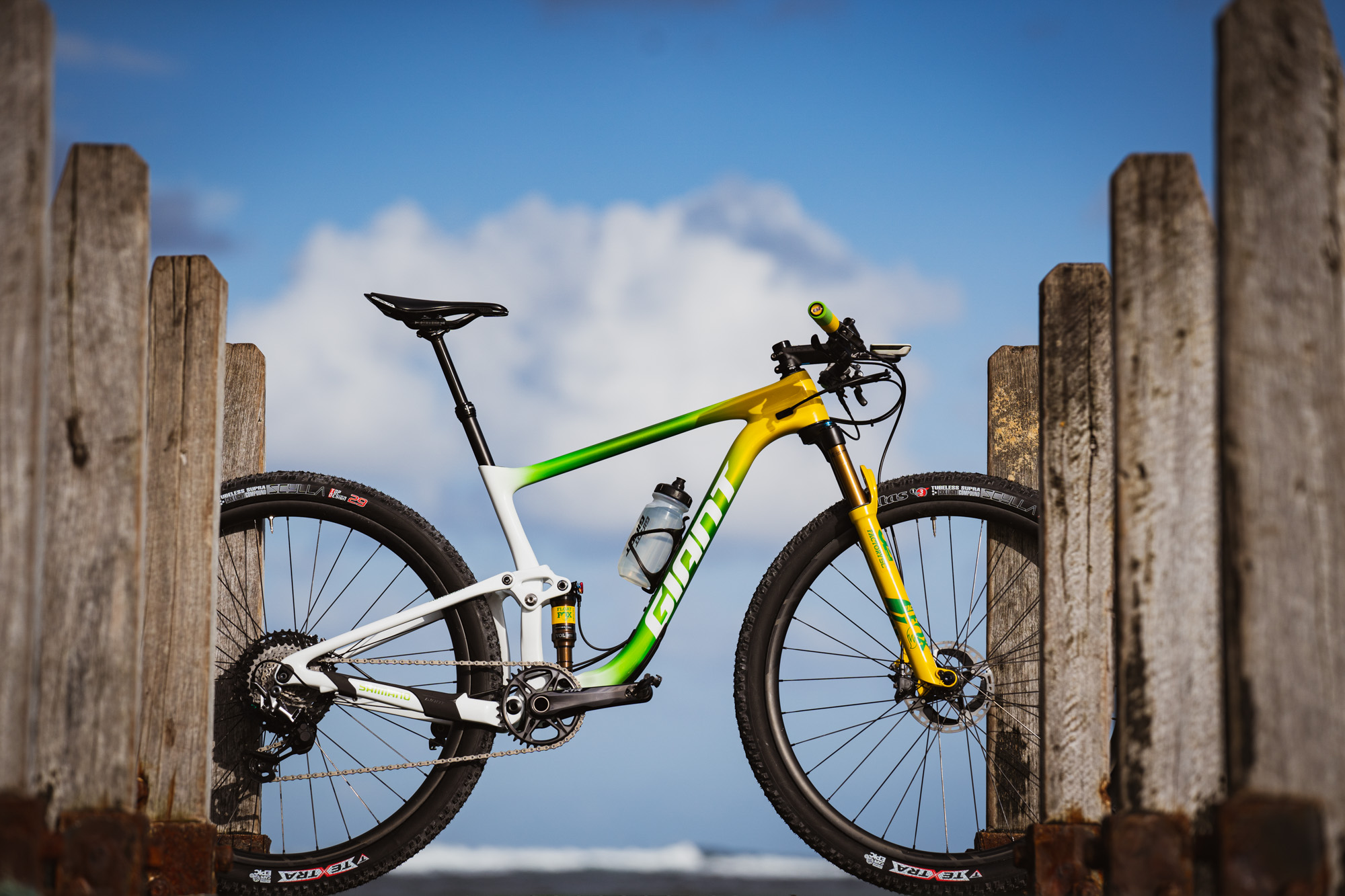 Ten years on from his cancer diagnosis, in 2019, Giant Australia commissioned this custom Anthem as a symbol of how far he’d come.
Related:
But over the years, he would become a dominant force in the Australian domestic racing scene, both on and off-road, while working full time as a sparky.
Looking for a new challenge, in 2023 Johnston applied for the Life Time Grand Prix and was accepted. At the time, the Life Time GP was only in its second year, but there was $250,000 USD in prize money up for grabs, and several riders had already made a career out of focusing on the six-race series. Trekky sold his business and planned to shoot his shot, to try and make a name for himself with the goal of coming back the following year.
“I’ve raced bikes and mountain bikes for over 15-years, but I’ve never put all my eggs in that basket for more than a few weeks. So to be doing it for the better part of the year is pretty foreign to me, and it’s actually a pretty great feeling,” he told Flow before he boarded a flight to head over for the first time in 2023.
His first taste of American gravel racing came at the Belgian Waffle Ride San Diego, where he’d come fourth. His first Life Time GP event was the Sea Otter Fuego XL ~100km MTB race, where he’d come sixth, despite battling a bad back.
The next race on the calendar was Unbound Gravel. This was the infamous Mudbound year. Unbound was his goal race for the season, and he fell victim to the mud pit half an hour into what was expected to be a ten-hour race. The peanut butter mud KO’d his rear mech and he walked for an hour to get out of the bog. He was forced to abandon at the first aid station after being stuck in 11T at the rear for three hours.
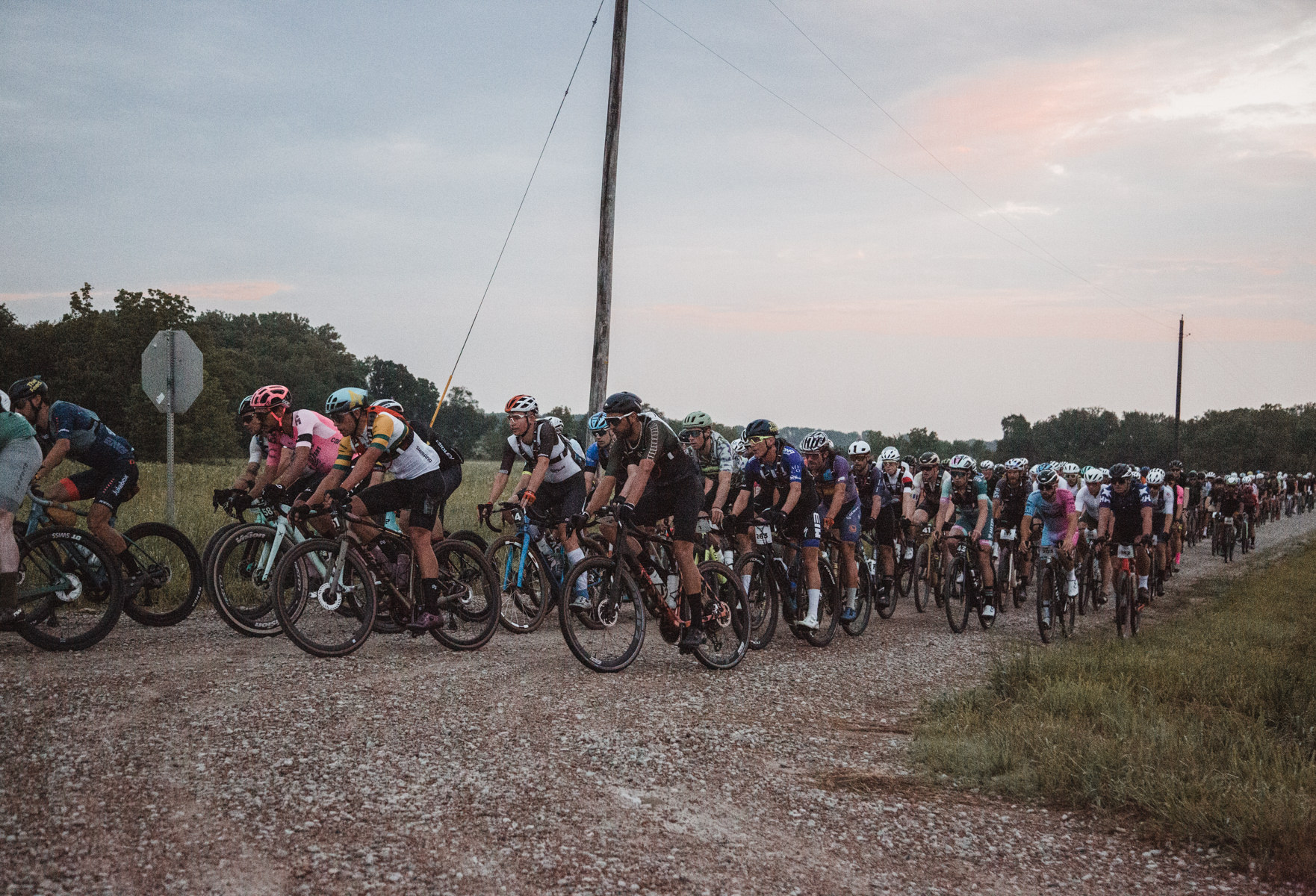 Unbound Gravel was a low point for Trekky in his first Life Time GP season, but he managed to turn things around.
Related:
Poor results at Crusher in The Tusher, Leadville and Chequamegon left Trekky on the back foot. He’d risked everything to get here, and he was getting his teeth kicked in week after week. So after a huge block going into Unbound and not finishing, he doubled down on the amount of work he was doing on the bike.
“I was just flogging a dead horse. I was living in Colorado Springs, which was really nice, but I’d never had this really poor period of training, and not being able to get anything out of myself,” he says.
“I was feeling this immense pressure in the middle of that year. It wasn’t going to plan. I hadn’t come here to have a year off. My plan was to establish myself and find a good contract and do it for years to come,” says Johnston.
A mid-season change of coach does not signal a machine that’s running well; however, it turned out to be the antidote for the hazy fatigue Johnston was battling.
At the next round, The Rad in Trinidad, Colorado, he landed in third, and a few weeks later, would snag his first Life Time Grandprix win and Big Sugar.
“I got piped for the overall in Big Sugar, but I was first in Life Time points — so second in the race, but first in the GP. I had two flat tyres. I rode back on and finished with a flat tyre and almost won the sprint,” he says.
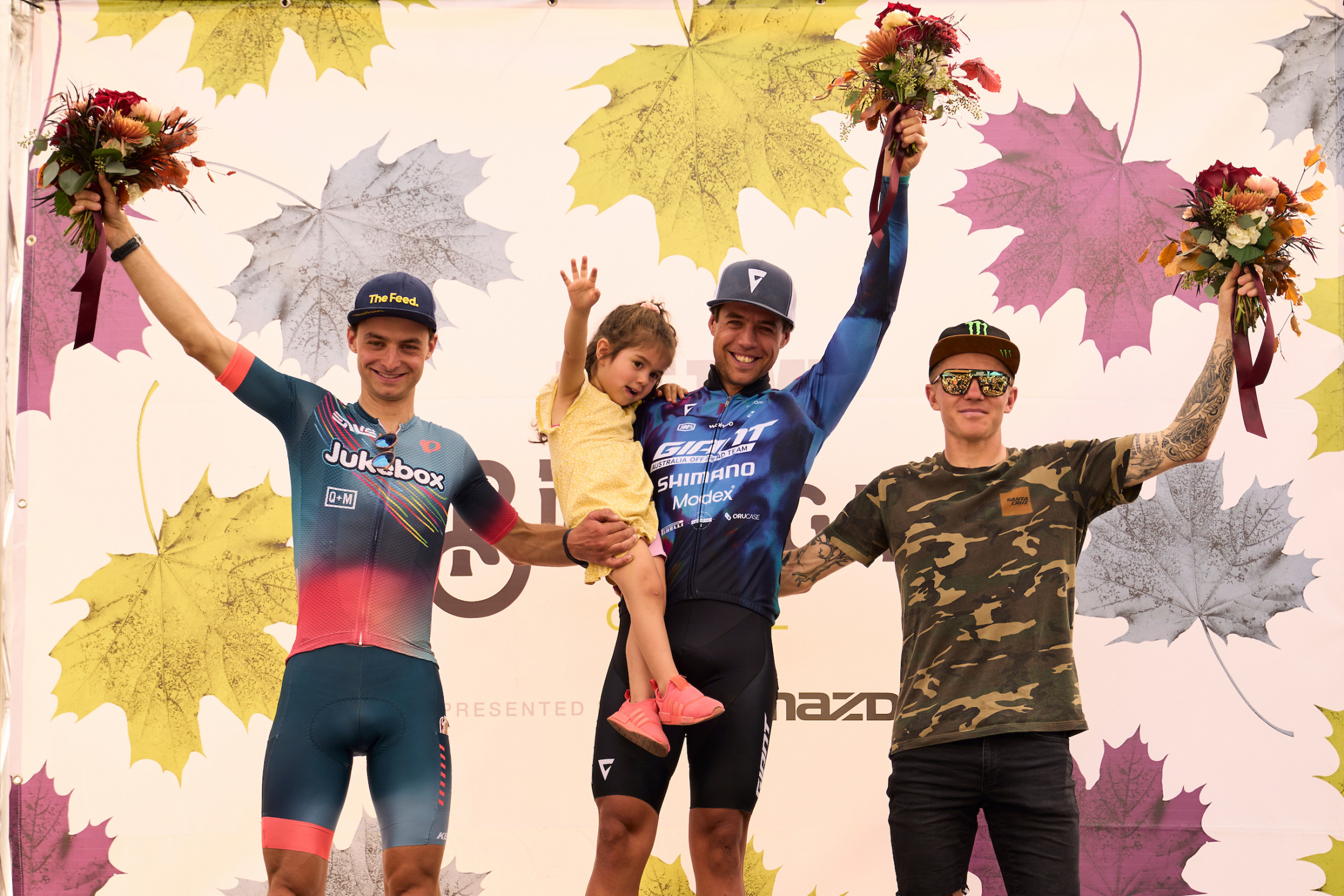 At Big Sugar, Trekky took second place in the race and was first in the Life Time GP points.
Despite a mid-season low, Johnston fought his way back and finished seventh overall in the field of thirty Life Time Grand Prix riders. He’d shown that he was strong enough to rub shoulders in this field and cemented his place in the 2024 season.
Johnston tells us after his breakout ride at Big Sugar, several brands presented him with contracts almost before he’d had the chance to change out of his kit.
“It was nice to get that instant gratification from a result,” he says. “If you have a good result in Aus(tralia) it doesn’t change your circumstances. You’re doing the best you can for your partners, and your partners are doing the best they can for you, but things don’t materially change.”
“I’ve had this result and now I am literally getting rewarded in the moments after it’s happened,” he says.
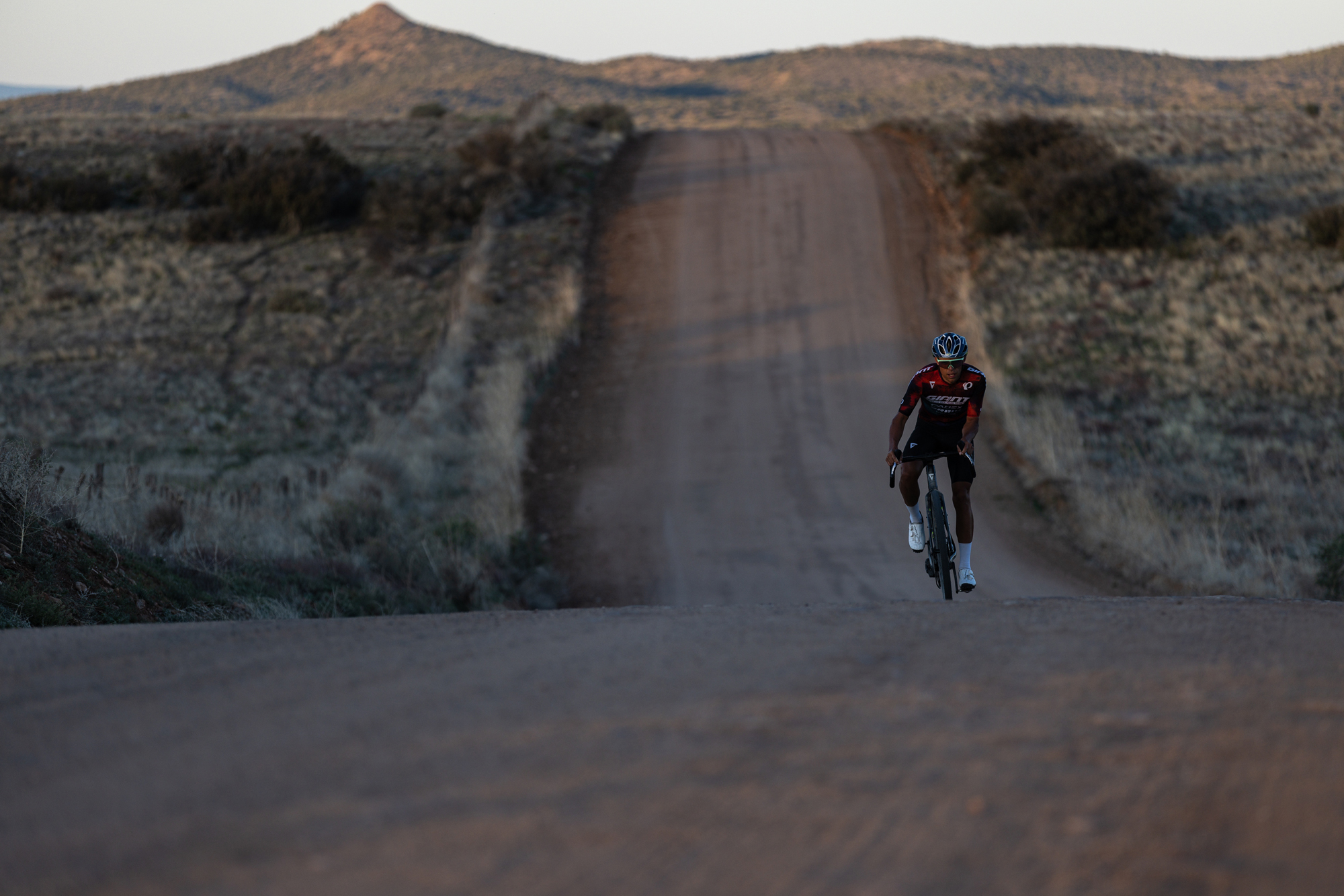 The 2024 season saw Trekky receive significantly more support, but with that comes more expectations.
Second Year Scaries | Coming back for the 2024 season
With the summer spent at home and a season of experience under his belt, Johnston entered the 2024 Life Time Grand Prix with a new level of support. He’d newly signed on with The Feed, one of the biggest sports nutrition marketplaces in the US, and Kenda Tyres, among others. He’s also started working with Inspire Athlete Management, who also represent the likes of World Tour riders like Mike Woods and Derek Gee, who have both won stages at Grand Tours, as well as other Life Time GP athletes like Dylan Johnson.
While you won’t see Trekky riding around in a Ferrari anytime soon, this added level of support was enough to get him through the season and take some of the financial pressure off. But the field is continuing to get faster, and with more sponsor support comes additional pressure to perform.
“I felt pressure to improve in the standings. I wasn’t targeting a race for a sole victory, but I just wanted to be really solid in the overall standings and be one of the top five guys,” he says.
And that’s precisely what he achieved, taking home fourth place in the overall, ahead of his Giant Bicycles teammate Cole Paton; he was also the highest-ranked The Feed athlete in the Men’s GP field.
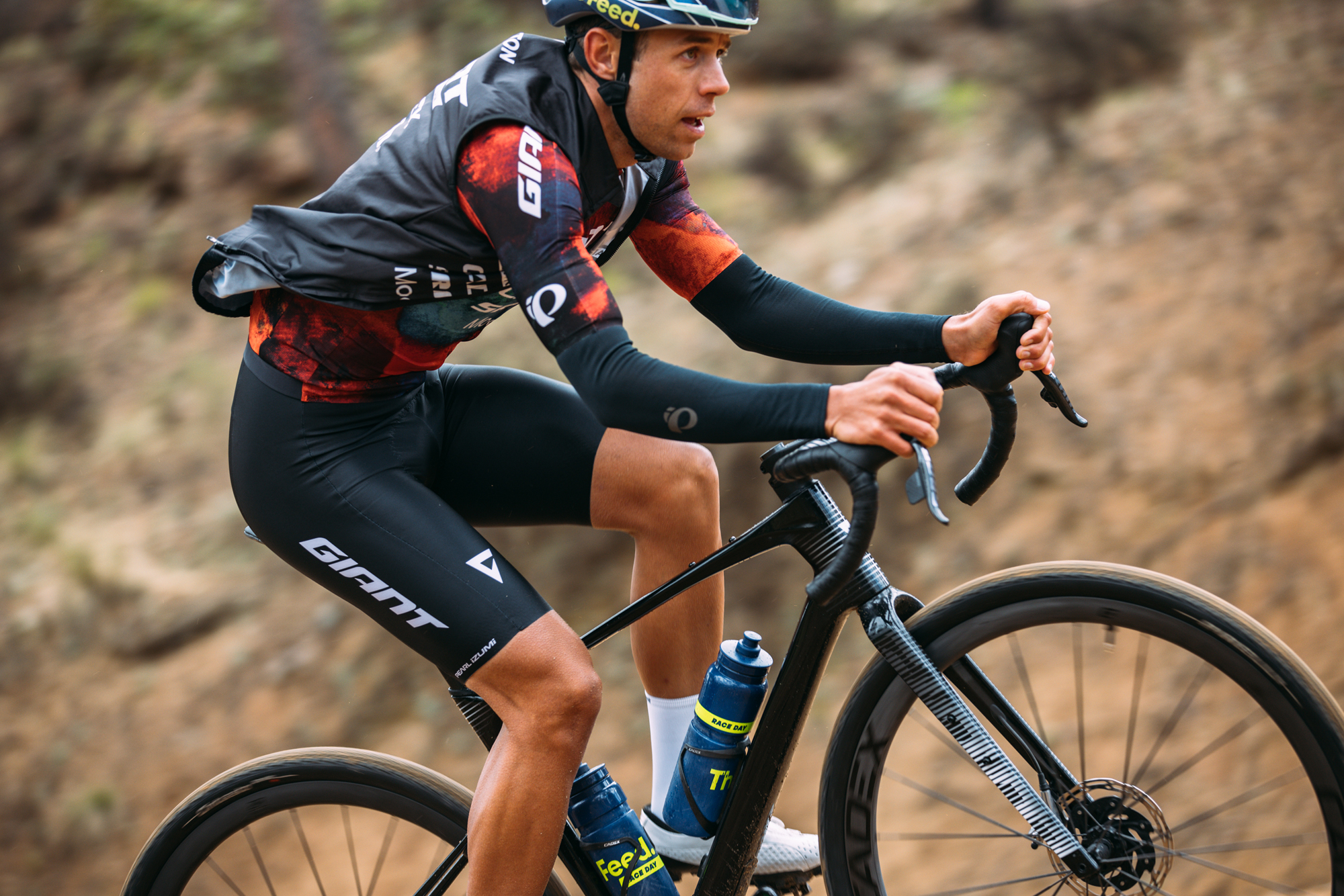 In the 2024 season, Johnston found is mojo on the bike and started the trive racing in the Life Time Grand Prix.
Even Unbound went better than normal from Trekky in 2024.
“I had three flat tyres and rode the insert for literally 80km in the front group,” he says. “But I was in the front of the race and still able to hang on with a flat tyre. The way I was able to ride that day was really validating for years to come. Not a good result, but it stood out as I can do well here one day, if everything goes right.”
With Leadville being his only finish outside the top ten in 2024, he was again proving his worth and mixing it up with the field of the best gravel and XCM athletes in the world.
He also went 12 months without losing a race in Australia — not a bad hit rate. The field here in Australia is surprisingly strong, and it’s not like he is sandbagging to win these races. The locals like Tasman Nankervis, Scott Bowden, Mark O’Brien, Brent Rees and others put him to the sword any chance they get.
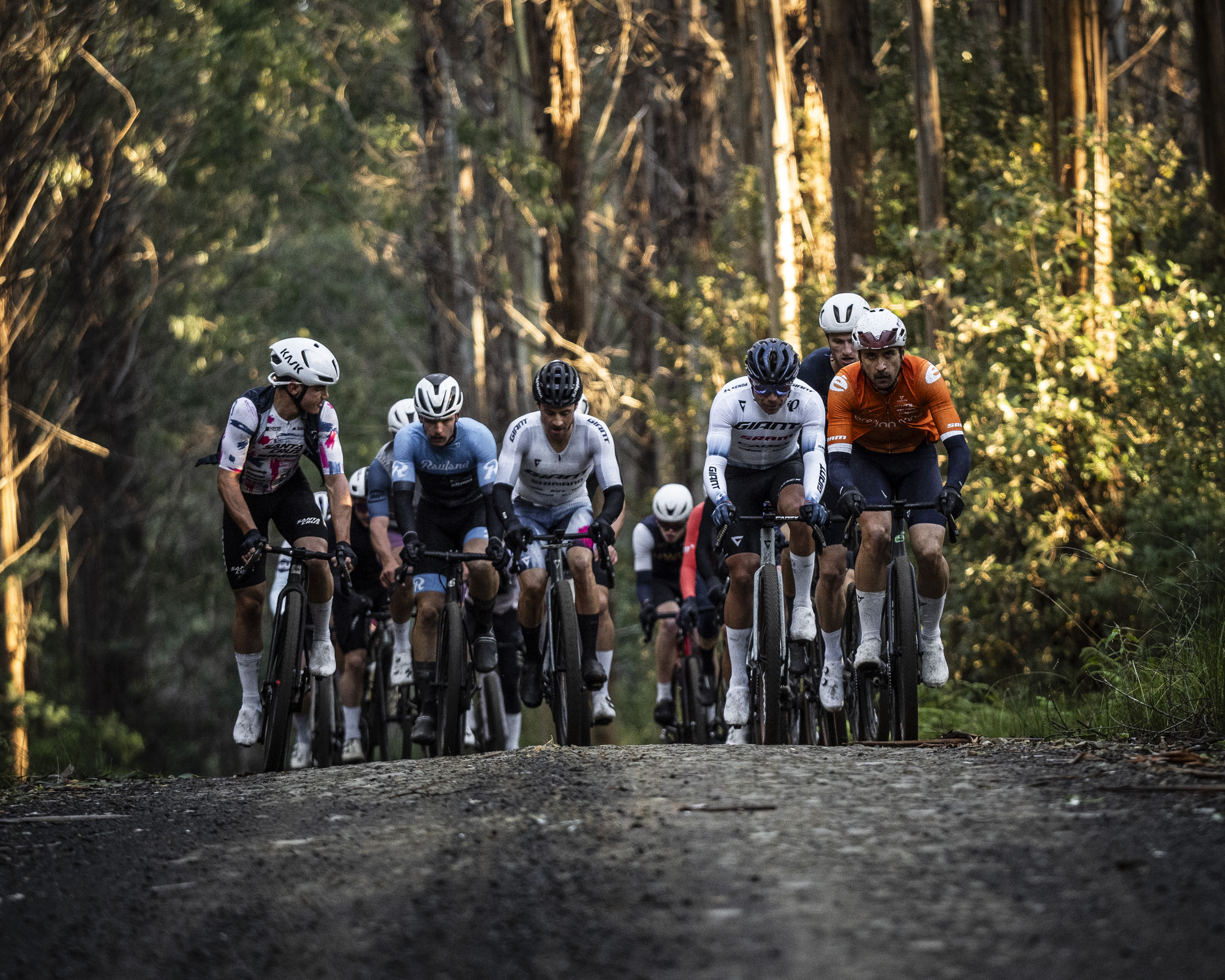 Trekky went a year without losing a race in Australia, which is quite an achievement when you survey the hitters in the local field.
2024 also saw Johston come to new prominence with Giant, playing a role in the development of the new Revolt gravel bike. Since then, he tells us there has been a steady stream of test mules in the stable working out the details for new geometry and other features for the next-generation gravel racer from Giant.
“Since gravel bikes are changing so fast, they’ve always come to the athletes for feedback. But Giant has always been a challenging brand in that space. We always have good products to race on, but it’s always been a focus for Giant to make bikes for the masses and to tick more than one box,” he says.
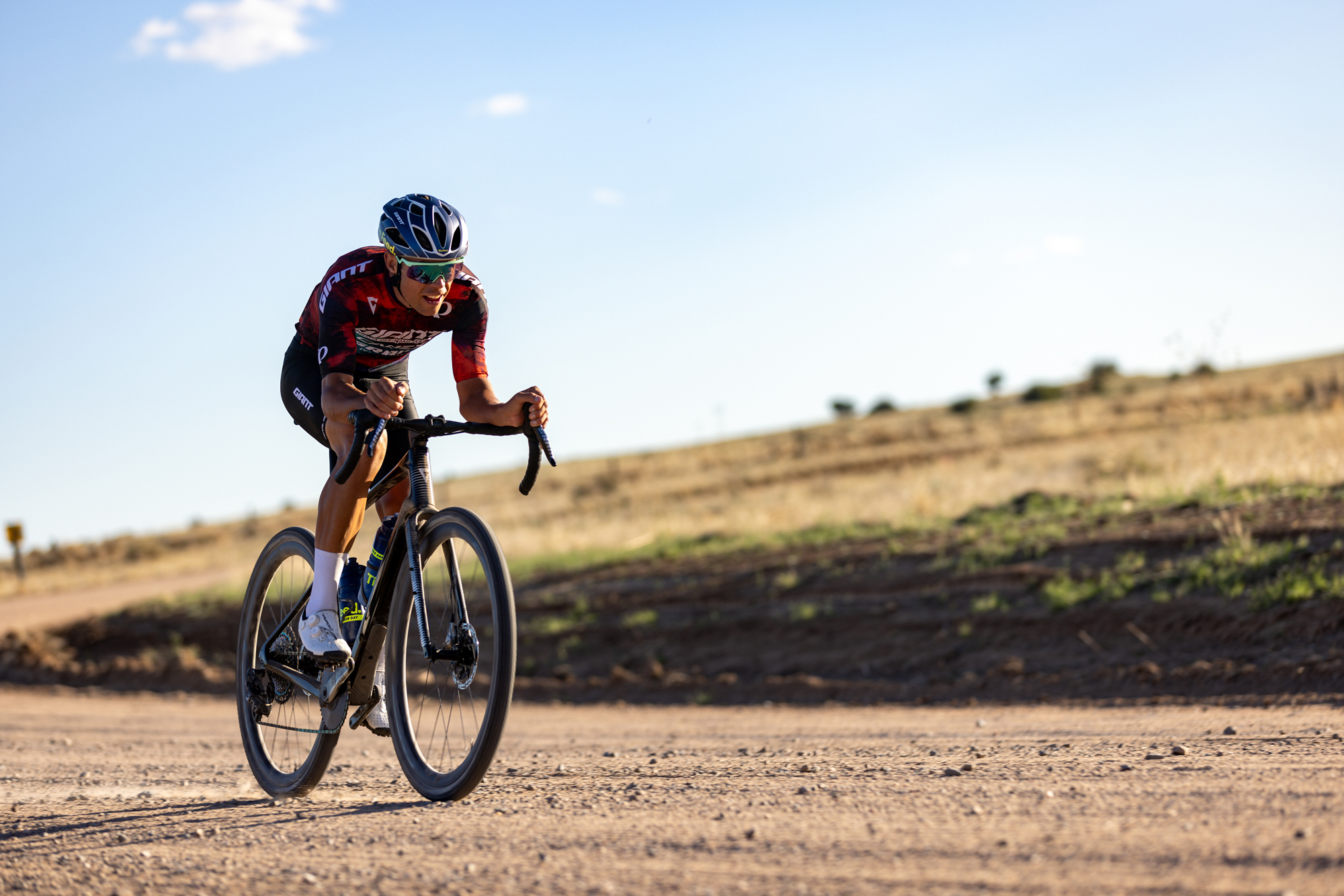 Trekky played a key role in developing the latest Giant Revolt that launched last year.
“I think in the last 12-18 months there has been a realisation that gravel is really becoming a performance product and there is space for high performance and lighter equipment,” he says.
Trekky tells us for the latest Revolt they had pushed for a few things like more aero integration and a UDH that didn’t come to fruition.
“We’re getting more traction with the team, and they are providing us a good platform to race on.
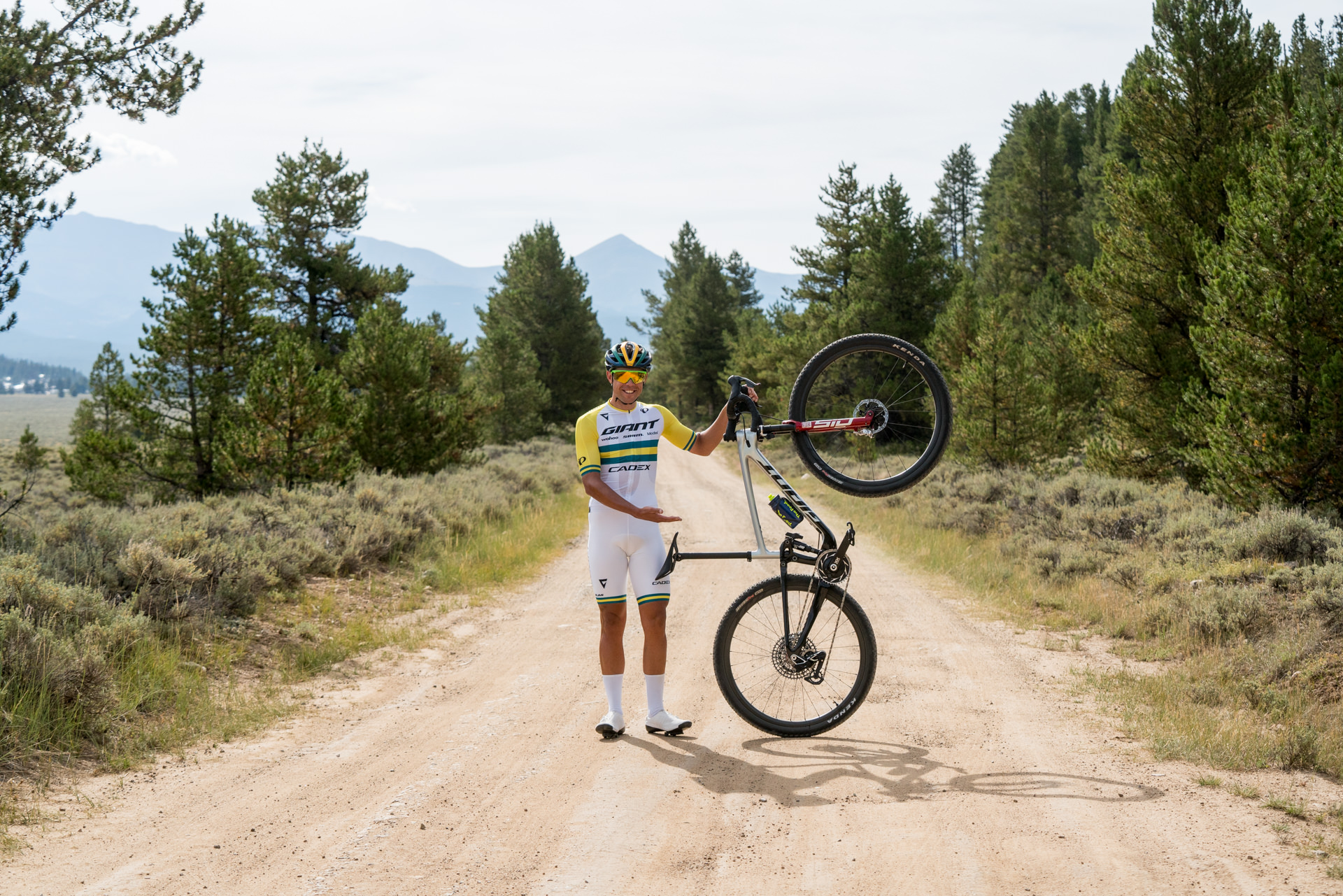 Leadville has spawned some of the weirdest bikes we’ve seen of late. Here’s Trekky’s drop bar, full suspension Giant Anthem.
A Dropbar Giant Anthem | What is that thing?
Of course, if we’re talking about racing platforms, we cannot move on without addressing the monstrosity that Trekky raced at Leadville — a full suspension Giant Anthem with a high post and curly bars.
Trekky — along with a large portion of the elite field — opted for some definition of a drop bar mountain bike for this year’s Leadville 100, but this is not necessarily new ground.
In the early days of mountain biking, John Tomac and Jacquie Phelan raced drop bar mountain bikes. More recently, Travis Brown raced Leadville in the late 2000s on a drop bar MTB, and four-time, 24-hour World Champ Corry Wallace came eleventh on a gravel bike in 2021. However, it was gravel’s tyre guy Dylan Johnson who arguably turbocharged the rebirth of this trend — so please direct any comments and concerns to @dylanjawnson on Instagram. Newly crowned XCM World Champion Keegan Swenson cornered the pro field into considering drop bars when he won his fourth and fifth Leadville 100s on such franken-bikes, though we should note that he set the course record on a Santa Cruz Highball with flat bars.
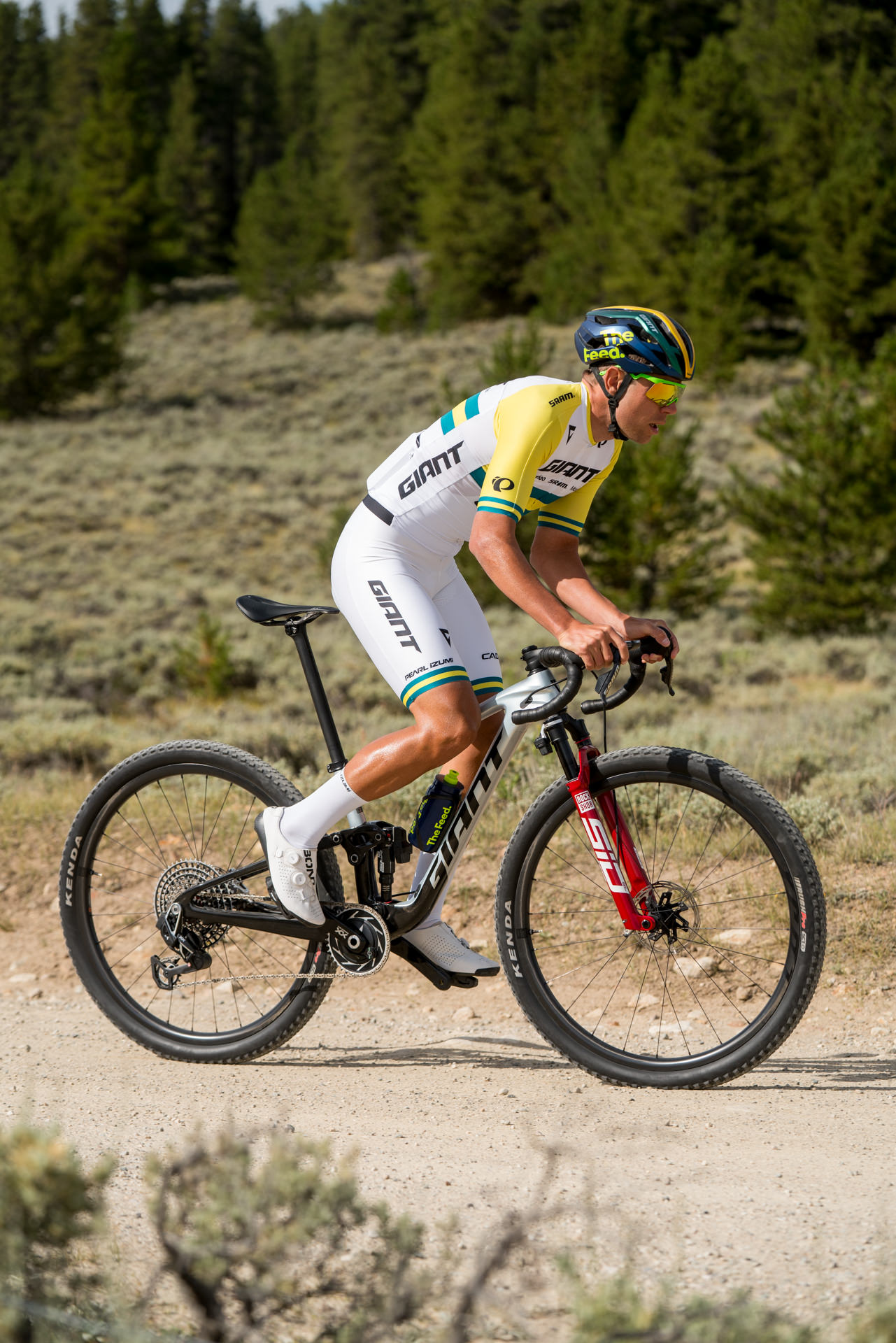 There’s quite a bit that goes into making the geometry on a mountain bike work with drop bars, and Trekky tells us he swapped from a medium to a small frame. Look at all of that seatpost sticking out!
Leadville is an interesting race in that the vast majority of it takes place on fire roads, double track and paved roads, with only a small portion of singletrack, none of which is that technical. But the whole course is rough and chunky, there are mega fast descents, and it’s a bloody long day.
Trekky tells Flow that he’d done a heap of training at home on a Giant XTC hardtail he’s set up with dropbars and a RockShox Sid with Flight Attendant.
“I was riding just standard gravel stuff, and I did a big block down the coast with some rougher gravel, but still pretty smooth,” he says.
“I’d done it (Leadville) on a hardtail the past couple of years, but getting there and getting out on the course, it was quite rough. The Sugarloaf climb on the way out over Powerline was embedded rock and super rough for climbing,” he says.
While he was putting in good times in his training rides and found himself able to push at altitude for the first time, there was an overwhelming sensation that he was bleeding efficiency on that setup. So, he made a call to build an Anthem with drop bars.
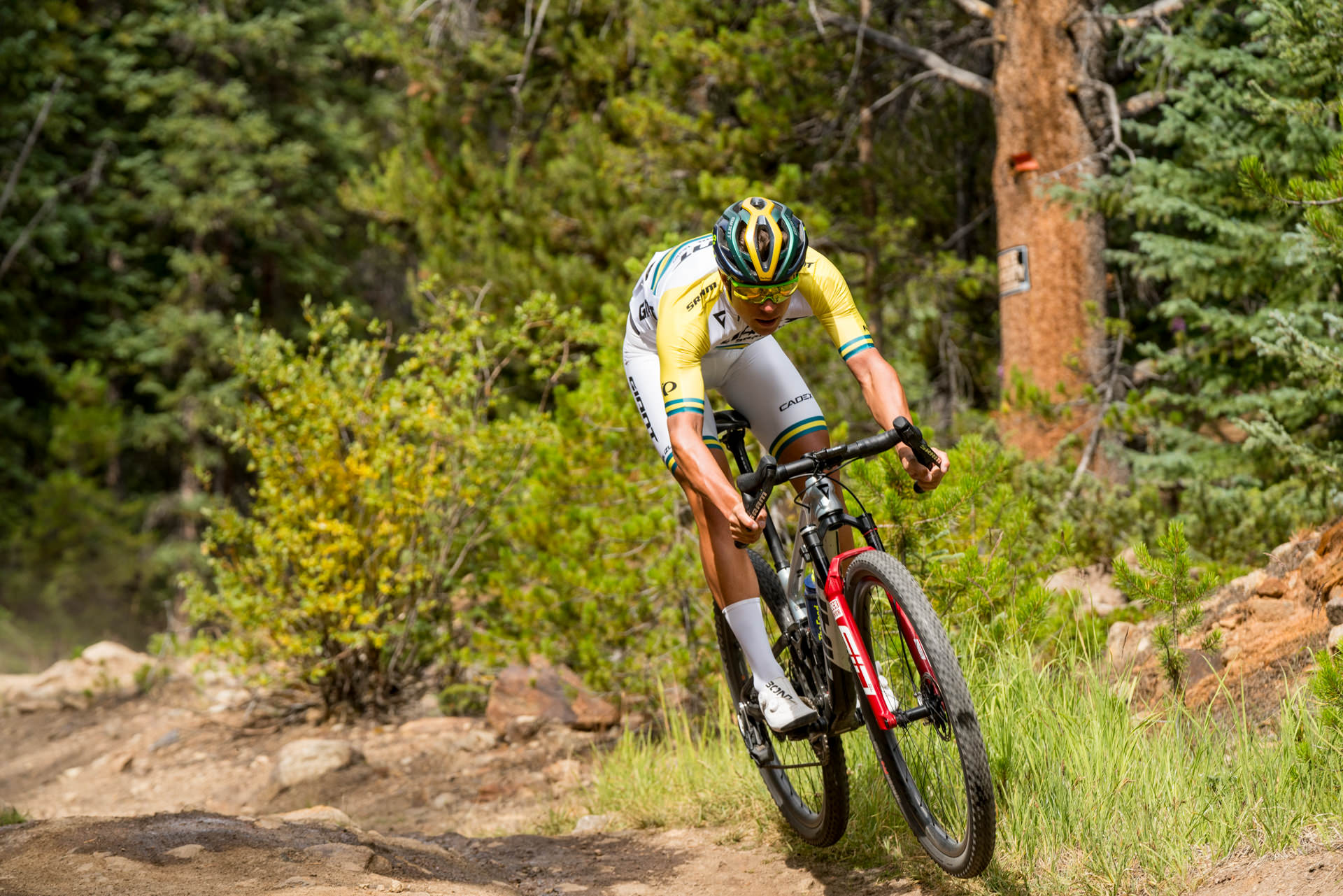 Unfortunately Johnston didn’t really get to see if this experiment would work for him at Leadville as something completely outside of his control ended his race.
Now, there is a lot more to making a drop bar mountain bike than just banging on a set of curly bars and connecting the brake lines. Trekky actually swapped from a medium to a small frame with a long stem.
Our mechanic drove out from Moab with this bike all set up,” he says.
“I am really fortunate that I have access to all this stuff, and I can make all of these calls — this is like Monday before the race. The next day I got on it and went training and was just like this is 100% the bike,” he says.
Gravel’s quest for marginal gains
The Life Time Grand Prix has been a hotbed for development and the pursuit of marginal gains. From mountain bike tyres to doing some races in road shoes and skin suits with a hydration bladder pocket because it’s more aero than wearing a pack — both of which are faster than stopping at feedzones.
That’s not to say that the pursuit of marginal gains in XC, downhill, or enduro, or even on the road, is not just as intense. However, in gravel and the unique suite of events that comprise the Life Time GP, it’s definitely been the most visible.
In the past couple of years, gravel bikes have completely changed, and a lot of that is trickling down because the top racers at the Life Time Grand Prix are asking for it. As consumers and fans, it’s difficult to keep up, but when your job depends on it, that is a whole new level of pressure.
Trekky tells Flow after the 2024 Leadville 100, he was speaking to Kimo Seymour, who is the brainchild behind the Life Time Grand Prix, about folks using drop bars at this race.
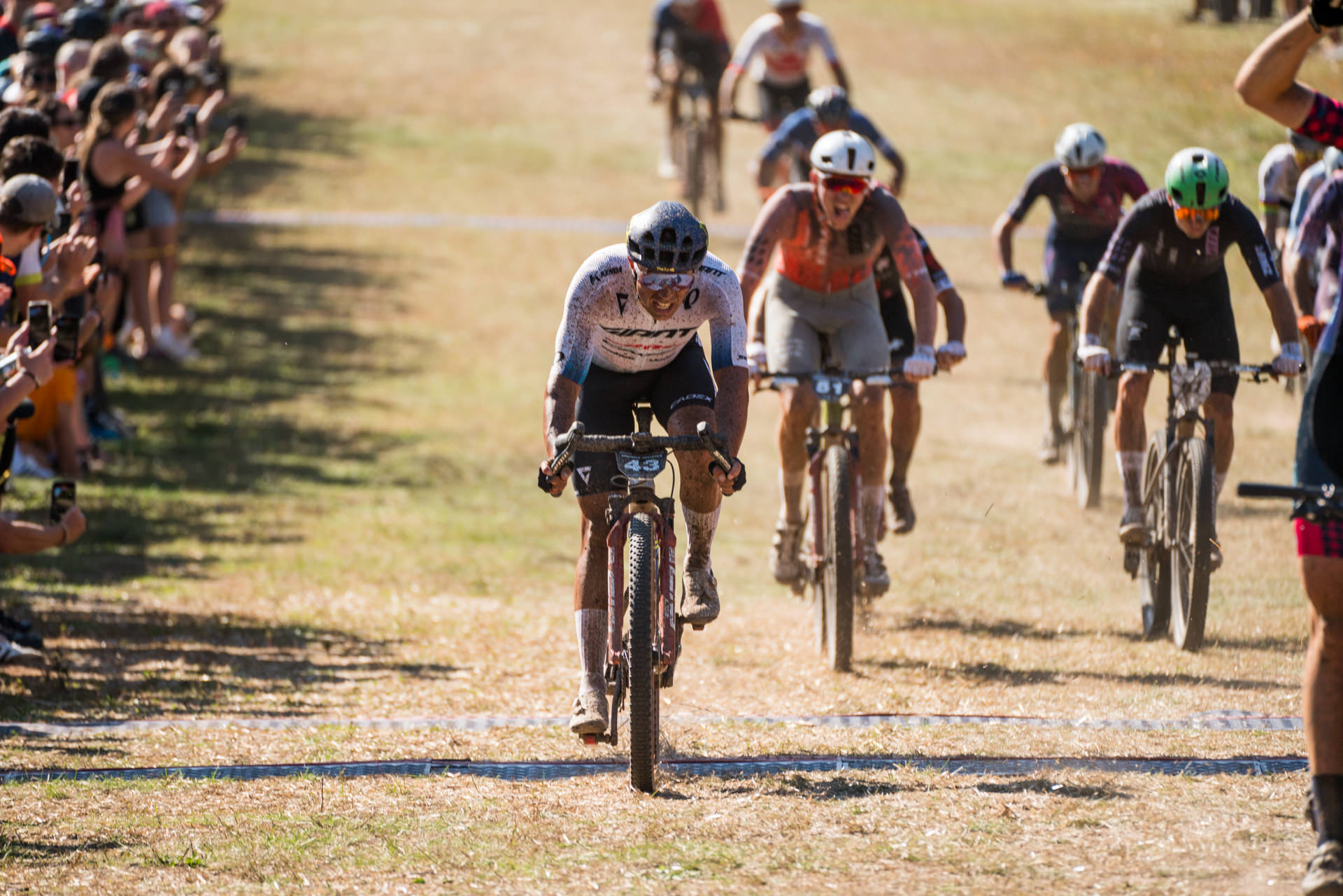 While it didn’t work in Leadville, Johnston’s franken-Anthem was good enough to earn him third place at the Chequamegon MTB Festival.
“At that point, I thought it was faster and was probably the way it was going to go, but I was unsure whether it was true to the roots of Leadville as a mountain bike race.
He (Seymour) was like ‘I have no intention of putting in rules like that (to prevent people from running drop bars) — ever! That’s not even on our radar. We want people to push the envelope and weird things to come about.’ Ultimately, it’s good for our sport in that there is no limit on the innovation we can do and the things we can try,” he says.
While Trekky says at times he’s been frustrated by the speed at which things are changing and are evolving within this space, he’s also conscious of the number of eyes it brings to this growing corner of the sport. Being that a significant portion of his budget goes towards travel — something to the order of $20,000 AUD — he doesn’t necessarily have a ton of leeway to be testing different tyres, setups or speedsuits, and he admits to following what some of his competitors are doing.
I stuck with it and I guess at that point it was kind of nice to feel ahead of the game — or at least like with the game.
But there was a time right when Trekky actually found himself at the cutting edge of the gravel arms race. In his first race in the US, the Belgian Waffle Ride San Diego, he came third on fat (for the time) tyres.
“The whole summer leading up to that first trip, I was training and thinking about my tires. I remember riding with my buddy Karl and talking about it — I was always using 45mm. At that point everyone was like, ‘that’s so big, isn’t it heavy and slow.’ I kept saying, ‘nah I think it’s the move, at the right pressure 45mm is better than 40mm.’”
“At the race everyone was using 38mm or 35mm, and some of the reporters were like, ‘you’re going to use those?’
I stuck with it and I guess at that point it was kind of nice to feel ahead of the game — or at least like with the game,” he laughs.
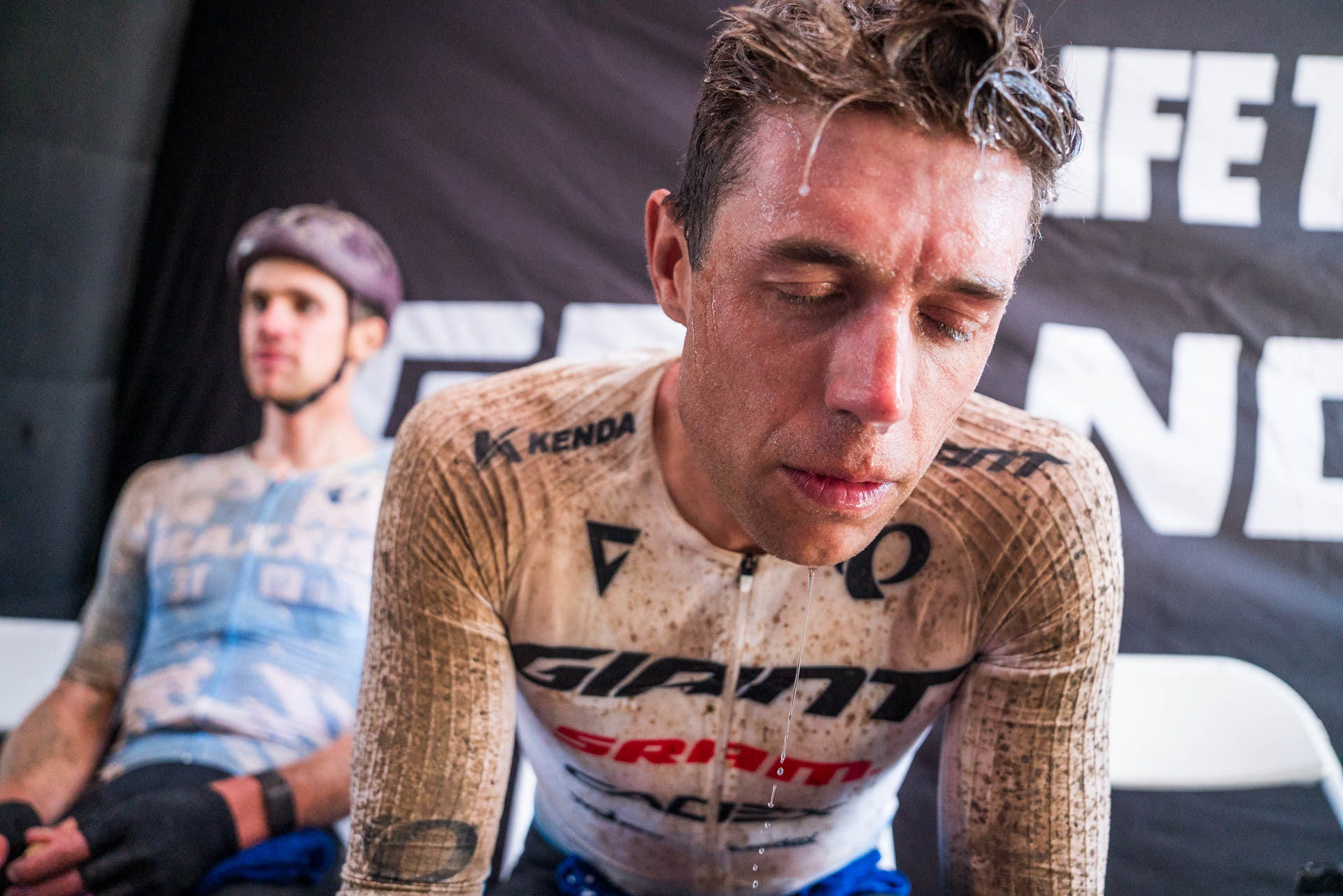 There is more to life than bike racing, and Johnston tells us the past few years have been pretty difficult.
It’s Not All Daisies & Sunshine Living The Dream
From the outside, Trekky is living his dream as a professional bike rider. He sold his electrical contracting business years ago and is achieving results at the highest level of competition for gravel and XCM. He has input on the direction of products being developed by the largest bike brand in the world, travels around the world to race his bike, and has brands tripping over each other to sign him.
But there is more to life than bikes, and this rise has also come at a cost. Trekky says the past few years have been some of the darkest periods of his entire life.
“These things have all come at the wrong time, and it’s been really tough in my home life. My daughter, Maeve, is the only grounding thing I have,” he says.
Maeve was born in 2020. Now, in his third season, Johnston has a travel schedule and budget that allows him to only be away from home for four or five weeks at a time. But little kids can grow up a lot in four or five weeks.
“She’s five years old now, and she changes so fast. I talk to her every day on the phone, but she changes, and I definitely feel like I miss parts of that. On the flip side, from October to March/April I’m hers, which wouldn’t be the case if I had a normal job,” he says.
“When I’m home, typically I’m training for two to six hours a day — I can drop her to school and pick her up at three o’clock, and then we can do something. That may not be the case if I had a regular job,” he says.
Despite the success he’s found on the bike, he’s in the midst of a personally challenging time. And with the roller coaster that is trying to push to be at the pointy end of the top one per cent, he’s had doubts. Asking what if.
“It’s always push, push, push, and you can’t ever take your foot off the gas. You want more support and more money, and I want to be able to provide for Maeve. I don’t want just to be here having a good time. I want to keep pushing. And then sometimes, you’re like, ‘well, I could just stop. That would be so much easier,’” he says.
But Johnston has had a regular job. He was an electrician with a successful business in Canberra. Cancer took his first shot at becoming a full-time pro mountain biker, but he’s been afforded a unique second opportunity to live out a dream. So he’s grabbing on with both hands and putting in everything he can.
Trekky tells us that when he looks at his own upbringing, his dad was a source of inspiration for him, and he wants to be the same for Maeve.
“I see a little bit of that in Maeve. She sees what I’m doing and thinks it’s cool. I hope I can inspire her to do what she wants to do, whenever that may be,” he says.
Staying True To His Roots | A true blue Aussie through and through
Johnston has a lot to thank for the cycling scene we have in Australia, with marathon XC racing and National Road Series (now known as the ProVelo Super League) teaching him the skills and building the diesel engine that he has now to mix it up with the likes of Alexi Vermeulen, Matt Beers and Keegan Swenson.
Just as the World Cup takes place mainly in Europe, North America is the home of gravel and marathon XC racing and at the centre of all that is the Life Time Grand Prix. That’s what the sponsors are watching, that’s where the prize money is, and where the best athletes in this segment of competition are flocking.
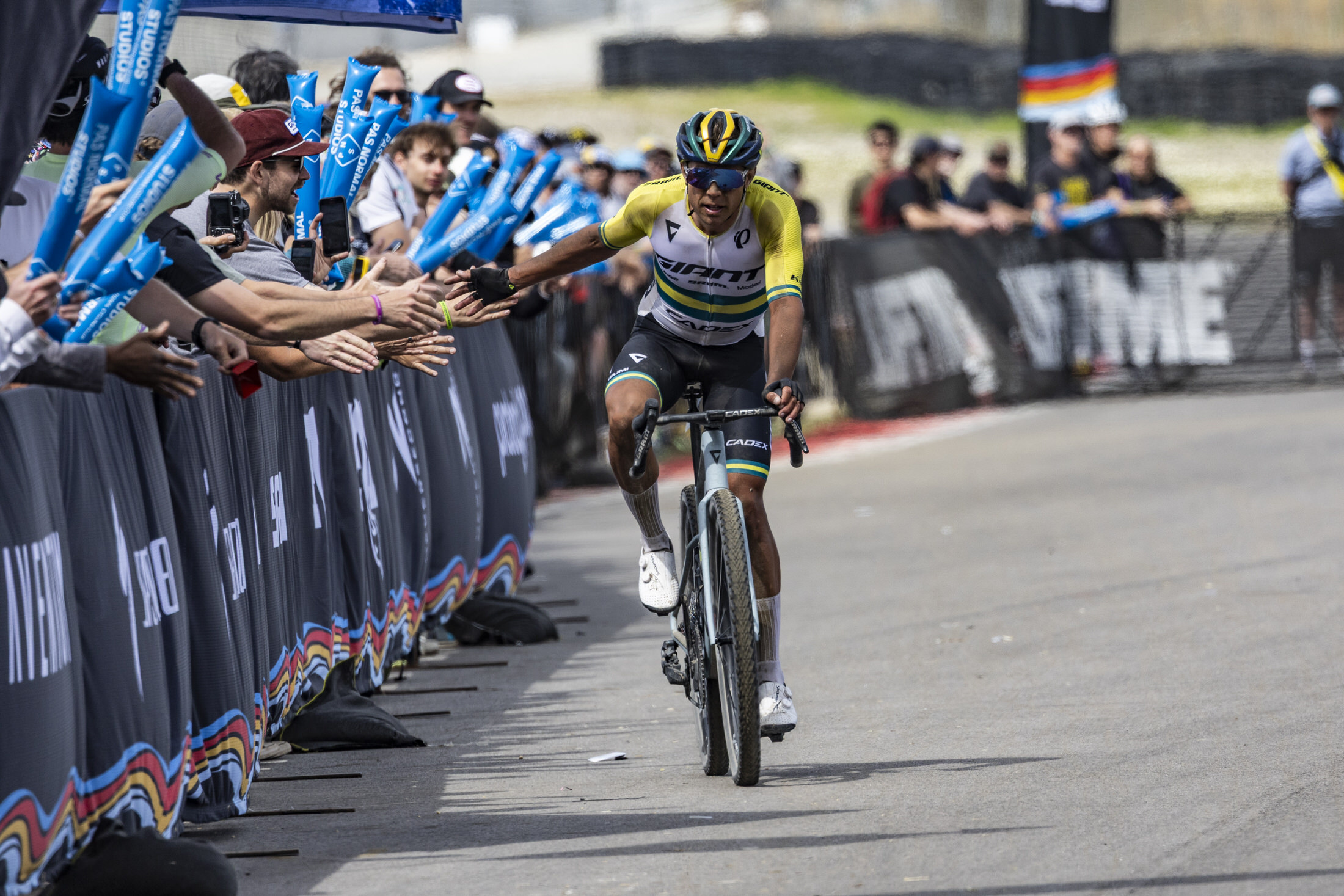 While he’s found a path to success racing in the US, Johnston has not forgotten his roots and the folks who helped him get to this stage. He doesn’t want to be the rider who trains here and races overseas.
But North America is a long way from Australia, and while you can watch some of the Life Time GP events live on YouTube, live images of Johston riding the rim at Leadville would have been broadcast after midnight on the East Coast.
“I want to remain relevant here in Australia and I feel like it’s hard to do that with the events we have (in the Grand Prix),” he says.
And when he is home, he does have a solid diet of the biggest races in the country — RADL GRVL, Otway Odyssey, Gravelista, The Devil’s Cardigan, Dirty Warrny, Quad Crown. But he has to be careful, many of these races take place in his competition’s off-season.
“It’s hard to be racing here during the summer and then trying to be really good in April (for the Sea Otter Classic),” he says. “How can I compete with those guys who are finishing racing in October and not starting again until March if I’m trying to race in January?”
This is something that has created some internal conflict for Johston because Australia is his home, and he feels an obligation not just to participate in the riding culture here but also to help support those who helped and supported him over the years.
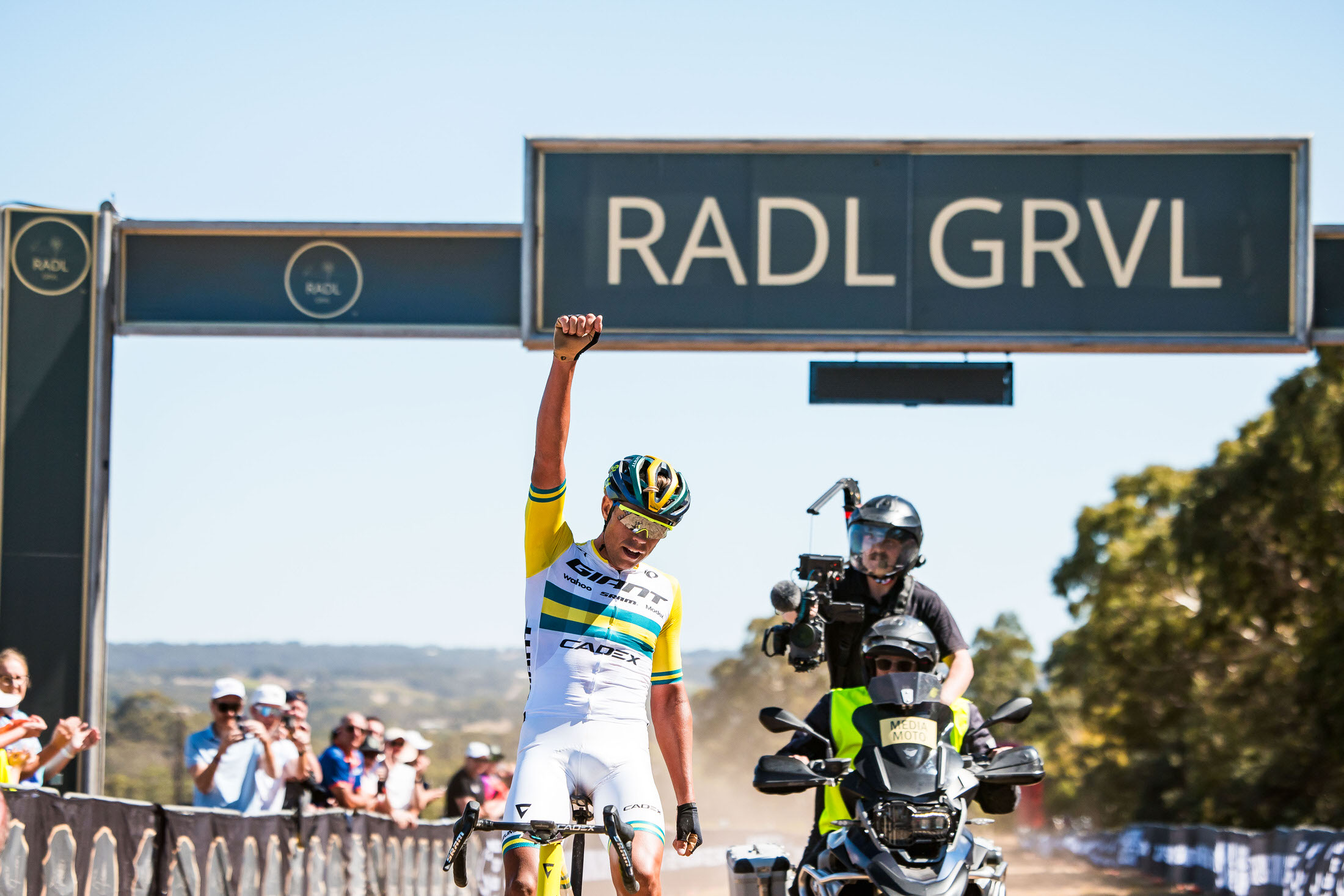 Johnston tries to do as many races as he can in Australia, but he also has to take into consideration that his rivals are resting during our racing season. So, he’s devised a different kind of challenge.
“I want to be more than just an athlete that trains here and races in the US,” he says. “I do things like go to the Giant (Australia) Christmas party every year — these are the people that have become my friends through this sport, and through our partnership. That’s not something I’ll ever lose sight of.”
So in early 2026, Trekky will be attempting an FKT (Fastest Known Time) from Perth to Sydney. The current record stands at 6 days, 10 hours, and 58 minutes, set by Christoph Strasser. Trekky thinks he can beat that, while also aiming to spotlight Australia.
“Everyone knows how far it is from Perth to Sydney; no one knows what Big Sugar is. So if I can do this and raise money for a good cause — Tour de Cure, which is a cause very close to my heart. I want to do something different,” he says. “My roots are here, and this challenge really speaks to that — it’s in the outback and on Australian soil.”
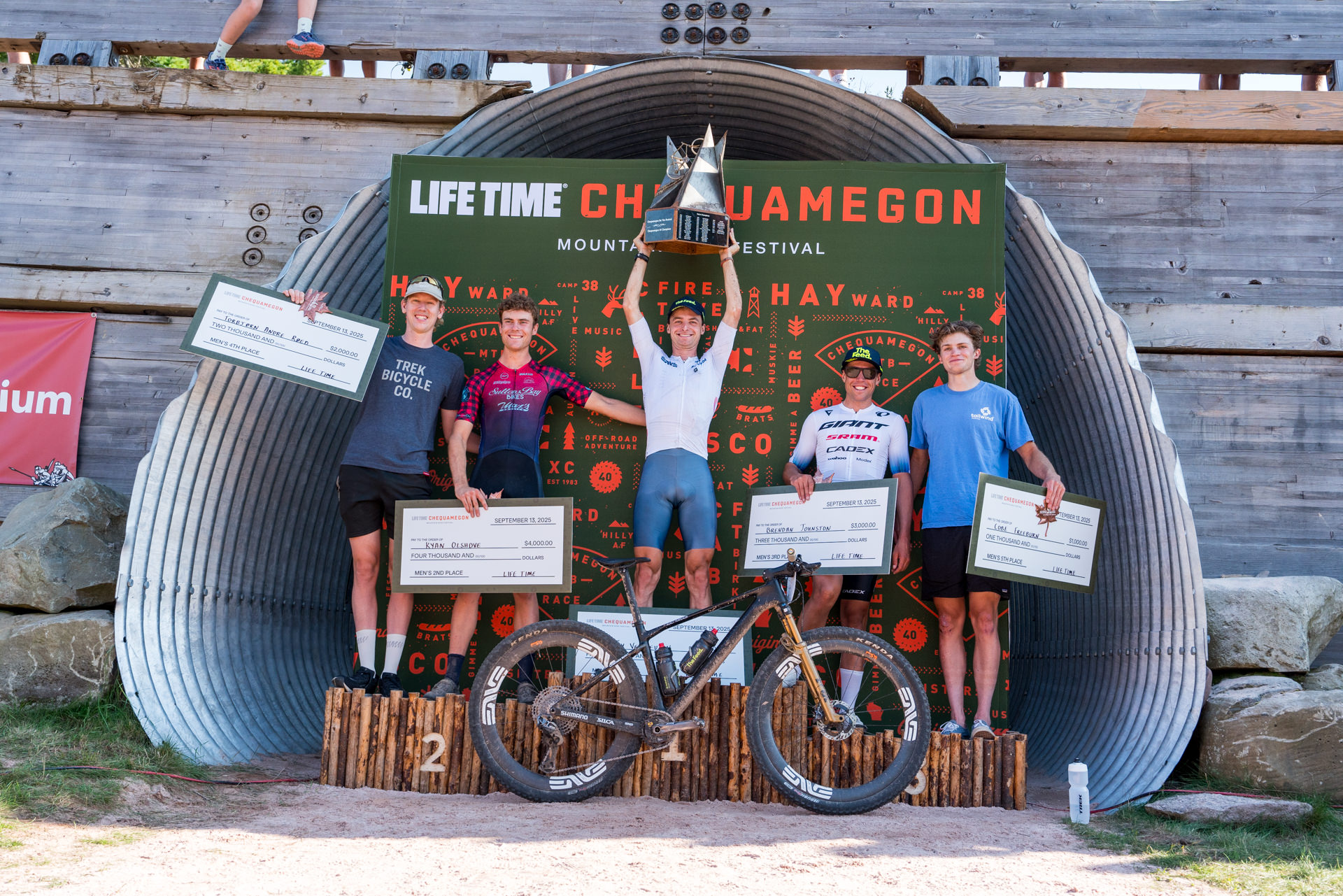 While we were writing this story, Trekky rode his way onto the podium in Wisconsin.
But before he can fully focus on riding nearly 4,000km in less than a week, Trekky is concentrated on business. As we were writing this feature, he raced the fourth stop of the 2025 Life Time Grand Prix, the Chequamegon MTB Festival, and piloted his franken-Anthem to third place, boosting him back up to sixth place in the overall GP standings. The series now heads to Arkansas and all that remains is the Little Sugar MTB race and the Big Sugar gravel race. While the second-place finish at Big Sugar last year puts him on solid footing going into this race, Trekky tells us he’s most excited for Little Sugar, which is a new addition to the Grand Prix this year.
“It’s a very Australian type race — all our marathons are just like this (Little Sugar),” he says.
“It’s the only proper mountain bike race we have this season, and I think maybe a different group of players will be in the mix, which is exciting.”
But the real goal, Trekky tells us, is when he eventually snags his proper win at a Grand Prix, his plan is to do the on-bike shooey. We can’t wait to see it!
Photos: Leslie Kehmeier (@thewideeyedworld), Kevin Mackinnon, Patrick Boeré (@patrickboerephoto) / @radlgrvl, Beardy McBeard (@beardymcbeard)
Editorial Guidelines
At Flow Mountain Bike, we’re committed to delivering engaging and trustworthy content, from product reviews to destination showcases, news, interviews, and features. While many of the brands and destinations we cover may advertise with us, our editorial team operates independently, ensuring our content is guided by expertise and passion—not commercial influence. Sponsored content is always clearly disclosed, and we remain dedicated to providing honest and unbiased coverage across everything we publish. For more details, see our Transparency Report.