
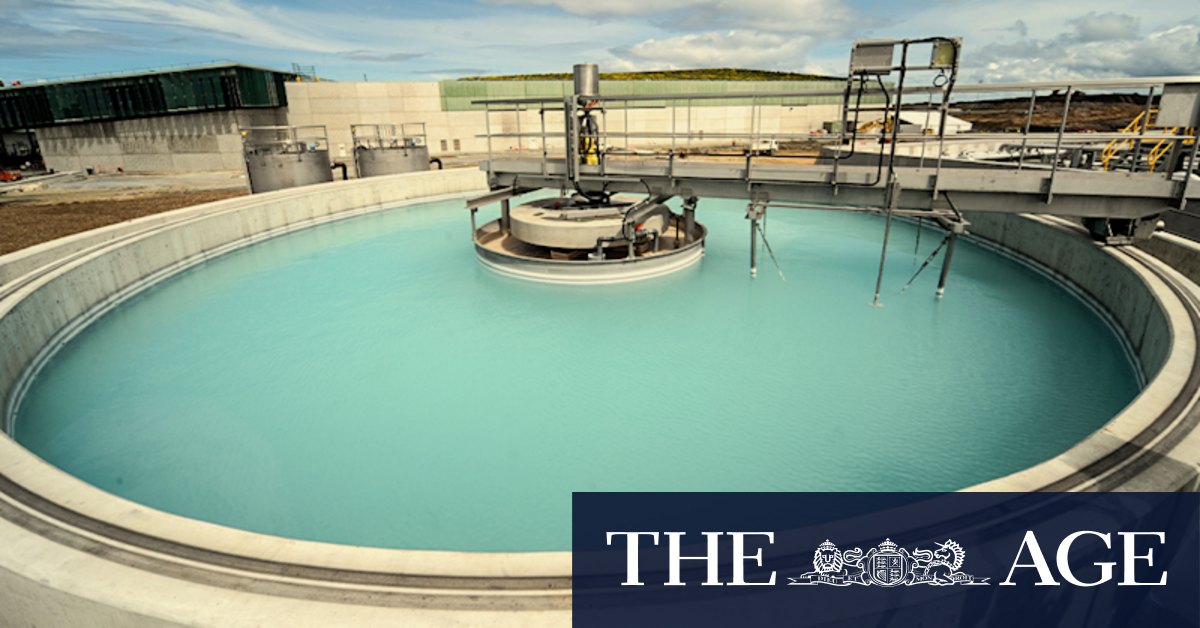
The Wonthaggi desalination plant was announced in 2007, and construction began two years later. The plant produced its first samples of drinking water in 2012, and a 50-gigalitre water order was announced for 2017-18.
However, it has been criticised for being used infrequently. In April, the state made a 50-gigalitre order to boost Melbourne and Geelong storage levels, but it was the first significant order since March 2022.
Modelling in the water security report assumes the plant to be operating at full capacity every year.
Water Minister Gayle Tierney said large-scale projects could take a decade to deliver, which was why planning had begun.
“We’re making sure Victoria continues to have a secure and affordable water supply as our state grows and climate gets drier,” she said.
In the Water Security Plan, Tierney said the desalination plant was a core part of Victoria’s supply system, buffering the state against dry conditions and droughts.
“By the end of 2025, the desalination plant will have delivered half a trillion litres of drinking water, or 28 per cent of Melbourne’s total water storage capacity,” she says in the document.
“This Water Security Plan is the start of a conversation on how we will continue to deliver a reliable, safe source of drinking water that is affordable, and supports economic opportunity.”
Large sections of regional Victoria have struggled through drought, with the Allan government announcing multiple relief packages and delaying increases to its emergency services levy amid rising concern about the impact of the drought across the state.
Monash University politics lecturer Zareh Ghazarian said the original desalination plant proved politically costly for former Labor premier John Brumby.
“It was seen to be a very expensive, very big project,” he said. “I think it took a lot of political capital to get it through.”
But Ghazarian said the political climate was now different, particularly with parts of west and south-western Victoria struggling through prolonged drought.
“Politically, you’d think Labor would have much less to lose if it was to extend desalination in Victoria.”
Other options canvassed in the plan include purification of recycled water for rivers and reservoirs, better efficiency from home and business resources and the greater use of recycled and stormwater for other non-drinking purposes.
Another unlikely option canvassed in the document is a north-to-south pipeline that could transfer a portion of Lake Eildon’s water to Melbourne, called the northern water reserve.
Loading
Existing rules limit the use of this allocation to times of critical need, because of its importance to communities in firefighting and supply in northern Victoria.
The report said Victoria needed to offset declining flows into dams, which requires homes and businesses to use their water more efficiently.
“We also need to investigate options for additional supply that do not rely on rainfall, such as use of purified recycled water and stormwater to replenish our rivers, groundwater or reservoirs, and expansion of our seawater desalination capability,” the report says.
Former Labor water minister Lisa Neville and former Coalition water minister Peter Walsh will report back on the options before March 2027.
Clean Ocean Foundation president Peter Smith said the Eastern Treatment Plant at Carrum could provide an alternative to another desalination plant. The Eastern Treatment Plant treats about 400 million litres of sewage every day, converting it into Class A recycled water.
Although the recycled water still contained microplastics, Smith said further cleaning of that water would be far cheaper than building another desalination plant.
“Why wouldn’t we recycle existing water?” he said.
Smith said it was unnecessary to use drinking-quality water for uses such as cooling data centres, so recycled water should be adequate.
He also said the existing desalination plant was not yet running at capacity even though it costs many millions of dollars a year to keep it operational.
Start the day with a summary of the day’s most important and interesting stories, analysis and insights. Sign up for our Morning Edition newsletter.