
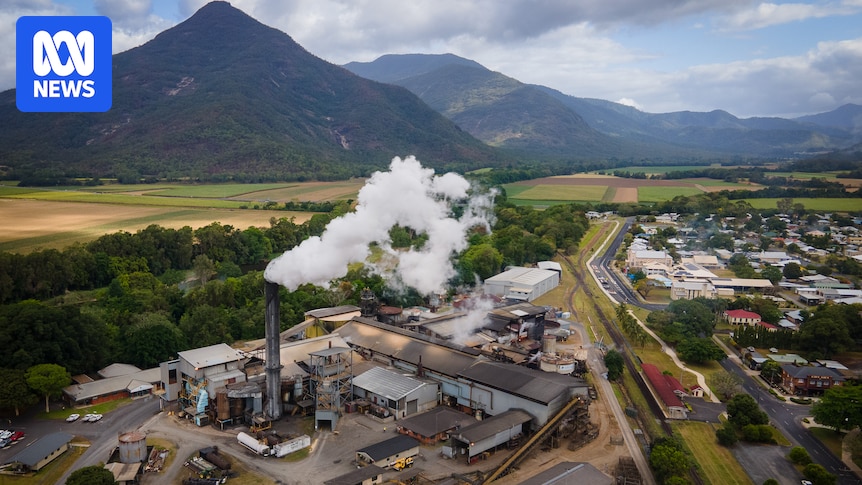
Sugarcane growers in Far North Queensland are facing the prospect of having nowhere to send their produce after next year.
Mossman producers have been trucking their cane to Mulgrave Mill in Gordonvale, about 100 kilometres away, since the Mossman mill shut down in early 2024 after 127 years of operation.
Now they are told that the costs of hauling the cane are too high.
Farmers in the Douglas Shire expect to return to the drawing board in the coming weeks to decide the future of agriculture in the region.
Dan Galligan, the chief executive of industry body Canegrowers, said it was a heartbreaking situation.
“There [are] multi-generational canegrowers that have been growing there and also been fighting very hard for the best part of five or six years to keep the industry going through variations of other projects and contracts,” he said.
“This was potentially a good five-year relationship that hasn’t worked out.”
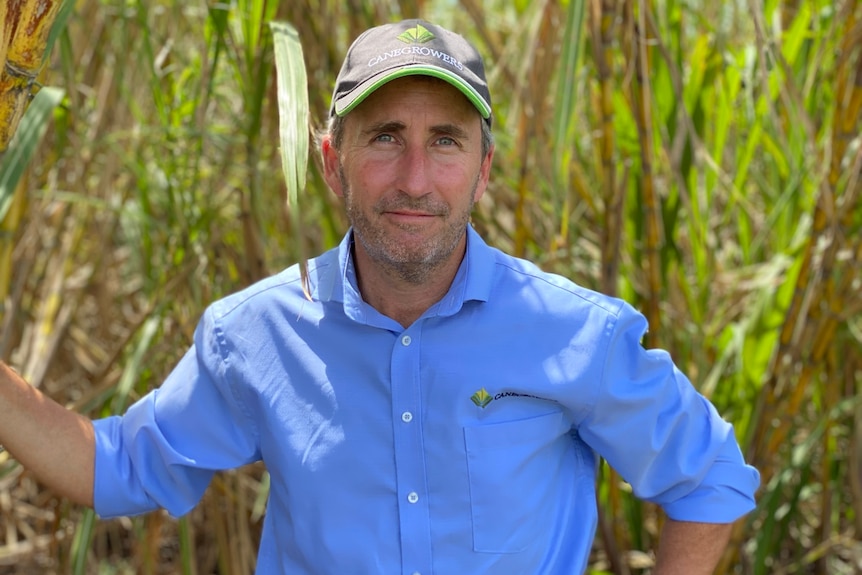
Dan Galligan will continue to work with Mossman farmers as they find alternatives. (Supplied: Canegrowers)
Mr Galligan said growers spent five years going through “an incredibly painful and heartbreaking process” but had not found a place to send their crops.
“Not many of them have come through for Mossman farmers, that’s the reality, and it’s awful — it’s frankly just awful,” he said.
Mr Galligan said it was time for Canegrowers to work with its members to find a way forward.
“Government has already indicated – and they have been proactive for a number of years – [it will] try and facilitate discussions around options and bring parties to the table and that will continue, and Canegrowers is no different,” he said.
Too expensive to transport
Mark Manganini from milling giant MSF said it was a disappointing outcome, but the economics simply did not stack up.
“It’s obviously unfortunate for all concerned, because we’re very keen to keep good-quality land growing sugarcane and the Mossman growers are exceptional in that,” he said.
More than 400,000 tonnes of sugarcane from Mossman were processed at the Mulgrave mill over the last two years.
Mr Manganini said the average sugar factory operated within a 30-kilometre radius of its growers.
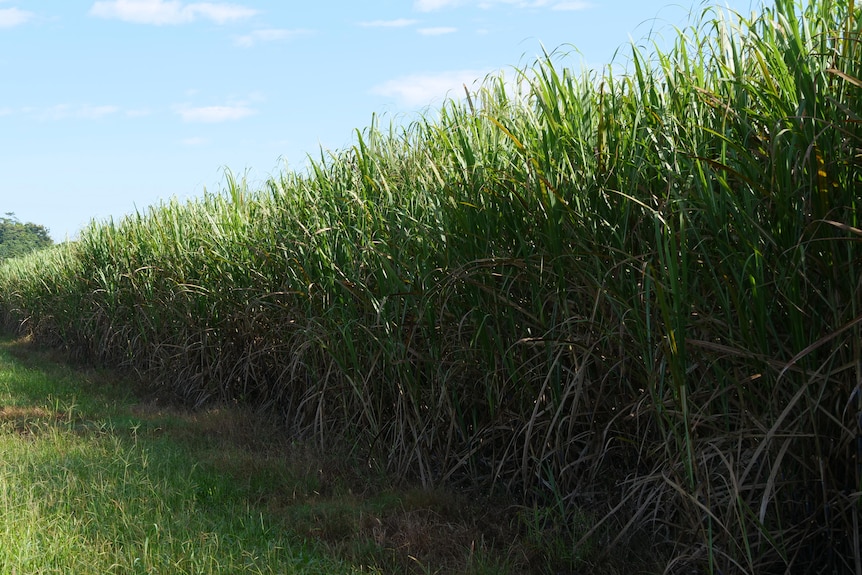
Sugarcane is the prominent crop in the Mossman region. (ABC Far North: Bridget Herrmann)
“The unfortunate part is the tyranny of distance makes the economics very difficult both for grower and for miller,” he said.
“When the state government is unable to continue to fund operational costs, which is fair enough, we have to make it work between miller and grower.
“Unfortunately the commercials didn’t work and we’re at a point now where we won’t be proceeding with that project.”
The state government committed more than $12 million to help the industry transition when the Mossman mill became unviable.
Half of that had already been used to help transport the cane over the last two seasons.
The Mulgrave mill will continue to process sugar from local growers.
$6m left for solution
Queensland Primary Industries Minister Tony Perrett said the government’s commitment to support Mossman canegrowers had not changed.
He said the unspent $6 million in government funding would be available for a longer-term solution that would be worked out with growers, councils and the Mossman community.
Cook MP David Kempton is the chair of the Mossman Advisory Council, which must decide how to spend the money.
He said that might include planning for a future beyond cane harvesting.
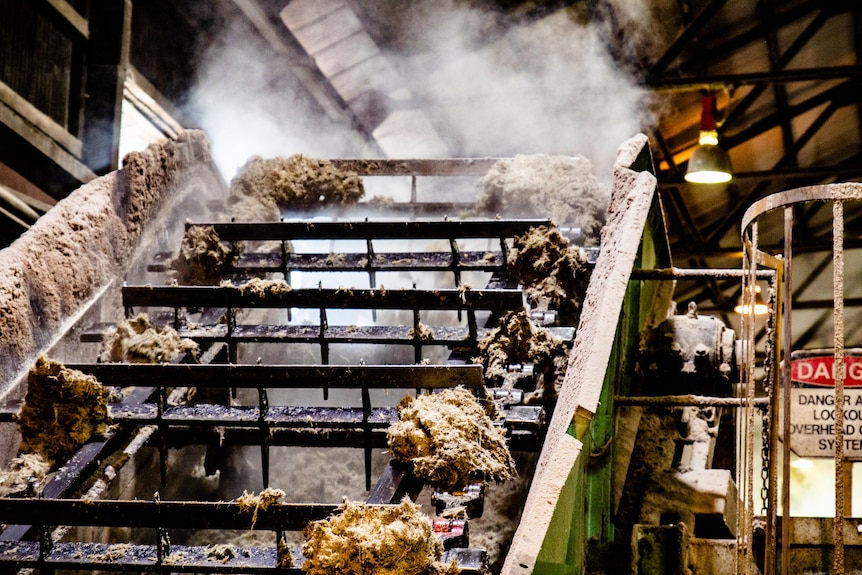
The Mossman mill operated as a cooperative enterprise for 127 years. (Supplied: Far Northern Milling)
Mr Kempton said one million tonnes of cane a year needed to be harvested to sustain the industry, but Douglas growers only produced about half that.
“It’s just not viable without a lot of government input,” he said.
“It’s just come to its natural conclusion.”
Mr Kempton said it was possible that some of the 40-odd local growers might wish to grow cane next year, but farmers would have to find a way to have it processed.
“I’m hoping there’ll be a strong transition into other crops,” he said.