
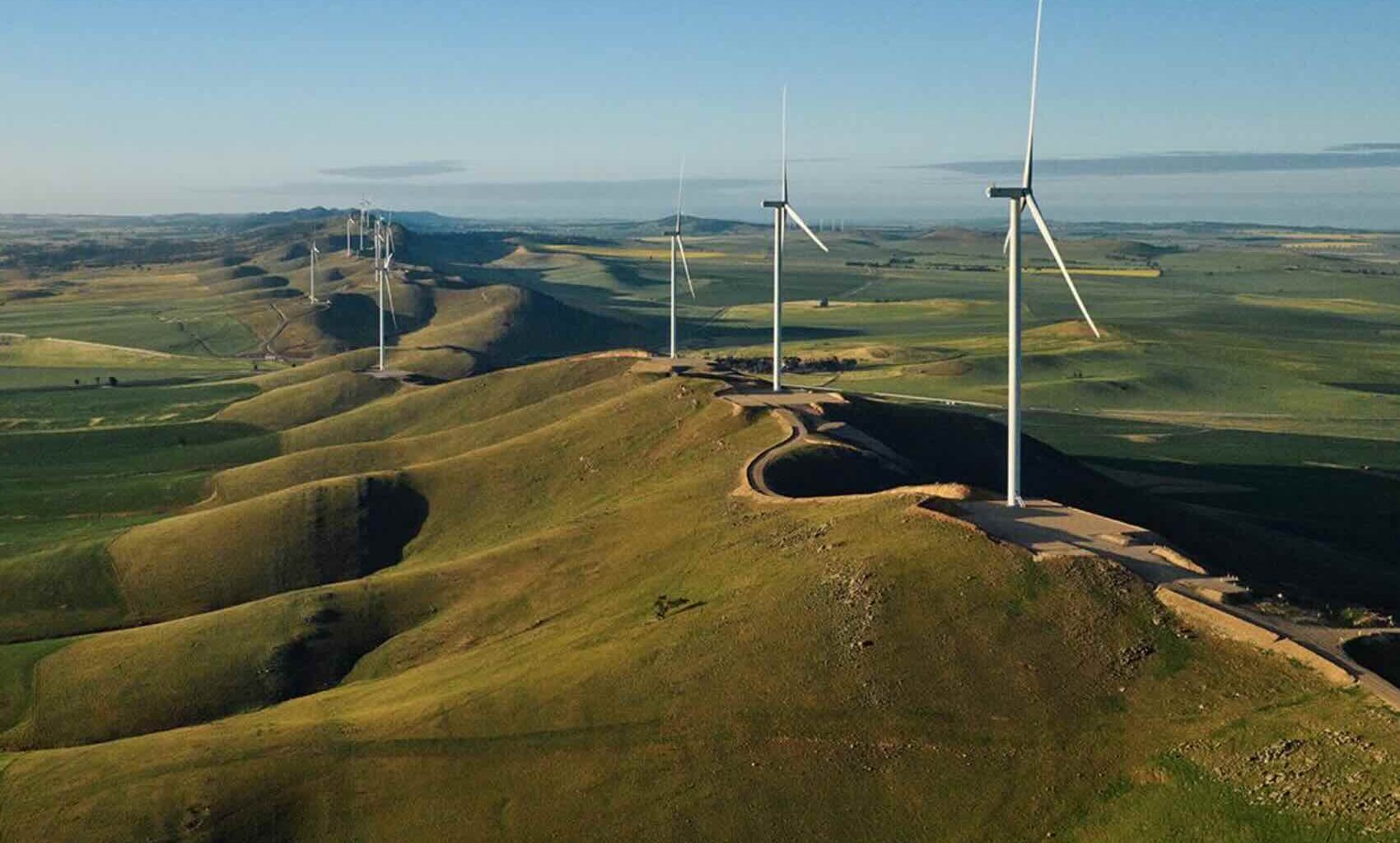
South Australia – the country’s most advanced renewable state – has posted some remarkable new records over the weekend, including a new peak for wind energy, growth in battery storage and a stunning reduction in the role of fossil fuels.
The state has run at an average of 75 per cent wind and solar over the past year, and hits levels of more than 100 per cent renewables (related to state electricity demand) every second day. The state government has an official target of reaching 100 per cent “net” renewables by the end of 2027.
Over the weekend wind energy hit a new peak share of 149.6 per cent of state demand. It occurred at 4.05am on Sunday, according to GPE NEMLog, and beat the previous record of 147.2 per cent set in early September.
The figure was boosted by the newly inaugurated 412 MW Goyder South wind farm, which is now the biggest in the state and is supplying the ACT, BHP’s Olympic Dam mine and retailer Flow Power though various contracts.
The record share is also being helped by the increased capacity on interstate transmission lines, with the first stage of the new link to NSW, Project EnergyConnect, allowing more exports to flow from South Australia, rather than being curtailed.

Those numbers will be boosted significantly when the transmission line is complete by the end of 2027, along with the near dozen new big battery projects now under construction, most with bigger capacity and longer storage duration than the eight completed batteries.
Battery storage is already making its mark on the state’s evening peaks, accounting for 31.2 per cent of demand at 7.45 pm on Saturday evening, a number that is also likely to grow significantly with the number of new big battery projects in the state.
That is having an impact on gas generation, which fell to a remarkable low of just 1.5 per cent of total generation early on Saturday, accounting for just 40 MW of the more than 2,700 MW being produced, mostly from wind and rooftop solar.
The Australian Energy Market Operator now requires just a single gas unit (operating at a minimum of 40 MW) to be operating at certain times to provide sufficient “synchronous” generation to provide grid security in the case of a disruption.
But even that need will be removed in a couple of years, when the new transmission line to NSW is complete, and the market operator is happy to rely on the synchronous condenser (large spinning machines that do not burn fuel) and battery grid forming inverters to provide those essential grid services, including system strength.
That will represent a significant development in the evolution towards inverter-based grids, although AEMO has also announced trials to test these technologies operating without any synchronous generation on a major isolated grid, i.e. one with new links.
This already occurs in small micro-grids that service mine sites, for instance. But AEMO says its trial will be a world first and the first time it has been demonstrated on an isolated grid of more than 100 MW.
Meanwhile, Geoff Eldridge of GPE NEMLog notes some other records on Sunday, including a record share for renewables – 154 per cent at 8am, and a record level of curtailment (2,305 MW) at 1.55 pm.
He also notes that the battery charging load – 547 MW at 12:20pm – is also a new best-so-far charging draw.
Read more here: AEMO turns to battery inverters for “world-first” trial of running big grids with no synchronous generation
And Renew Economy’s Big Battery Storage Map of Australia for more information.

Giles Parkinson is founder and editor-in-chief of Renew Economy, and founder and editor of its EV-focused sister site The Driven. He is the co-host of the weekly Energy Insiders Podcast. Giles has been a journalist for more than 40 years and is a former deputy editor of the Australian Financial Review. You can find him on LinkedIn and on Twitter.