
Loading
“Go f— yourselves, the lot of you – you sad, attention-grabbing, power-hungry little men. Do not use our music or my voice for your moronic charade of a campaign,” band member Michael Stipe said at the time.
Since then, major artists like Rihanna, Phil Collins, Steven Tyler, Neil Young, the Foo Fighters and The Rolling Stones have objected to their music being used by Trump. Tyler even sent a cease-and-desist letter to Trump’s campaign in 2018 after it used his song Livin’ on the Edge.
More recently, Swedish pop legends ABBA demanded Trump stop using their music after hits such as Money, Money, Money were played at a Trump rally last year, accompanied by actual footage of the band itself. Celine Dion was similarly frustrated after her Titanic classic My Heart Will Go On was used at a 2024 rally, even posting about it on social media: “really, THAT song?” she wrote.
Last year, Beyoncé‘s team threatened to issue a cease and desist letter after a Trump campaign spokesperson used her song Freedom – a track that played a role in Kamala Harris’ campaign – in a video of Trump disembarking a plane. Beyoncé had permitted Harris to use the song, but not Trump’s camp. Similarly, The White Stripes sued Trump over unauthorised use of their song Seven Nation Army in a video posted last August. This suit has since been dropped.
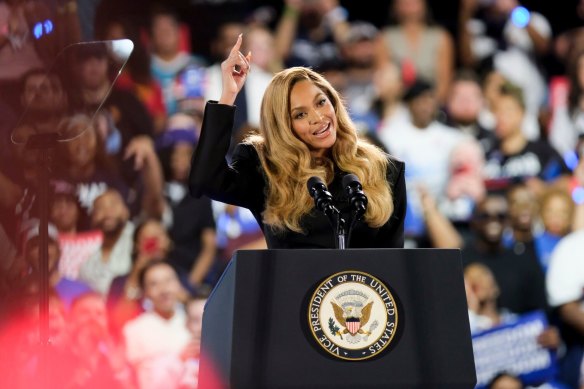
Beyoncé spoke at a Kamala Harris campaign rally last year.Credit: F. Carter Smith/Bloomberg
Trump’s use of songs from musicians who have died has also come under fire, including the use of Sinead O’Connor’s Nothing Compares 2U at Trump’s Maryland and North Carolina rallies last year.
“It is no exaggeration to say that Sinead would have been disgusted, hurt and insulted to have her work misrepresented in this way by someone who she herself referred to as a ‘biblical devil’,” O’Connor’s estate representatives said in Variety.
Trump isn’t the first politician to use popular music to drive their messaging home. But is it legal to use other people’s music like this?
It’s usually allowed due to blanket licensing, which grant broad permissions for the public use of certain songs. As long as the political party has obtained a public performance licence (typically through a Performing Rights Organisation like the American Society of Composers, Authors and Publishers or BMI) to play music in public, it’s generally legal.
There are, of course, some exceptions. Musicians are permitted to object to unauthorised use of their work in campaign advertisements, and political figures cannot use songs in a way that suggests the artist endorses the political message.
Find out the next TV, streaming series and movies to add to your must-sees. Get The Watchlist delivered every Thursday.