
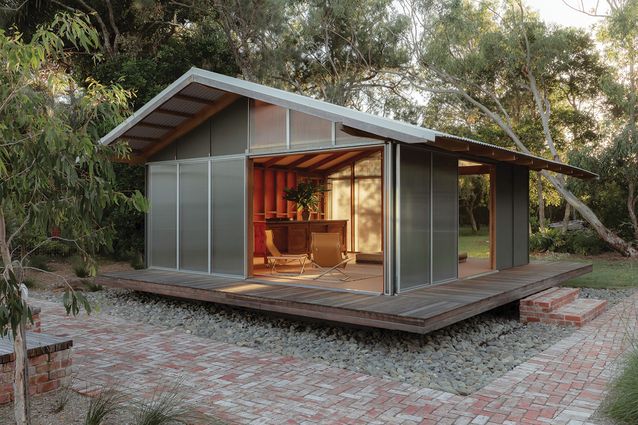
Past the mangroves in the Tweed River, and just a short bushwalk through a protected coastal reserve from Dreamtime Beach, Cal Somni is a spot to pause. Named the “house of dreams” in Catalan, this garden pavilion is open to the whims of the user. For yoga, to read, to siesta, to host friends. To dangle your feet off the deck and listen to the birds.
Located in Booninybah/Fingal Head, a narrow peninsula in northern New South Wales, Cal Somni is the creation of the owners and designers, Nigel Chouri and Crick King of We Are Blankslate. Nigel and Crick moved back to Australia after living in Barcelona for 20 years and crafted this sculptural structure to pay homage to the landscape they’d missed when living in the city.
The pavilion sits on the footings of an old shed behind a beach shack, also thoughtfully renovated by the duo. With a nod to Barcelona, the space in between the architecture becomes an extension of the buildings – a courtyard of recycled brick paving that is an inviting place to sit with a coffee or a glass of wine.
View gallery
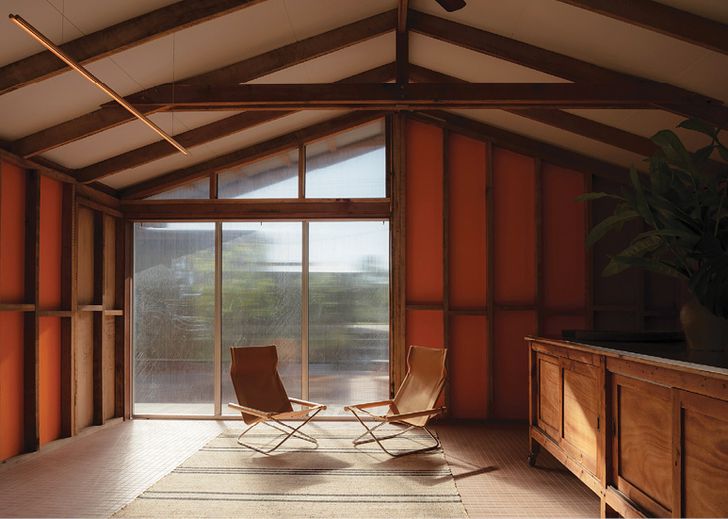
Cal Somni embodies a duality of beautiful yet resilient architecture, created in collaboration with local builder, Bare Build, to withstand the water that moves across the peninsula. Employing the existing concrete slab of the shed, the building is raised on the site to resist flooding, while tiled floors, cement board and hardwood timber are robust enough to tolerate a maritime climate.
The floating deck evokes a sense of weightlessness, enhanced by the structure’s operable walls, which immerse the user within the landscape. Regardless of the weather, there is always an opportunity to sit outside: large custom aluminium-framed sliding doors slide completely open, with 1200-millimetre eaves offering shade and protection from sun and rain. Transparent polycarbonate cladding lets dappled light and the dance of the tree’s shadows filter through, even when the pavilion is closed.
The dreamy experience of living lightly in the landscape is paired with a weighted practicality that fundamentally invites the users to recall the simplicity, scale and utility that once typified the beach shack. An embracing yet unrestrictive pavilion, it delivers a space to pause and consider our place in the environment – as the environment eventually claims it back.