
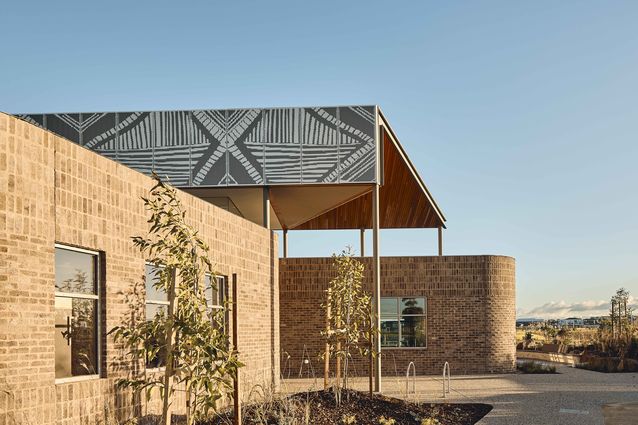
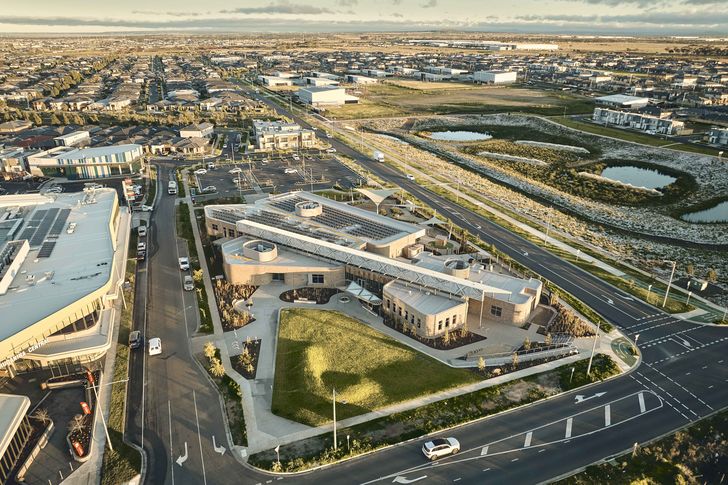
The Truganina Community Centre has united a multicultural community, not only through the physical building, but through the design process itself. Located on the western plains of the Bunurong, the centre is situated within Melbourne’s south-west growth corridor – an area home to a rapidly increasing culturally and linguistically diverse population.
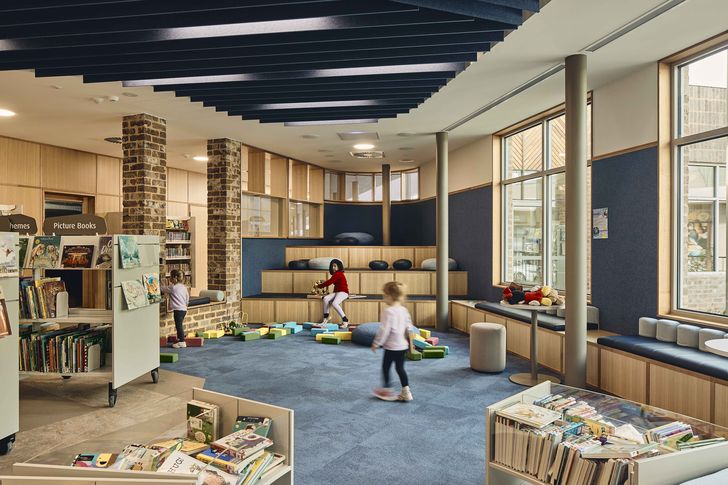
Designed by Jasmax’s Melbourne studio (formerly Canvas Projects), and funded by the Victorian government and Wyndham City Council, the centre is the first of its kind in Victoria to offer a wide range of health, education and social facilities for families. These include a kindergarten, maternal and child health consulting suites, technology and study spaces, multipurpose community rooms and a unique “library lounge” that promotes multicultural literacy.
Importantly, the centre is non-commercial and is instead passionately community-oriented, providing a much-needed welcoming and safe social space for residents of all ages to connect.
View gallery
Over an eight-month period, the architects worked with Wyndham City Council in a brief-building and community-led co-design engagement process facilitated by the Murdoch Children’s Research Institute. This ensured the development of a brief that responded directly to the needs and aspirations of the centre’s various community groups and gave residents a real sense of ownership and pride in the project.
Statistically, the Truganina community is held at a disadvantage due to lower-than-average levels of family income, lack of existing infrastructure and distance from basic services. These factors leave communities like Truganina prone to social isolation and cultural displacement, highlighting the critical need for improved infrastructure and better support across Australia’s sprawling suburbs. Principal at Jasmax’s Melbourne studio Jeff Gabriel believes that new community centre models can play a vital role in building social cohesion and enriching cultural identity, ultimately improving on some of those statistical anomalies.
The studio’s co-design process involved a sequence of online Zoom sessions during the COVID-19 pandemic. For Gabriel, this resulted in an outstanding outcome as it allowed people who might have been unable to attend in person to participate in the sessions, imagining what their lives might be and how they might better connect with their neighbours.
View gallery
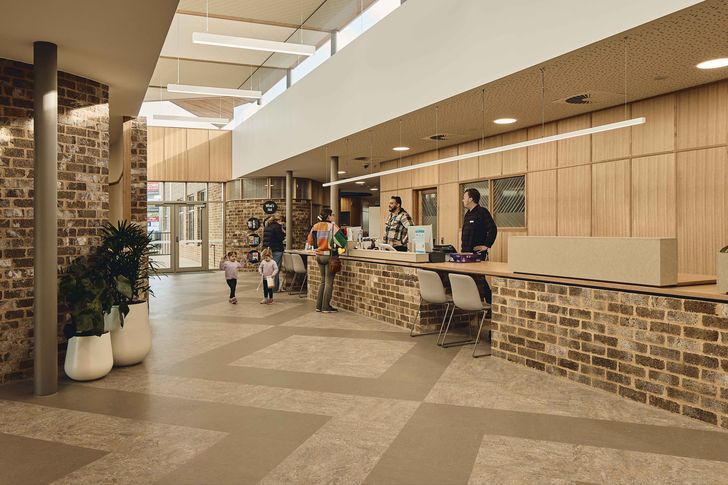
The second advantage of this process was that the architects were given a glimpse into people’s homes. Despite the sameness of the plasterboard boxes, the variety of textiles and cultural items adorning attendees’ interiors became an important linchpin for the project, with the patterns of real-life Zoom backgrounds ultimately woven into the visual language of the building’s wall, floor and ceiling finishes.
Also originating from the consultation sessions was the community’s desire for a space to practice cultural continuity and exchange. The architects developed this request into the idea of a “library lounge” – a central “public street” lined with a culturally focused library collection, which forms the centre’s connective tissue. The spaces that hinge off this spine facilitate various activities through to incidental gatherings, including spots to have tea or coffee.
Gabriel believes the most impactful community infrastructure happens in these interstitial spaces, even though, in his experience, these areas usually lack representation in the initial project brief. Having the community “in the room”, so to speak, helped the architects advocate for these spaces, as did building on successful precedents, including two prior community projects Canvas Projects completed with Wyndham.
View gallery
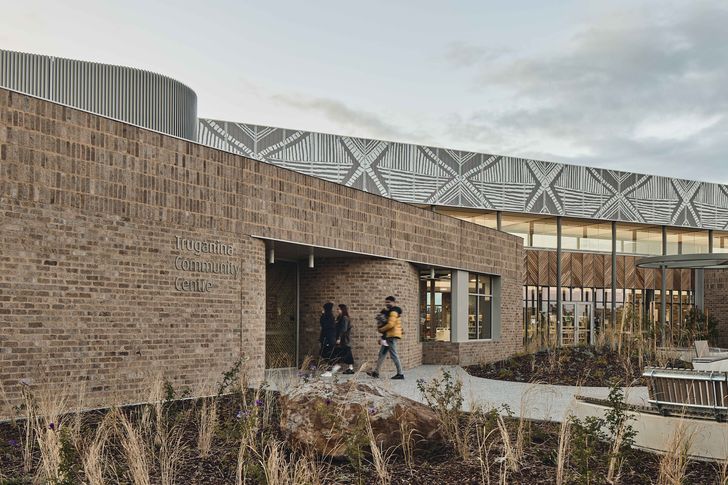
In contrast to the singular language of the suburb’s volume-builder housing estates, the community centre’s permeable edges and warm, textured materiality is open and welcoming, yielding to the thoughtfully planted native landscape designed by Outlines Landscape Architecture.
Understanding the deeper histories of place and how to design responsibly for Country is, for Gabriel, a critical part of practice that begins early in the design process. Historically, the Truganina site has always been a place of cultural exchange. Being close to the western border of Bunurong Country,itintersects with Wathaurong and Woi-wurrung language groups. This has been a powerful and important reference for the building. One of several artworks commissioned for the project, First Nations artist Lisa Waup’s artwork for the circulation spine, titled Converging, extends across the 60-metre length of the elevated roof. Referencing crossroads and pathways of connection, the work has become a symbolic flag for the building.
View gallery
The distinctive form of the Truganina Community Centre has created a new precinct landmark, helping establish a sense of identity and belonging for a culturally diverse community. The architect’s earnest commitment to a community-led co-design process and a deep connection to Country has led to meaningful outcomes with lasting and ongoing resonance to people and place.