
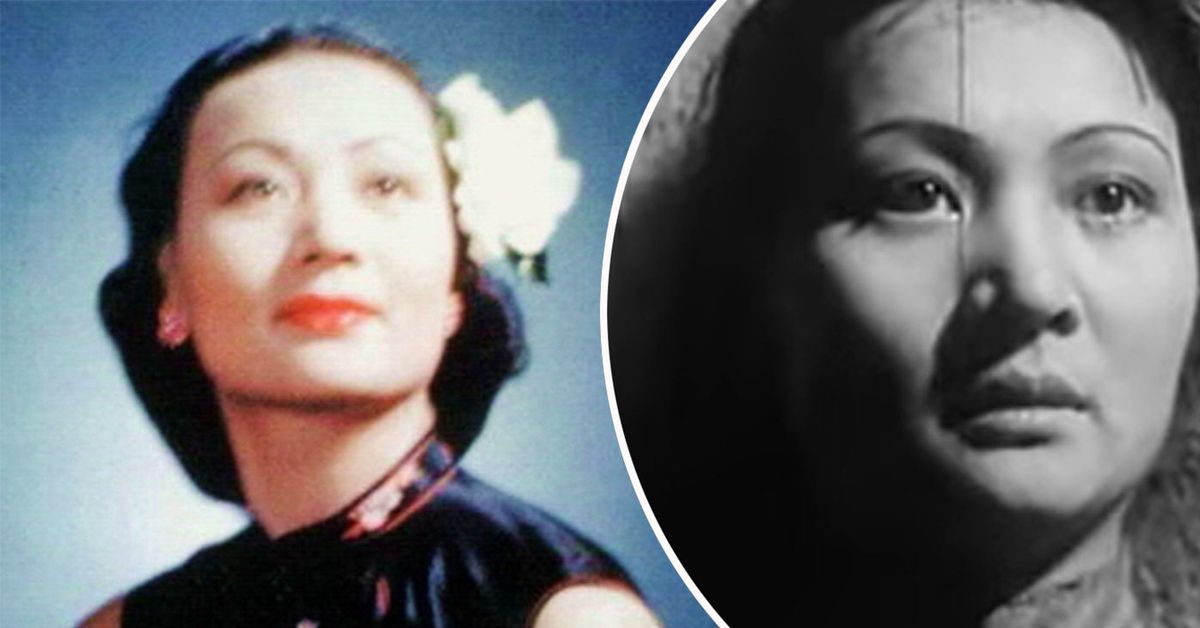
When Blood on Wolf Mountain was released in Chinese cinemas on November 1, 1936, it wasn’t seen as the sort of movie to have a lasting impact.
The film told the story about a village surrounded by bloodthirsty wolves. Ostensibly it was a simple horror film, but was a thinly-veiled allegory for the Japanese invasion of Manchuria.
But it was the opportunity for a star-making turn for one of the actresses involved.
 Li Lili became one of China’s most loved actresses. (Public Domain)
That actress was Li Lili, who outshone the rest of the cast and became one of China’s best-loved actresses.
It was bad news for Lan Pang, a co-star who took Li’s success personally.
She left Shanghai the following year, changed her name to Jiang Qing and became a diehard communist.
She met and married party leader Mao Zedong, though he was already married.
Though initially prohibited from wielding any political power, Jiang rose to become a powerful figure within the Communist Party.
There she became, in her own words, the attack dog for her husband.
 Lan Pang, later Jiang Qing, in Blood on Wolf Mountain. (Public Domain)
During the Cultural Revolution of the 1960s, she organised the arrest, torture and even murder of party officials and their family members.
But her wrath was not limited to present rivals.
On Jiang’s orders, Li Lili and her husband were denounced and tortured.
Li’s head was shaved by the revolutionary Red Guards.
Meanwhile, her husband died under torture. His body was never returned to his family, only his glasses.
But despite Jiang’s powerful role in state politics, she was not well-liked among the people of China.
 Chairman Mao Zedona and First Lady of China Jiang Qing. (Supplied)
 Several years after the death of her husband, former First Lady of China Jiang Qing was sentenced to death. (Nine Archives)
Less than a month after Chairman Mao’s death, she was arrested.
After a contentious six-week televised trial, Jiang was sentenced to death.
Her sentence would be commuted but she spent the majority of the rest of her life in prison.
She died by suicide in 1991. No funeral was held.
That year Li was given a lifetime achievement award from the Chinese Academy of the Motion Picture Arts.
The last living movie star of Chinese film’s silent era, Li died of a heart attack in 2005, aged 90.