
Why aren’t more young people reading for pleasure? International studies reveal that their reading skills and enjoyment are falling. The trend is also apparent in Australia: recent data shows that one in three Australian children aren’t proficient readers, and that 29 per cent of teens don’t choose to read at all.
We can all point to reasons: the rival attractions of the internet and social media, limitations to literacy, peer group pressure, and so on. It’s a given that children develop an attachment to books at a very early age, long before they can read, through picture books and the voice of a parent or caregiver reading aloud. But parents these days are often too time-poor and tired to pick out the right books and to give their children this kind of attention.
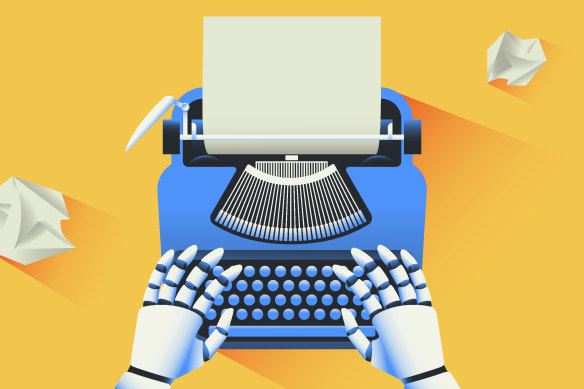
Authors worry about the implications – both legal and ethical – of AI-generated books for children.Credit: Getty Images
Guess what? AI has come up with a solution that at first glance seems quite a boon for frazzled parents. Google has launched Gemini Storybook, an app that creates personalised stories that you can read aloud if you choose. Feed in a few prompts for story and art style and in 10 seconds, Storybook is back with a 10-page digital picture book in any one of 45 languages.
One fan, Sarah Dooley, told the US journal Publishers Weekly she wanted a story about twins starting kindergarten for her children. “Gemini created the sweetest storybook about squirrel sisters starting school together. Sharing it with my girls opened up a conversation about their nerves.”
But other users are not so happy, pointing to weird glitches in the pictures, such as too many limbs or heads on backwards. These are tech problems that can presumably be ironed out. More worrying is the widely held view among writers for children contacted by PW, who described the AI books as “soulless, machine-driven content” that disregards everything known about child development. One author, Martha Brockenbrough, said the app’s stories are like serving children “powdered orange juice made in an unregulated factory and feeling good about it”.
There’s also a legal challenge that ties in with authors’ concerns about their work being stolen to train apps. A coalition of US groups has said the product violates federal piracy law and has demanded its withdrawal.
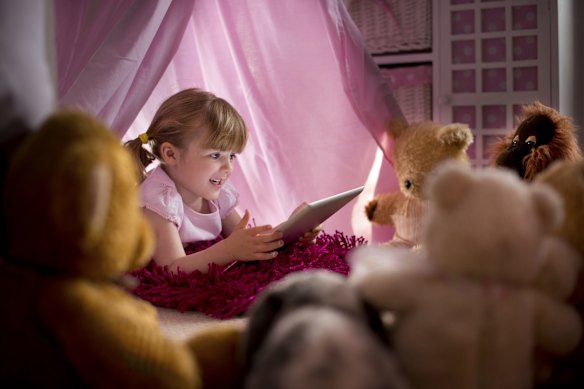
Too tired to read to your kids at bedtime? There’s an app for that…Credit: Canberra Times
So what are time-poor parents to do? Well, maybe they can consult a book. Australian author and educator Megan Daley’s Raising Readers, now out in a fully revised and updated edition, is one of those books you can dip into for ideas to solve your own particular problem, no matter how old your children are.
She recommends bedtime reading for children aged between three and five, with suggestions for good books and how to get around the time-poor problem with help from neighbours, grandparents or older siblings. And she includes her own experience of a precious 15-minute reading time that’s good for her too: “Being physically close and escaping into an imaginary world through books reduces my stress and anxiety like nothing else I know.”