
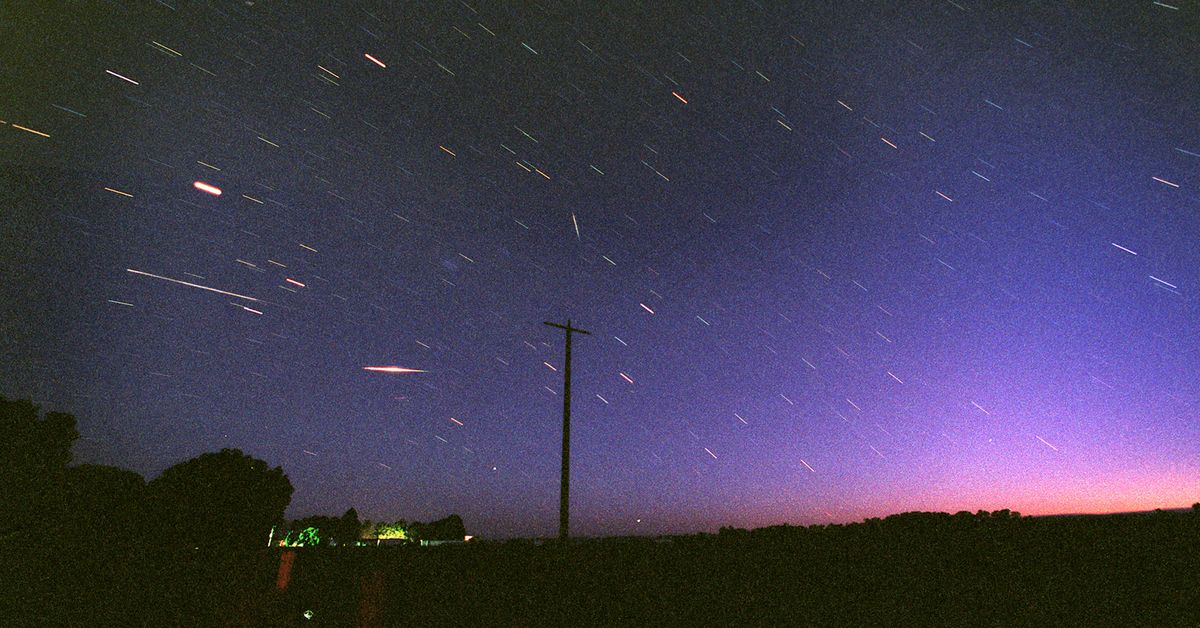
As one meteor shower comes to an end in Australia’s skies this week, another is just beginning.
The Leonid meteor shower will kick off this Thursday, November 6, right before the Orionid meteor shower concludes on Friday, November 7.
The Orionids ran for most of October, but those who missed out on seeing the shooting stars it produced have another chance this month as the Leonids light up our horizons. Here’s everything you need to know about the Leonid meteor shower, including how to see it yourself.
 The Leonids Meteor Shower will once again be visible in Australian skies this month. (Craig Abraham)
Can you see the Leonid meteor shower in Australia?
The Leonid meteor shower is visible from both hemispheres and will be visible from all Australian capital cities.
What is the Leonid meteor shower?
The Leonid meteor shower is an annual celestial event which takes place every November.
It was named for the constellation Leo, as the point where the meteors appear to emerge is located in that area.
This meteor shower is not particularly rare as it occurs every year, but it’s still an exciting phenomenon well worth looking up for.
It occurs when Earth passes through the debris of the Comet Tempel–Tuttle.
Bits of the debris collide with the Earth’s atmosphere and burn up in fiery streaks which appear to the naked eye like shooting stars.
The comet itself isn’t visible from Earth, as it takes about 33 years to orbit the sun and only appears in our sky every three decades or so.
It was last visible in 1998 and will appear again in 2031.

Astronaut returning to earth shares mind-blowing images of the cosmos
What is the best time to watch the Leonid meteor shower?
The Leonid meteor shower will occur between November 6 and 30.
It will peak on the night between November 17 and 18, which will likely be the best time to watch it light up the sky.
The peak of a meteor shower is usually when there is the most visible activity.
During the peak of the Leonid meteor shower, stargazers should be able to spot up to 10 meteors per hour – provided it’s a clear night with good visibility.
Here are the best times to watch on the night of the peak in each capital city:
Brisbane – 1am to 5pmDarwin – 1.30am to 6.30amPerth – 2am to 5amSydney – 3am to 6amMelbourne – 3am to 6amCanberra – 3am to 6amHobart – 3am to 6amAdelaide – 3.30am to 5.30am
If it’s cloudy or you miss the peak, you can still see meteors on a clear night outside the peak.
Where can I watch the Leonid meteor shower?
The best way to observe the Leonid meteor shower is by finding a secluded spot away from bright lights.
Meteors can appear at any spot in the sky, so choose a viewing location with a clear view of the horizon.
Then lay back and keep an eye on the sky.
You can track the Leonid meteor shower based on your location here. The Geminid meteor shower is up next and it’s sure to be spectacular. (Getty)
What will be the biggest meteor shower in 2025?
If you don’t get to see the Leonids meteor shower, don’t fret – the biggest meteor shower of 2025 is still on the horizon.
The Geminids meteor shower takes place between December 4 and 20 and is considered by many to be the most spectacular.
With up to 150 meteors set to be visible per hour during the shower’s peak on the night between December 14 and 15, it’s expected to be stunning.
It will also be visible from both hemispheres, so Aussies will get the chance to witness it.