
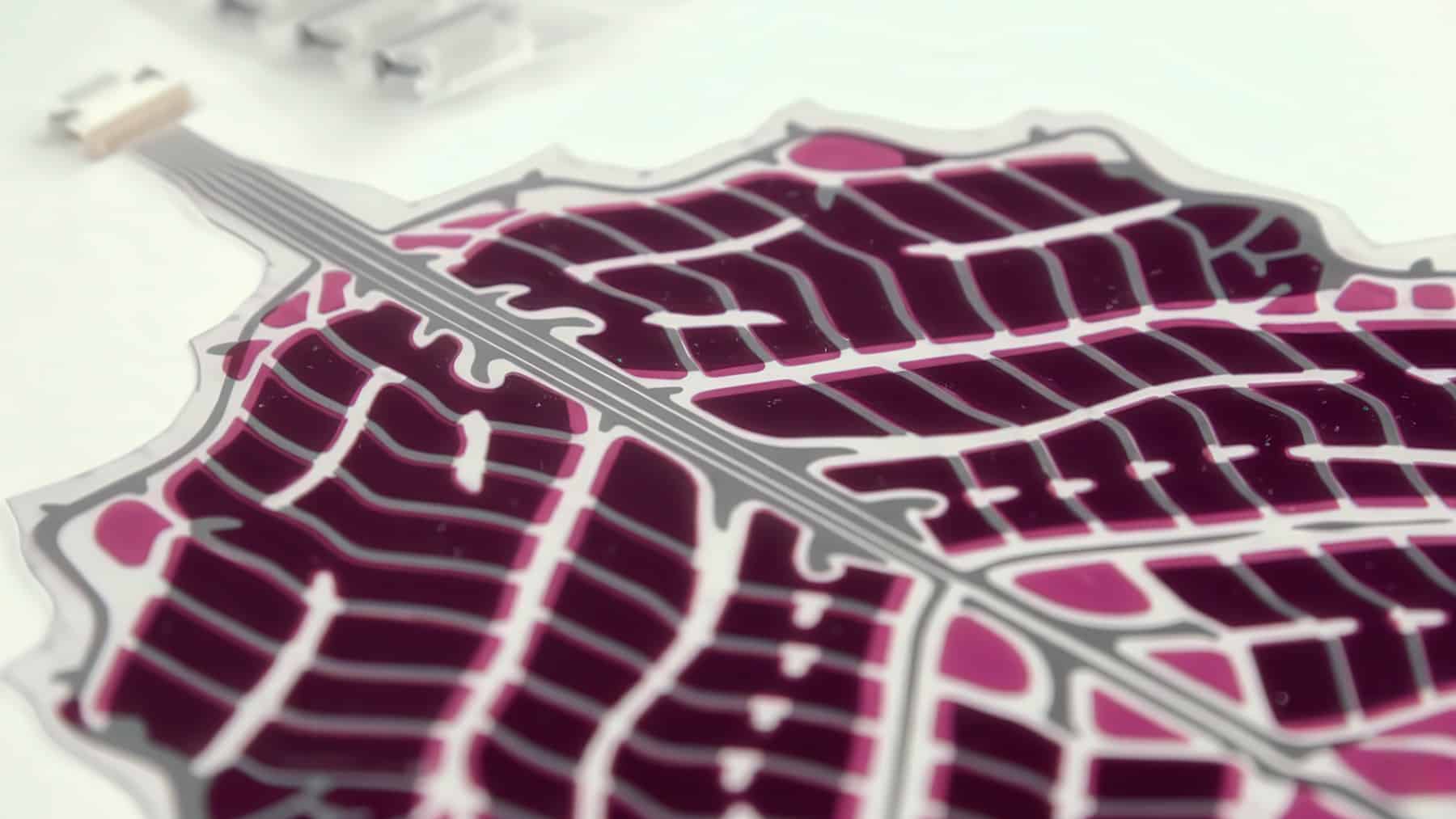
Yes, you read the title correctly! Just like many other sectors, the renewable energy industry is seeing yet another breakthrough, but with a twist this time around. Recently, enthusiasts from all over the world seem to be confused about the timeline of the photovoltaic tree. Without wasting much time, have a seat, and let’s dive in.
Why it matters: examining the reason and timeline for the ‘red photovoltaic tree’
This is not dystopian by any means. Rather, a monumental shift towards adaptation and innovation is spreading deep into the roots of renewable energy. Since its inception, photovoltaic technology has been one of the major backbones of renewable energy. It is not so difficult to see why engineers all over the world seem to be interested in integrating the technology with nature in a way to encourage better assimilation and a disconnect from a rather robotic environment.
Europe is not slowing down when it comes to the topic of renewable energy. Many experts would love to argue China’s dominance in the sector, but Europe has its sights set on the winning spot, and Finland seems to be the next hotspot for innovative photovoltaic ideation and creation.
How did the fascinating idea of a ‘red photovoltaic tree’ slip into the limelight?
The idea was borne from a simple hypothesis as far back as 2015: When we look around, especially in nature, it is evident that trees are numerous and greatly contribute to the ecological landscape of any location, be it a state or a country. The ongoing conversation can not go on without giving credit to VTT, also known as the Valtion teknillinen tutkimuskeskus, National Technical Research Center. Why touching on VTT, you might ask?
A closer look at VTT’s role in the development of the technology from the ground up
They engineered leaf-shaped photovoltaic tree cells, each of which has a surface area of 0.0144 square meters and includes connections and the important wiring systems. It has also been widely discussed that 200 of the OPV “leaves” can generate 3.2 amperes of electricity and 10.4 watts of power outdoors in sunnier climes in a one-square-meter formation, like this groundbreaking solar mountains. The trunks of the “energy harvesting photovoltaic trees” are 3D printed using wood-based biocomposites that are mass producible and can be infinitely replicated.
The entire process was engineered from scratch to encourage great efficiency and a performance boost. While the leaves for the “photovoltaic tree in question” might be less efficient than a conventional rigid solar panel, the benefit is in the scalability and the cost reduction.
Implications for Finland’s energy infrastructure and the future ahead
In Europe, Finland is one of the countries that relies heavily on Fossil fuels. While enthusiasts might debate about the efficiency and energy gains of fossil fuels, which have made it import the resource from Russia severally times, an underlying side effect is the culmination of toxic waste and gases that can emerge from the extraction or utilization of the resource. While Finland has continued its relentless efforts to diversify from fossils, Russia’s invasion of Ukraine in 2022 has further increased its overall stance on the issue.
An innovation like the “Finnish red photovoltaic tree” will not only relieve Finland of its ties with Russia, but it will also further add a layer of integrity and reduce strain on the country’s foreign exchange reserves.
Over and over again, we are being shown in real time that change is inescapable. But the major takeaway is that Finland is looking beyond and ready to cement its position as a leader on the topic of photovoltaic energy. The possibilities from the country’s innovation are just borderline limitless. Time will tell what humanity will do with this new advancement, but for now, the future looks bright, just like this groundbreaking solar sphere, adopted by U.S homes.